
-
Image
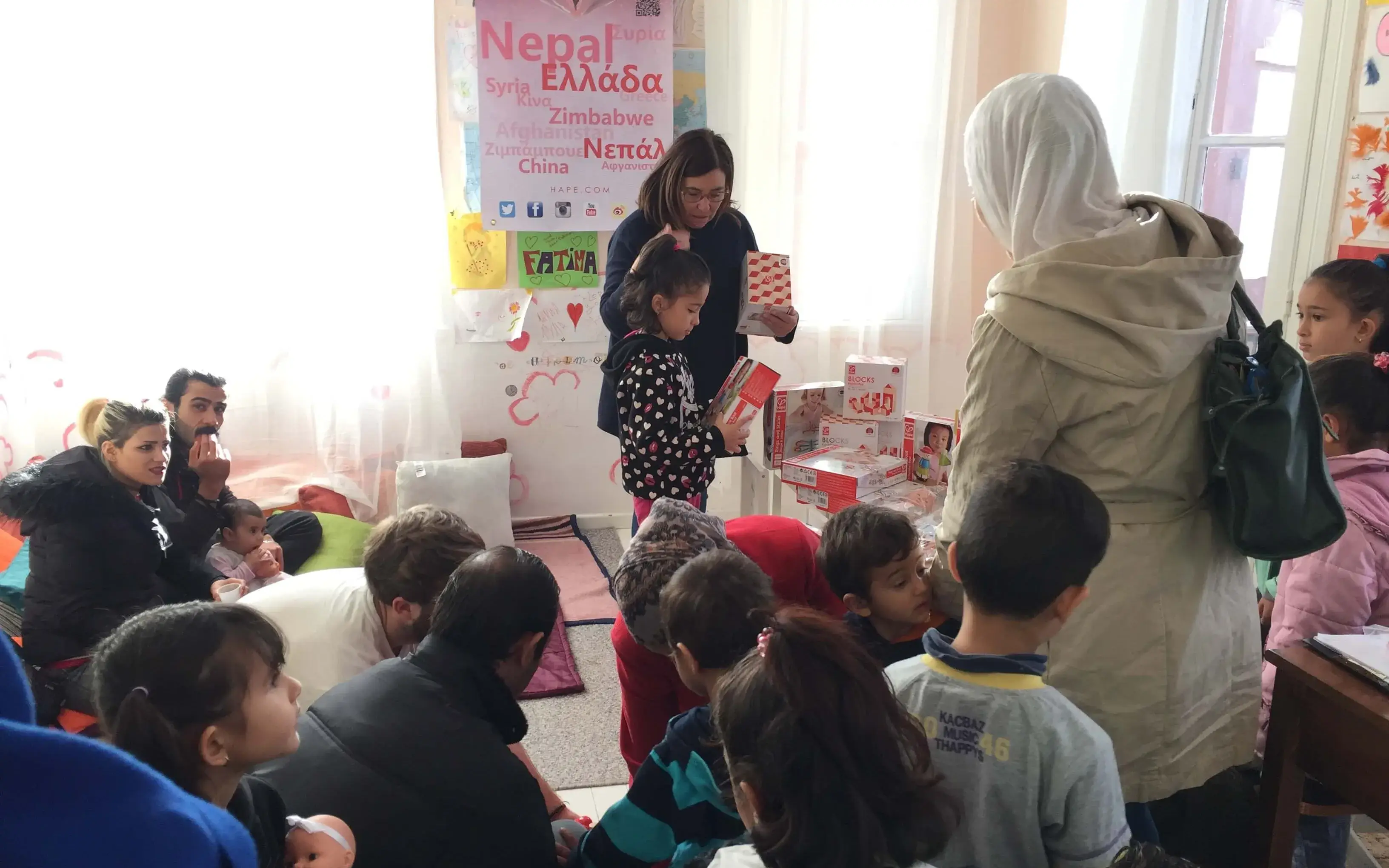
Dolls 4 Girls promotes an educational project that uses dolls dressed in professions and sports. Source: Dolls 4 Girls. Source: Dolls 4 Girls -
Image
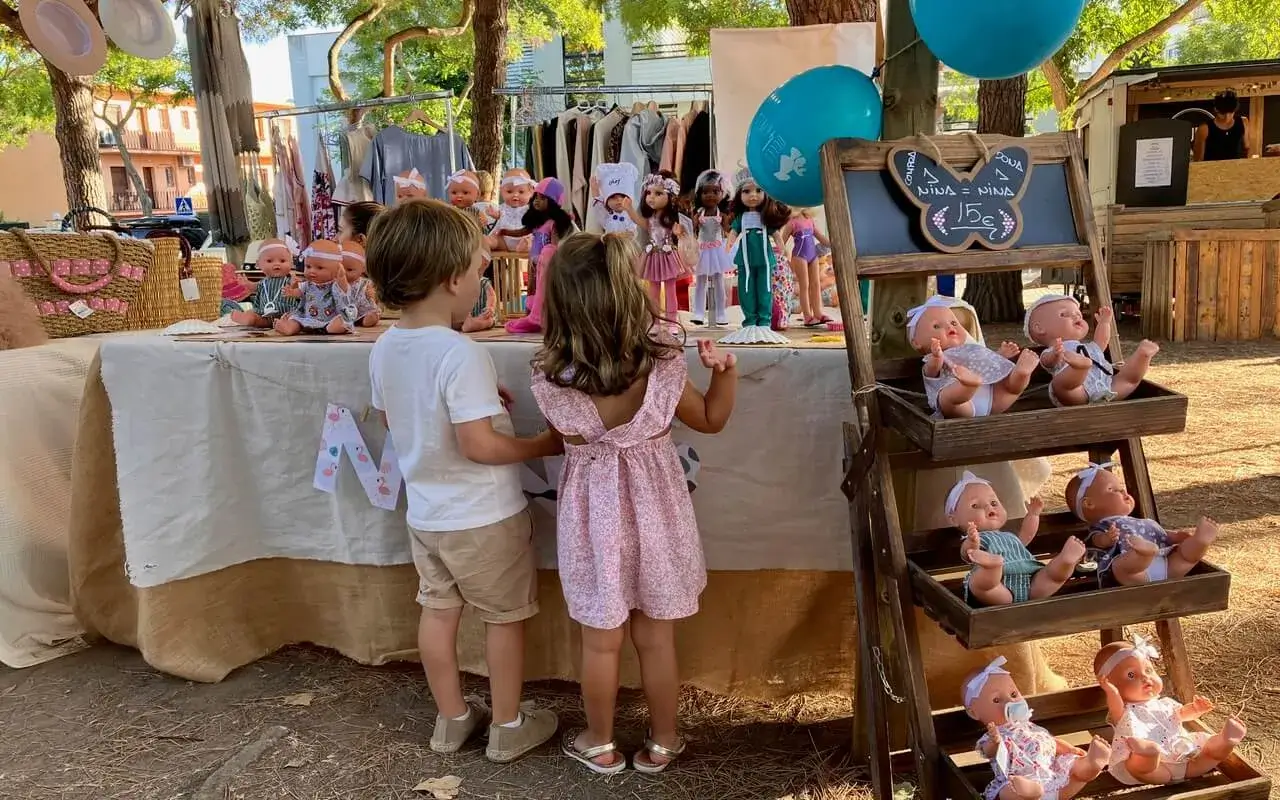
Dolls 4 Girls was born in 2016, following Pilar Olivares’ experience in refugee camps in Greece. Source: Dolls 4 Girls. Source: Dolls 4 Girls
Dolls 4 Girls promotes an educational project that uses dolls dressed in professions and sports to open conversations about equality, role models and the future with girls and boys.
Dolls 4 Girls was born in 2016, following Pilar Olivares’ experience in refugee camps in Greece, where she detected a lack of play among girls. What began as a collection of dolls has grown to lead the organisation to act in contexts such as Bangladesh, Ukraine, La Palma or the DANA.
Now, the association is preparing the rollout of the ‘Sin Miedo’ project, an educational workshop for schools that aims to work on equality and role models from childhood. We speak with Pilar Olivares, founder of Dolls 4 Girls.
You founded Dolls 4 Girls following your experience in refugee camps in Greece. What did you see that pushed you to create the organisation?
I had been living in Dubai for six years, where the news is very restricted. I knew there was a war, but I did not know the scale of the refugee crisis. When I came back, the image of Aylan appeared, that boy dead on the beach, and I began asking myself what was happening. Then I went to a refugee camp in Greece, at a time when that crisis was just beginning.
What did you find when you arrived at the camp?
There were some toys there, balls and cars, but there was not a single doll. The boys played with anything, even with a stick, and they had a great time. The girls, however, did not play. I set up Dolls 4 Girls from the Alexandria camp itself, through Facebook. I remember a girl of about three, the only one who had a doll in the whole camp, combing a Barbie’s hair with a plastic fork. Even now it feels as if I can still see her. That image was what made me decide that I had to do something more: bring dolls so the girls in the camps could play.
Why was play so important in that context? What can a doll mean for a girl living in a camp?
Play was a way of escaping. A doll, for a girl in a refugee camp, could be comfort, company, someone to hug. It was a way of letting out anger, but also of giving affection and having something of her own in the middle of all that chaos. It is much more than a toy. A ball helps distract you, you kick it and that is it. But the comfort a doll can give is something only a girl knows. And some boys too, because boys also play with dolls, although that is still not so clear to everyone.
Not everyone understood what you were doing...
Yes, I have been told all sorts of things. Since the organisation is called Dolls 4 Girls and it was very clear that we were going to help girls, I was even told that I was bringing sexism into the camps. I was told tremendous nonsense, just because I wanted to help girls. It is very hard to explain, because there is still a lot of resistance around dolls. I see fathers who pass by a stall with a boy and turn around when they see the dolls. It still happens. That is why I say I am fighting a titanic battle. It is girls’ empowerment, yes, because when you want to empower women, they already arrive with baggage. We have to start earlier, with girls, and give them tools so they grow up knowing they can be much more.
After that first experience in Greece, how did Dolls 4 Girls grow?
That became big. Between 2016 and 2019 we helped refugees in Greece, also on the islands, and we ended up sending many containers. I did not really know what I was doing, but it went very well. We are a very small NGO, but we have reached more than one hundred thousand beneficiaries. Then, when it seemed that everyone was going to Greece, I thought we had to go where no one was going. With the Rohingya, there had been the ethnic cleansing in Myanmar, and I decided to go directly to Bangladesh, to the Cox’s Bazar camp, to see what was happening. Since then, we have been in many places: Bangladesh, Ukraine, La Palma, the DANA... Wherever we saw that we could help.
In the middle of this journey, the organisation has evolved a lot: from baby dolls you have moved to dolls dressed in professions and sports.
Yes, in Bangladesh I came out of the bubble again. I always brought baby dolls, with the idea that girls could have a doll to play with and hold on to. But after a week of being there, they explained to me that, from the age of twelve, they stopped having access to education because it was considered that they had to be mothers and caregivers. Then I saw clearly that I could not continue bringing babies. I could not be reinforcing, even unintentionally, that those girls had no other future.
And what did you do from that moment on?
In 2019 we decided that the dolls had to be dressed in professions and sports, so that, subtly and without offending any culture, girls could see that they could be much more than mothers. That was the big change. Then Covid came and stopped everything, but the project has continued to grow. We continued helping in other emergencies, such as La Palma, Ukraine or the DANA, and, at the same time, the dolls dressed in professions have gradually evolved into an educational workshop that we want to carry out through schools.
So, how would you explain the work you do now?
After almost ten years distributing dolls, toys and helping girls and boys in different contexts, we have realised that people still think we only give dolls to girls. And it is not that, or not only that. Now we have a very powerful educational project, but it is hard for people to understand it. We continue to focus on girls because we have seen this gap many times. In refugee camps, when toys arrived, there were often cars and balls, but very few dolls. And that is where we began: trying to fill that lack so girls could also have a space for play, comfort and, now, also imagination about their future.
Some people might think that a doll is just a toy, but you say it is much more than that.
For us it is an educational tool. Dolls are a tool so girls can imagine their future. A doll dressed in a profession or a sport helps us open conversations that otherwise might not take place. When you enter a classroom with a ball, everyone plays. But when you enter with dolls, something else happens. That is the conversation we want to have and the one we have to normalise. It is not just about playing with a doll, but about asking ourselves what it represents, what a girl imagines when she holds it in her hands and why it is still so hard for us to accept that it can also be a tool to talk about the future, equality and role models.
Why is it important for the workshop to be mixed and for boys to take part too?
I want boys to be there so they can see that girls can also be much more. For me, it is as important for a girl to see that she can be whatever she wants as it is for a boy to assume it and normalise it. This is super important, and it is what I am trying to defend right now: that equality is not worked on only with girls, but also with boys.
Now you want to focus on the ‘Sin Miedo’ project. What does it consist of and what do you want to work on?
‘Sin Miedo’ is the educational workshop we want to bring to schools. We work with girls and boys aged five to eight, who are still very young, and we do it through a story with five dolls, each dressed in a different profession and linked to a female role model. Based on this story, the children play with the dolls and with a magical shoe that presents this idea: if you put it on, you can be, you can do. The dolls help us open a dialogue and ask questions that otherwise might not be asked. Even if it is only for one hour a year, it is worth it for the girls to ask themselves what they can be and for the boys also to see that the girls can be it.
Why did you give it this name?
It comes from Nina Simone. Once she was asked what being free meant to her, and she answered that being free meant having no fear. This is our project. That is why it is called ‘Sin Miedo’ and I do not want to change the name. The same thing happens to me with Dolls 4 Girls. I have been told that, if I changed the name to Dolls 4 All, maybe they would give us a grant. But I answer them: excuse me, but we work with girls. That is the focus and I do not want to lose it.
You have also incorporated female role models into the project.
Yes, and we have some extremely powerful role models. Georgia Sarquella, head of Paediatric Cardiology at Sant Joan de Déu, is our doctor. Alexia Putellas has agreed to be the footballer. We also have Yudania Gómez Heredia, the orchestra conductor of the album Lux, by Rosalía. I wanted an orchestra conductor because a baton is very visual and very easy for a young girl to understand.
What other profiles have you added?
We also have Marta Senso, commander and pilot, and Laura García, who is a police spokesperson. We are still finishing closing other profiles, such as the lawyer or the judge, but we have a very good team of role models and mentors. And I have to be very grateful for that, because nobody gets paid here. Everything that comes in goes to the girls or to the dolls. That leaves us with almost no money, but it is the way we do it.
You came from the world of interior design. Why have you devoted yourself fully to Dolls 4 Girls?
I am an interior designer and I have worked in interior design for thirty-eight years. Everything had gone well for me and I have been lucky enough to live through the best years of the sector, which I believe will not come back. But it seemed to me that this project was much more important. For two years I have been dedicated to it one hundred per cent, because it is worth it and because it is necessary. That said, it is very hard. We are going along with balloons and we do not quite fit into the calls for funding, because they are always for one thing, for one country or for another. But here we are.
Where does the implementation of the workshops stand now?
Right now we have to do a rebranding, because no matter how much I explain that we are focused on an educational workshop, many people still think that we only bring dolls. And I am not saying we do not do that, because if I see an emergency and we can help, we do. But it is no longer the core of the project. The leitmotiv now is to get these workshops done. In fact, one has already been started in Mexico, in Mexicali, thanks to the Escolapios, who took care of everything. I am fighting for it to be possible in Catalonia, but they will still start earlier in Madrid, because they are also asking us for it.
You also have a presence in Colombia.
Yes, we have signed an agreement in Colombia, with the Wayuu girls of La Guajira, and I am very excited about it. We have not been able to get there yet because we do not have money. We tried to get Iberia to make the trip easier for us, but we did not manage it. We will get there when we can. I cannot put in any more money. Right now, the project is ready, but we need the funding to take this first step on the ground.
How can people collaborate with Dolls 4 Girls?
People can help by buying dolls, for example, but we still have to develop that part better. We do not have a membership base, and it is hard for me to take that step because in these ten years I have seen things in the world of foundations and NGOs that have made me very cautious when it comes to collecting money. When we have been in a very tight spot, we have done some crowdfunding, but it is not something we do regularly.
And what kind of support would be especially useful to you right now?
Right now, companies that could sponsor the dolls would help us a lot, for example the aviator doll or the police officer. Companies looking for meaningful corporate social responsibility could give us a very important hand. And it also helps us a lot to be given a voice, to be known. After ten years, it is still hard to explain everything we do. In fact, after the summer we want to hold a charity event to celebrate these ten years, which have been titanic and fantastic.
What would you say is the main challenge for Dolls 4 Girls right now?
The main challenge is to be able to carry out the workshops and prove that they work. Everyone tells us that the project is very nice and that the idea is very good, but we have to move from that to making it a reality. We have to go on the ground, put it into practice and prove that it can add to the things that already work. Right now, what interests us most is starting these workshops and seeing that they make sense. We want the girls to see themselves as capable and for the boys to see them that way too. For me, that is as important as everything else.


Opinion
Related content



Add new comment