After winning the 2025 European Social Economy Award in the Housing category, the Catalan cooperative Sostre Cívic continues to demonstrate that social, sustainable, and democratic housing models are not only viable but scalable.
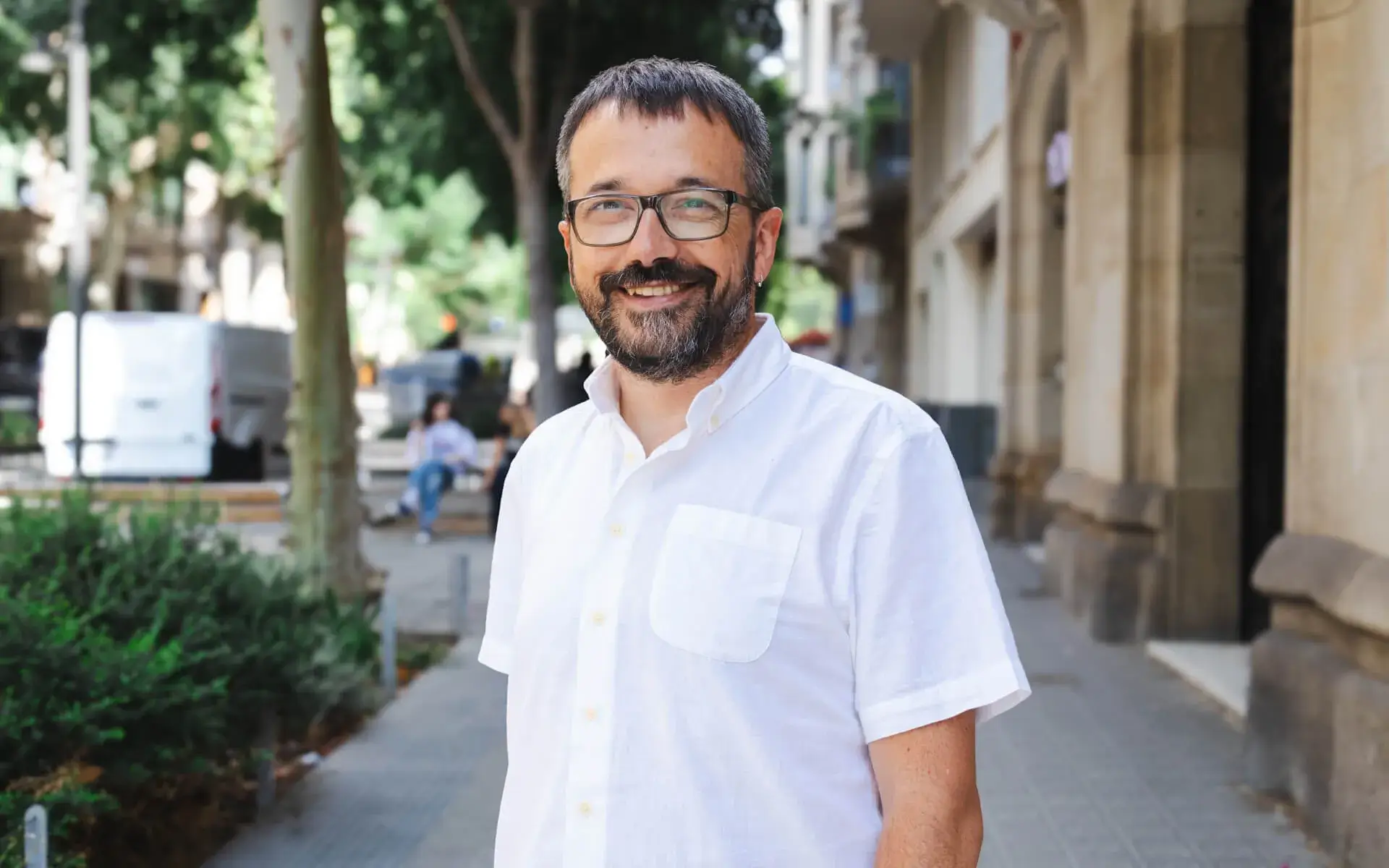
In this interview, David Guàrdia, co-director of Sostre Cívic, explains how the cooperative is reshaping access to housing in Catalonia while promoting environmental responsibility, social justice, and community resilience.
You’ve just received the 2025 European Social Economy Award in the Housing category. What do you think made your project stand out among more than 100 European initiatives?
The jury valued our real impact in Catalonia: we offer stable, affordable housing based on sustainability criteria, protected from speculation, and managed democratically. We’ve shown that this model works at scale and is replicable.
For those who may not know you yet, could you explain what Sostre Cívic is and what housing model you promote?
We are a non-profit cooperative with more than 2,200 members, managing over 550 homes across 14 active projects and 11 more under development. We promote the cooperative housing model under a “right-of-use” scheme, which is similar to renting but with a cooperative and long-term structure. Ownership is collective — it belongs to the cooperative.
The cooperative pools resources to train members, support groups, identify real estate opportunities, manage construction, and later oversee the building’s use and maintenance. All of this happens alongside the members, who play a central role, as the cooperative is governed democratically.
Your model is based on the right-of-use system. What advantages does it offer compared to traditional renting or home ownership?
It offers indefinite stability, affordable payments, and democratic participation. Unlike market rent, there’s no risk of rent increases or eviction. Unlike ownership, there’s no personal debt or speculation on property.
A key part of your work is preventing speculation. How do you ensure housing remains protected from that risk?
Ownership lies with the cooperative collectively, not with individuals. The cooperative has broad governance that safeguards the public interest: resident members, prospective members, worker members, and collaborating organizations that also support cooperative housing.
Additionally, the legal framework strengthens the social purpose of the housing. Altogether, this prevents the sale of assets and ensures that homes remain permanently within the social and solidarity economy.
The award jury highlighted your commitment to ecological housing. What concrete measures do you incorporate to reduce environmental impact?
We prioritize low-carbon materials (several of our buildings use timber structures), centralized systems for heating and hot water powered by renewable energy, and highly efficient designs that consume about 55% less energy than conventional homes.
We also implement water-saving systems and encourage shared spaces and services to reduce consumption and emissions. Furthermore, we focus not only on new builds but also on rehabilitating existing buildings.
What role can cooperative housing play in addressing the climate emergency?
It’s a key tool — it combines environmental and social sustainability. It supports the energy transition while building community and resilience. The model not only reduces emissions and waste but also fosters conscious, collective responses to climate challenges.
Right-of-use cooperative housing is a double lever: environmental and social. It reduces ecological impact through energy-efficient buildings, sustainable materials, renewable energy, and renovation instead of new sprawl, while promoting shared resources that reduce overall consumption.
Do you think this model can be scaled across Europe? What main obstacles must be overcome?
It’s viable — there are already examples in several countries. In fact, we draw inspiration from experiences in Switzerland, Denmark, and Vienna (Austria).
The main barriers are financing and land availability, which require active public policies. Ultimately, housing policy is a state competency that has long been delegated to the market. In countries where the cooperative model has flourished, it’s because governments have protected the right to housing through comprehensive, well-funded, and long-term policies.
Are you working on new projects or international partnerships following this recognition?
Yes. Recently, the Statewide Network for Cooperative Housing, which we help lead, joined Housing Europe. This allows us to participate in European projects and help shape EU housing policy.
We also received the largest European funding ever granted to a cooperative: €31 million from the Council of Europe Development Bank, which will enable us to create more than 350 cooperative homes in two to three years on public land. Our goal is to further expand European funding to make projects more affordable and sustainable.
What would you ask from public administrations to strengthen cooperative housing in public policy?
In general: public administrations must protect the right to housing outside the market and without profit motives, rather than treating us as just another private actor.
Non-profit entities should be prioritized over private operators in publicly supported housing projects. To achieve this, we need a paradigm shift — to recognize housing as a right, not a commodity — and to increase support for the social economy through financing, access to land, fair taxation, and recognition as key partners in housing policy. Only then can cooperativism become a structural tool alongside public policy to guarantee the right to housing.
How do you assess Sostre Cívic’s and other Catalan organizations’ inclusion in Housing Europe? What does it mean to be recognized as European-level stakeholders?
It’s a strategic step that consolidates Catalan cooperative housing as a European benchmark. Being a full member of Housing Europe gives us a voice in major EU debates on housing and the social economy. It allows us to share our experience and values as a fair and sustainable alternative to speculation.
Ultimately, it strengthens our political influence and positions us on the European map as essential actors in tackling housing and climate challenges through community-based, transformative solutions.





Add new comment