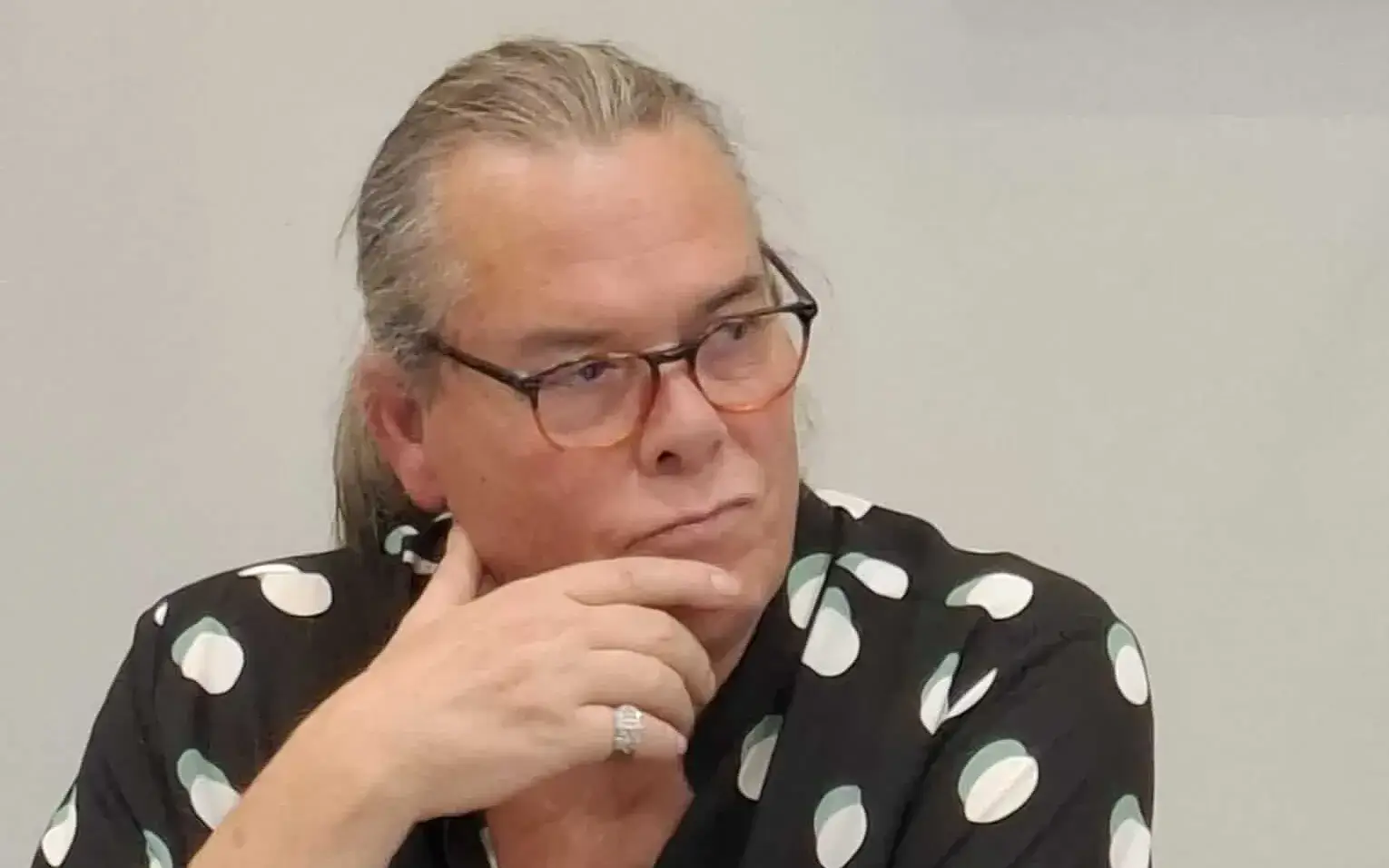
Vincent van Grondelle: "Without taking mental health into account, there can be no real social justice"

Social justice not only involves equal opportunities, but also ensuring the emotional well-being of all people. Vincent van Grondelle, founder and general coordinator of Iguality, leads an initiative that puts mental health at the center of social equity, offering free and inclusive psychological support to the most vulnerable communities.
With a background as a social worker and experience in the private sector and non-profit organizations, Vincent van Grondelle leads Iguality with the conviction that social justice and mental health are inseparably linked .
The organization works to ensure that refugees, migrants, LGBTQ+ people and survivors of violence have access to therapy and community activities that promote integration, social cohesion and overcoming structural barriers that prevent full participation in society. Its work combines direct care, awareness-raising and promotion of inclusion , demonstrating that a just society is only possible when mental well-being is a shared priority.
How do you define the relationship between mental health and social justice within the mission of Eguality?
It is an essential relationship: without mental health in mind, there can be no real social justice. A just society must care for mental well-being, eliminate stigma, and provide accessible care to those who need it. Without these pillars, including a mental health system as robust as our physical health system, social justice remains an unattainable ideal.
What are the main structural barriers you detect in access to mental health for the communities you work with?
We offer free , inclusive and accessible psychological care to anyone at risk of social exclusion: refugees and migrants, LGBTQ+ people, survivors of gender or domestic violence, and any other person in a situation of vulnerability. We founded Iguality because, working directly with these communities, we saw that even if opportunities such as education or employment are offered, without adequate psychological support, it is very difficult to take advantage of them.
Unfortunately, in Catalonia and the rest of Spain, as in many places in the world, mental health systems are underfunded. While CatSalut works well if you break a leg, in mental crises there are often not enough resources, specialists or timely care. Those who can afford private therapy have options; those who cannot, are left helpless . We try to fill this gap.
How do you decide which groups to prioritize and how do you adapt services to their specific needs?
We have general criteria: not being able to afford private therapy and having time for regular sessions (individual or group). But we also review each case individually: we assess the urgency, whether we can offer the type of support needed (we do not offer day or residential care), and whether there are no other alternatives.
We tailor our services by ensuring that our therapists are trained in diversity and inclusion. We also match patients with therapists based on preferences: language, gender, culture—for example, matching someone from Latin America with a therapist from that same background—because trust and cultural understanding are fundamental to healing.
How do you measure the social impact of your work beyond the number of people served?
We conduct surveys after each activity : individual therapy, groups, sports and community events. They include numerical ratings on a scale of 1 to 10 and open-ended questions to improve or recognize what we do well. At our annual general meetings, open to members and the entire community, we also organize feedback sessions. All this data is compiled into impact reports with live metrics for our three programs, available on our website.
What role do community and sports activities play in reducing social exclusion?
So far I have mainly talked about therapy, but our sports and community activities are just as essential. For us, sport unites physical and mental health and also breaks down social barriers. Unlike therapy, our sports activities such as football, running and hiking are open to everyone, including the general public. So a Catalan, a migrant from outside Europe and a European migrant can meet, share and build cultural bridges.
Have you detected changes in public policies or social perception thanks to your awareness-raising work?
As a relatively small organization, we haven’t yet influenced national policies. But we have in the communities we work with. Both beneficiaries and volunteers have seen changes. Through events, social media, our ambassador program, and outreach, we have opened the dialogue about mental health. Our surveys show that more people now understand its importance and feel more comfortable talking about it .
How do you balance individual attention (therapy) with the desire to generate structural change?
Our main focus is direct care : we are a field organization. Our three programs of psychosocial support, sport and social belonging, and awareness and advocacy are ordered by priority. That is why we emphasize therapy. But we see them as interconnected: without advocating for structural change, our field work would have less impact; and without field work, our advocacy would lack a real basis. Both are reinforced.
What financial or institutional challenges do you encounter when offering free and sustainable services over time?
Like any NGO, especially in these complex global times, obtaining sufficient and sustainable funding is our biggest challenge. Our strength is our community of volunteers, which allows us to offer free psychological care with a relatively small budget. But we need funds to pay for our coordination team, insurance, spaces and materials. We have received valuable support from entities such as the Barcelona City Council and the Barcelona Provincial Council , but to expand our impact - by training more volunteers and reaching more people - we will need to increase our fundraising capacity in the coming years.
How do you work on the intercultural and diversity perspective within the professional team?
It is a fundamental aspect. We seek diversity at all levels : leadership, coordination and volunteering. Our board of directors includes people from both Catalonia and abroad, with representation from the LGBTQ+ community. Our coordination team is also diverse, to better understand the needs of the communities we serve. But we are not perfect. That is why our community of volunteers, with their multiple origins, completes the picture and helps us offer truly inclusive and multicultural care.
If you had to describe the main social change you would like to see in ten years in the field of mental health, what would it be?
That mental health has the same priority as physical health . That a person with depression receives the same resources and attention as someone with a fracture. And, at the same time, that we break the stigmas : talking about our emotions, about our mental struggles should be as normal as talking about the last Barça match.




Add new comment