
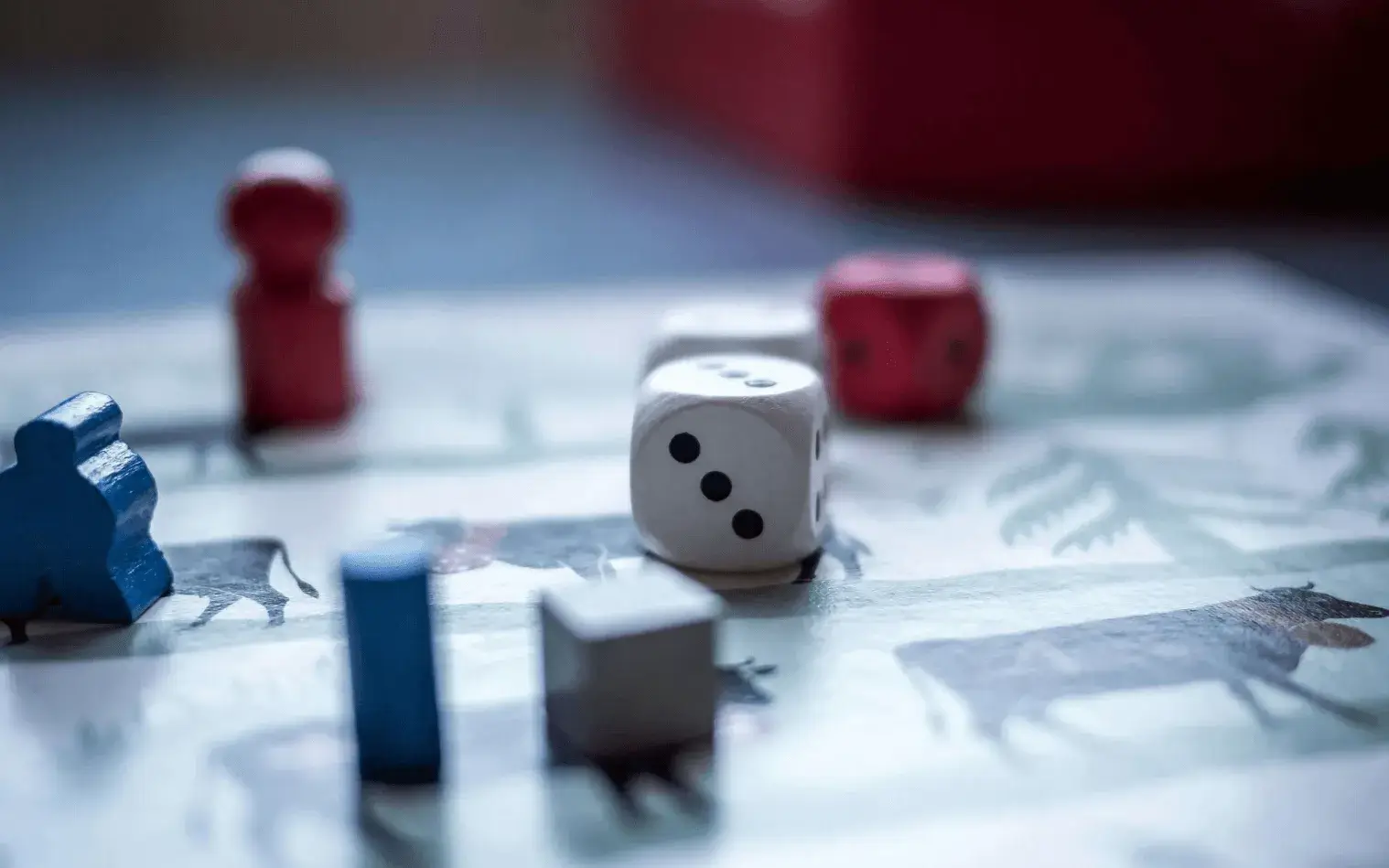
Through play, reflections on current issues can be put on the table. These are four ideal proposals for doing so.
The game , beyond being a playful practice , is also a space for reflection . Playing is one of the most essential habits of people, and, as such, opens the doors to dialogue and creative and critical thinking. Specifically, board games can promote these openings in the direction of social and current themes , which revolve around problems of global scope.
This resource includes some board games that can be played with groups of teenagers and young people to encourage joint reflection on the dynamics of today's world and the transformations that could be carried out in it.
The Quite Year
'The Quite Year', 'The Silent Year', is a cartographic and role-playing game in which the group plays together to build a community after the collapse of society . All the decisions that are made take place in a framework of increasing tension and against the clock. It is played with 52 cards that correspond, each, to a week of the symbolic year in which the game takes place, and that set in motion various events, misfortunes or changes that will turn the group's circumstances around.
It is a game for groups of two to four people , and has an average duration of three or four hours. It was designed and created by Avery Alder, and can be purchased in physical or PDF form on his website .
'The Quite Year' features a reimagining, ' The Deep Forest', which focuses on decolonization , and where the group is a community of monsters that must heal and rediscover themselves after expelling the humans who occupied their lands. It can be purchased for free in PDF .
Blog by Blog
In Catalan, 'Bloc per bloc', is a semi-cooperative board game that focuses on 21st century protest movements . Each person represents a revolutionary faction (workers, students, neighborhood and prison), who fight against the state on the streets of the city. They can build barricades, occupy districts, get resources in shopping malls... Whatever it takes to liberate the city before the army arrives.
Over 10 rounds, players will put their agendas into play , and use strategy to put their skills, distributed asymmetrically, at their service. The mechanics are built in rounds that represent a night divided into two phases in which each player takes between three and five actions, which are in turn answered by the police . The ultimate goal is secret to each faction, to fulfill a secret agenda, and although some will have to cooperate, there are those who will truly be against the insurrection.
Co-opoly
Monopoly is a game about the capitalist socioeconomic system , but in general its critical vision has been lost. That is why Coopoly can be a good alternative, as it puts the same issues on the table, but from a perspective where the people who play it make effective cooperative choices , with a more positive tendency.
In Coopoly, everyone wins or everyone loses. The people who participate must create a cooperative together to compete against the bank , acquiring along the way useful knowledge for real cooperativism. You can purchase Coopoly on this website .
Daybreak
This game called 'Daybreak', 'Alba' in Catalan, is a complex strategy game in which players promote technologies or policies to reduce pollution , to the point that reducing emissions to zero is the only way to win, while defeat can come in various ways, from a critical increase in temperature to the emergence of multiple climate crises.
The logic is cooperative, and each participant represents a global power to build resilient societies. It is made up of cards that hide a wide variety of realities, from cities to methane removal. It is a very realistic game , which deals with issues of raging current events, such as heat waves or misinformation around fossil fuels.
Catan. New Energies
The classic strategy game has released an edition dedicated to climate change. 'Catan. New Energies', 'Catan. New Energies', maintains the same premise as the original , whoever expands the most wins, but in this edition the people who play it will have to build energy plants , which can be both fossil fuels and renewables . The former are cheaper and allow for faster expansion, but the pollution they emit affects societies throughout the game.
As in any Catan, in 'New Energies' the first person to reach 10 points wins , whether with one type of plant or another, but if all people collectively build too many fossil fuel plants, and pollution increases too much , the game ends, and at this point the person who has done the most for clean energy wins.





Add new comment