
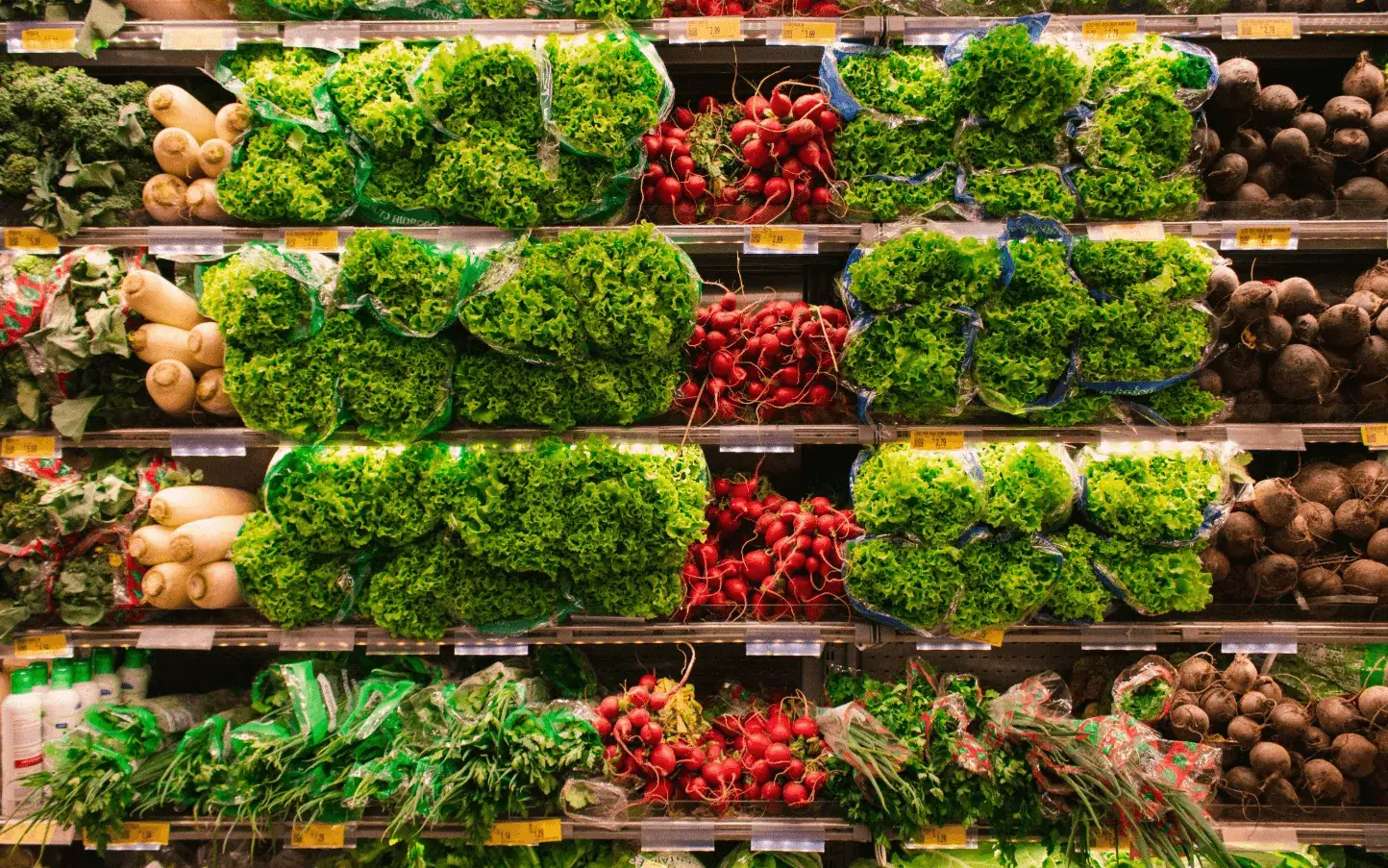
These are community initiatives that aim to prevent food waste while raising awareness about sustainability and food sovereignty.
Food waste is responsible for 8% of the world's CO2 emissions , and represents a water footprint of 250m3 of water, and all this annually. In addition, letting food go to waste also affects the economies of families and homes. However, what may be surplus for some people can be of great service to others. And, if they are close, the solution is very simple: share food so that nothing goes to waste.
This dynamic has existed all our lives, of course, but the speed and alignment of today's society have marginalized this practice. With the aim of recovering it, food recycling networks are emerging , community initiatives that seek to guarantee the recycling of food in neighborhoods and towns, in collaboration with their local businesses, in order to improve their sustainability and empower the population.
This resource, developed based on the ' Guide to creating a community food use network ', includes the keys to promoting this collective initiative.
What are they?
The utilization networks are a self-organized community action in a delimited space (a population, a collective or group, a neighborhood, a building...) which, like any action of this kind, aims to respond to needs for improved quality of life, inclusion and cohesion . In this case, the focus is on food sovereignty , with a view to collective sustenance, sustainability and awareness-raising.
The utilization network consists of creating alliances with businesses, farmers and food distributors , which can donate food that is about to expire or be wasted. Thus, the network is made up of people, entities and facilities willing to collect food, and to have contact with local businesses. From there, you just need to organize yourself to decide on the forms of utilization and exchange.
Find participants and equipment
Any person, facility or entity can be part of a food recovery network. They just need to be interested in food and sustainability. To find interested people, you can go to public facilities such as community centers, civic centers, neighborhood associations or libraries. Not only can you recruit people there , but it is likely that these spaces have facilities for holding meetings.
In fact, the first step is to establish alliances in order to see the scope and possibilities of the network. It is recommended to contact facilities, businesses and entities in the neighborhood and explain the project to them. This will define what infrastructures the project has: refrigerators, kitchen, warehouse, vehicles, meeting spaces... From here, the idiosyncrasies of the initiative will have been defined.
Planning
Once the people who want to participate in starting the network have been gathered, it is time to plan its operation.
The form the network can take can be debated according to the possibilities offered by the alliances. The three most popular models are: a platform of entities (if there is a majority participation of already established entities), an entity of its own (if it is a rather extended and/or organized group of people) or an informal neighborhood network (if the group is smaller or of closer people). The advantage of the first two is that they allow access to subsidies and resources, but they may be more of a nuisance than a service for a smaller group.
Once the model has been decided, you can start creating the other side of the network, contacting businesses or food distributors , explaining the project to them, and establishing a communication channel and collection system. It is advisable to prioritize small neighborhood businesses , since they are the ones who are most aware of what it means to throw away food. It is also advisable to contact people dedicated to farming, if there are any near the neighborhood or town where the network is being set up.
Afterwards, it is interesting to collect the conclusions in a document, and keep a record of the participants , the businesses aligned with the network and the facilities that offer support.
Organization and committees
The foundation of any collective initiative is horizontality, so everyone needs to be part of the decisions that are made. Before starting the network, it will be necessary to establish regular meetings to define it, but it can also be interesting to maintain them once the initiative has been launched, since it will be necessary to decide on issues as they arise, such as new additions to the network (businesses or people) or ways of using the food.
It is also interesting to create committees , or define people responsible for certain parts of the initiative: collection, distribution, communication, cooking, monitoring...
Gleaning: gathering food
Traditionally, “to glean” meant collecting ears of corn or remnants of the cereal harvest. Today, however, this term has been extended to define, precisely, the act of collecting food that is about to be wasted .
For network planning, it will be necessary to establish a fixed day for the gleaning , which will be communicated to the businesses. Depending on the number of people participating, more than one day can be established, or a rotation system can be established , so that not everyone gleans every time.
To define what type of food is collected, the equipment available to the network must be taken into account . With a basic infrastructure , dry foods, plant-based foods and bread can be used, as they are kept at room temperature. If you have a refrigerator and freezer , you can expand the options. From here, any food that can be delivered is suitable: in general, products are usually discarded for visual reasons or because they are renewed daily to maintain their freshness (as is the case with bread).
Destination of food
The collected food can be distributed, consumed or cooked . This depends on the equipment available in the network. It also depends on the quantity and type of food, since some will have to be distributed immediately, but others can be reserved for a group meal , or the menu can even be decided on the same day of the gleaning, opting for versatile and simple dishes. In this sense, it is also advisable to take advantage of neighborhood or town festivals, which will make it easier to establish synergies and expand the reach to other people who are not directly part of the network but who can contribute on a timely basis.
The latter can be a very good time to spread the word about the network, encouraging more people to join and raising awareness among the population.
Diffusion
It is recommended that the dissemination of the initiative be continued , through spaces that are related to sustainability and conscious eating , as well as, obviously, social networks , the latter without forgetting analog communication, through posters (very effective in small towns or neighborhoods).
It is also interesting to prepare regular meetings in schools, libraries, civic centers and other public spaces. However, the objective is to seek new incorporations and synergies .
Hygiene measures
Of course, to run a food recycling network, it is necessary to comply with hygiene and safety measures . First, a source of drinking water must be available , as well as gloves, aprons and caps or hats. In addition, the people who will have to handle these foods must be trained. In addition to all this, prepared foods must be separated from raw foods, and care must be taken never to leave them at room temperature for more than two hours.
Indicators
It is recommended that during the operation of the network, the social and environmental indicators of all the actions carried out are recorded . This will not only serve to monitor the effectiveness of the initiative, but also to disseminate it , call for participation and take the opportunity to raise awareness about the problem that the network is trying to alleviate.
The types of indicators that can be collected are: number of people who participate as volunteers, number of entities involved, number of stores involved, volume of people informed, number of diners, number of portions cooked, kilograms of food collected and used and equivalent CO2 saved, way of using the food...
It is advisable that one person be responsible for collecting these indicators.





Add new comment