

Although much of the responsibility lies in the field of production, consumers can help limit the impact of textile waste by acquiring reuse habits.
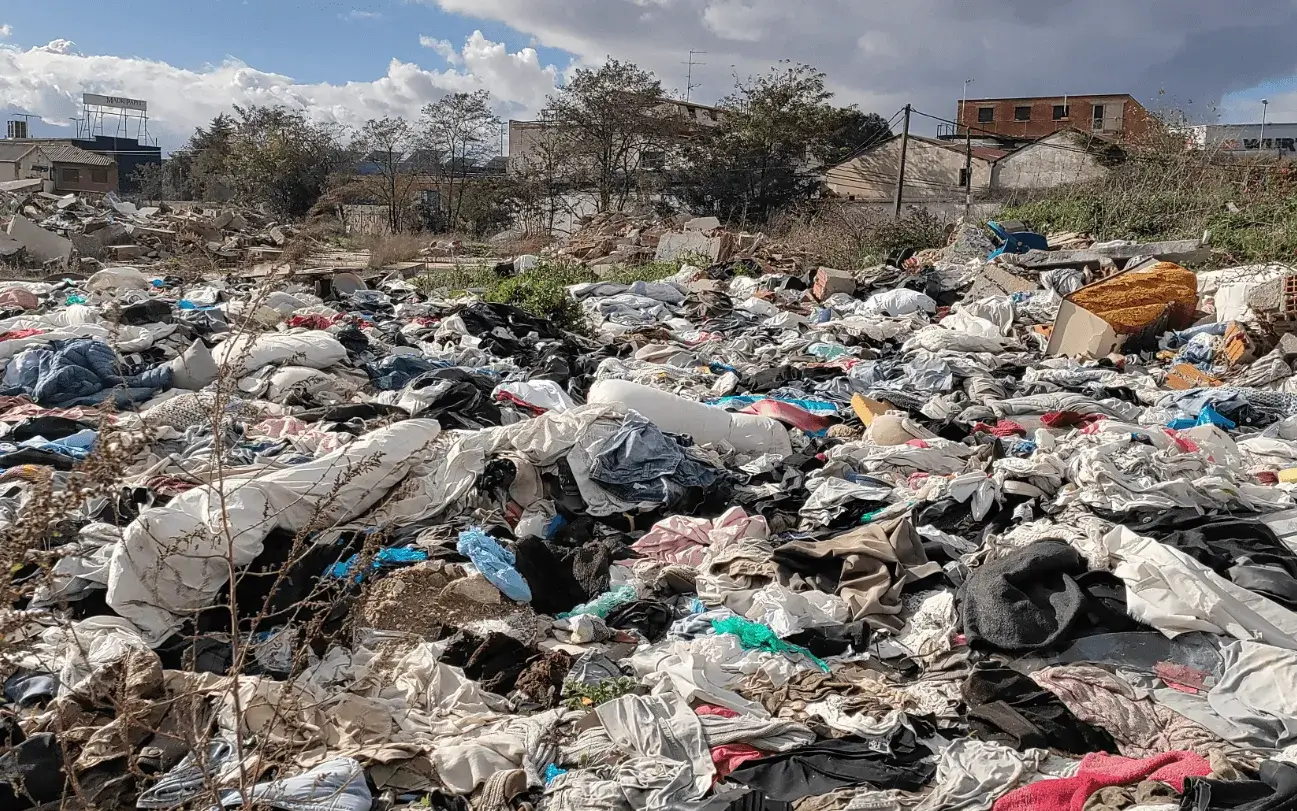
The most direct consequence of fast fashion is the ease with which clothing that comes from consumerism is discarded and the place where its journey usually ends or where the surpluses are derived. In the global south, several regions, such as the Atacama Desert in Chile , have already become real dumping grounds for textile waste . Faced with this situation, there are many entities that work in the field of sustainability that, although a large part of the responsibility lies with production, acquiring reuse habits can help alleviate this huge impact.
This resource offers some alternatives to getting rid of clothes , focused on reusing them or donating them so that someone else can benefit from them. The article ' How to reuse old clothes ' by the Opcions entity was used to create this content.
Change its use
Old clothes can easily be repurposed into other items using very simple sewing techniques . Here are some ideas:
- Cut up shirts and sew them into creative pillowcases
- Transform a sock into a puppet
- Cut a shirt or t-shirt sleeve and sew it to make a bread bag
Sew the bottom of a tank top to turn it into a tote bag
All of them are very entertaining activities , as well as easy, that will give clothes a second life, and are a very good option to spend the afternoon with the kids.
Tie dye
With hot water, dyes and plastic rubber bands, you can dye T-shirts and other pieces of clothing with intricate patterns and different shapes, in a process that is not only easy but also fun, as it allows you to experiment and play with surprise . If this is also done with natural dyes such as turmeric, beetroot, coffee beans, black tea, spinach leaves, onion skins or Lombard cabbage, the activity will be more sustainable, and even more so if it involves kitchen scraps.
You can also try making drawings on clothes with bleach , using a cotton swab.
Decorative elements
With a little creativity, any piece of old clothing can be turned into a decorative item . Banners, flowers, garlands or blankets and bedspreads are just some of the decorative objects for the home that can be made by sewing and unsewing old clothing.
They can be used all year round or for specific occasions, such as Christmas, Midsummer or a birthday party.
Fix the pieces
An obvious alternative, but one that as a society we tend to forget about due to the cheapening of fast fashion and the disappearance of workshops, is to repair clothes. Often, a piece of clothing can continue to be used, but has some small damage , and with a little knowledge it can be easily fixed and continued to be used.
There are, therefore, many organizations that offer sewing workshops , such as the Espai de costura lliure or the Catalan Sewing Association , as well as community sewing spaces .
If not, the other option that remains is always to take the clothes somewhere to have them repaired. Although there are few of them, there are some workshops and shops or haberdasheries where they make various repairs, such as haberdasheries.
To clean
Even those older garments can have a last life. Cotton or linen clothes can be reused to turn them into cleaning supplies , a more sustainable and cheaper alternative to buying new synthetic fiber cloths.
To obtain cloths to remove dust and clean glass, simply cut a piece made of the aforementioned materials into a square or rectangular shape . It is recommended to cut several sizes, so that they can be used for different furniture and surfaces.
'Upcycling' or putting pieces together
The life cycle of the clothes we buy today is designed to end quickly. However, there is a way to overcome this situation through the practice called ' upcycling ', which means reusing old clothes and scraps to create new and unique pieces . Exactly the same thing that has been done all our lives: sewing patches on torn jeans, putting together t-shirts to make an apron, turning a shirt into a skirt...
It is an option that not only allows you to break out of the constant cycle of consumption and save money and clothes, but also allows you to be directly involved in the process of making the clothes you wear and create clothes that no one else in the world will have.
Buy and sell
Finally, another action that allows you to leave aside the consumerist dynamics of fast clothes, and still acquire new pieces from time to time, is to buy second-hand . This clothing is not only much cheaper, but it also allows you to dress with a unique and personal style, and turn shopping into a real archaeology session .
There are many organizations dedicated to trading in second-hand clothes, such as Solidança , Roba Amiga , Humana or Engrunes , and all of them respond not only to ideals of sustainability , but also to a growing trend in Europe of buying used clothes and giving them a second life. You can also try your luck at periodic second-hand markets , such as Fleadonia, Flea, Two Market and Lost&Found.
These pieces can also be purchased through online applications and websites such as Wallapop, Vinted, Vestiaire Collective or Micolet. All of them allow not only buying but also selling pieces , promoting the circular economy.




Add new comment