In a humanitarian emergency, it is necessary to listen to communities, respect their dignity and trust the organisations that know the territory and work on the ground.
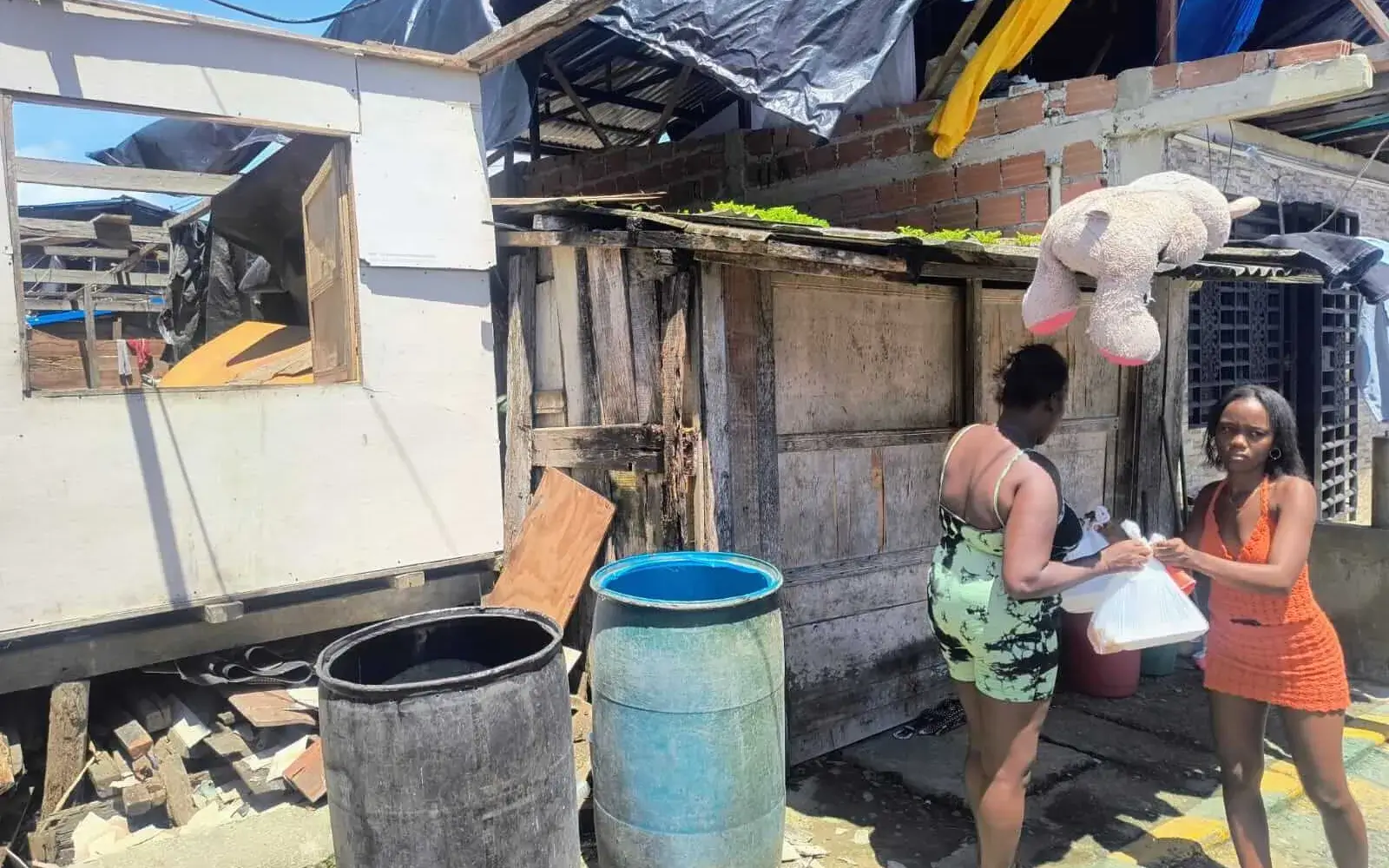
The earthquake that affected Colombia on 10 August has left more than 300 people dead, thousands injured and more than 120,000 families affected across a wide area. The earthquake affected major cities such as Cali and Pereira, but also regions of the Colombian Pacific, such as Chocó and Buenaventura, which are especially vulnerable.
In Buenaventura, one of the most affected cities, more than 10,000 homes have been damaged, nearly one thousand of which have been destroyed. (Sources: UNGRD, territorial administrations and the District Mayor’s Office of Buenaventura)
In recent days, social media has been filled with fundraising campaigns and collection points for clothes, food or medicines. This mobilisation demonstrates the enormous solidarity of the public, but it also forces us to ask ourselves a question: is all aid really useful?
Listen before deciding
In an emergency, a rapid response is necessary, but it is also necessary to listen to the people affected, properly coordinate actions and guarantee a response adapted to their real needs.
Communities must be able to participate in decisions about what they need and what their priorities are. We cannot decide for them from thousands of kilometres away.
Solidarity cannot simply consist of sending what we have left over or what we consider necessary. When we decide for others without listening to them, we run the risk of reproducing a paternalistic and colonialist perspective, deciding ourselves what is best for them without respecting their needs.
The Colombian Pacific already existed before the earthquake
In recent days, many people have suddenly discovered the Colombian Pacific. But Buenaventura, Chocó and many other communities in the region were already suffering, long before the earthquake, from structural poverty, precarious housing, violence, lack of opportunities and serious difficulties in accessing basic services.
A reality also marked by structural racism, territorial inequalities and historical institutional abandonment that has particularly affected Afro-Colombian and Indigenous communities in the Pacific.
The families who appear in videos today did not begin to suffer on the day of the earthquake. The earthquake did not create vulnerability: it aggravated it and made more visible a reality that was already profoundly unjust.
Helping well also means knowing how and where to donate
When an emergency occurs, the desire to help often translates into collections of clothes, food, medicines and other products. It is an understandable and supportive response, but if these collections do not arise from a specific request from the territory, they may end up accumulating products that do not respond to real needs.
Added to this are the high costs of international transport, customs procedures that may delay or even block shipments, and the environmental impact, especially when transport is carried out by air.
The massive arrival of free products from abroad can also harm small local businesses and traders. With the same resources, it is often possible to purchase more products within the territory itself, get them there more quickly and contribute to reactivating the economy. Buying locally is also a way of helping.
And then, who will distribute all this material? Delivering aid does not simply consist of transporting it. It is necessary to identify the people and communities affected, establish priorities and guarantee that the aid reaches those who need it most.
This does not mean that international shipments are never appropriate. When there is a specific and justified demand, they may be necessary.
The same responsibility is necessary in the face of the proliferation of fundraising and product collection campaigns that appear after a disaster. Good intentions do not guarantee that all of them are reliable or that the resources will actually reach the people affected. Being supportive also means finding out before donating, checking who is behind the campaign, what track record they have, how they will manage the resources and whether there is transparency regarding their destination.
For this reason, whenever possible, financial contributions to reliable organisations with experience and a presence on the ground make it possible to adapt aid to needs that may change rapidly and help ensure that resources reach where they are really needed.
Solidarity is also responsibility: it is not only important to donate, but to know how, where and to whom we donate.
Poverty cannot become a spectacle
We cannot overlook another fundamental issue: dignity.
The people affected do not need their pain to be used to gain clicks, followers, donations, political gain or visibility.
In recent days, we have seen public figures visiting the scenes of the tragedy, taking photographs and recording videos. When we show a person who has lost everything without respect or consent, we run the risk of turning their suffering into content, instead of recognising them as a person with a voice, rights, decision-making capacity and a story of their own.
Social media can be an extraordinary tool for mobilising resources and giving visibility to territories that have historically been forgotten. But a humanitarian emergency cannot become a competition to see who arrives first, who collects the most or who achieves the greatest impact.
People with a great capacity for communication, influence or power can play a very valuable role. Let us ensure that this capacity is at the service of communities and not of the spectacle of the emergency or personal or political interests.
What is DAGUA doing?
At DAGUA, we have spent twenty years walking alongside the most vulnerable communities in Buenaventura, and we have learned that any response must begin with listening, knowledge of the territory and coordination with local people and organisations.
After the earthquake, we prioritised the most urgent assistance: temporary accommodation, food, coverage of basic needs and psychosocial support. The extraordinary public mobilisation that has taken place both in Colombia and from abroad has made it possible to respond to many of the most immediate needs, especially in terms of food, water and hygiene products.
For this reason, at first we decided not to open any fundraising campaign. We preferred to assess the extent of the damage, listen to the families and identify which needs would remain unmet.
But the emergency does not end after a few days. It is necessary to continue guaranteeing the basic needs of families who have lost their homes or their livelihoods and, at the same time, begin to address recovery: rebuilding homes, recovering income, reactivating small businesses and helping families progressively regain their autonomy.
At this stage, more resources will be needed. In Colombia, as elsewhere, public aid may be insufficient and access is not always easy or sufficiently swift, especially for the most vulnerable people and in the face of disasters of this magnitude. For this reason, we are already working with private companies and public administrations, such as Girona City Council, Platja d’Aro City Council and the Catalan Fund for Development Cooperation, among others, on possible humanitarian aid.
It is not about fundraising for the sake of fundraising. First we listened, assessed the extent of the damage and identified the needs; today we are mobilising resources to provide a concrete response.
And now, we have also decided to mobilise people in solidarity by launching, through the Mi Grano de Arena crowdfunding platform, the campaign “The earthquake in Colombia took their homes away. Let us help 7 families rebuild their homes”, with a very specific objective: to begin the rehabilitation of the homes of seven particularly vulnerable families. They are seven women, heads of household, fighters and responsible for caring for their children and elderly people, who cannot face this situation alone.
The needs will not end when the emergency is no longer news
Today, it is necessary to continue guaranteeing food, water and accommodation; tomorrow, it will be necessary to rebuild homes, recover income and reactivate small businesses. Real recovery will come when families are able to regain their autonomy and rebuild their life projects with dignity.
Helping is not about seeking visibility or promoting one-off actions. It requires commitment, coordination, transparency and continuity, listening to communities and also recognising and strengthening the work of organisations that work in the territory and will remain by their side.
Solidarity cannot end when the emergency is no longer in the media. The affected communities will need support for a long time. Solidarity is not only about giving. It is about listening, respecting and acting responsibly and consistently, always placing people and their dignity at the centre.


Add new comment