
Barcelona brought together activists and professionals from 23 countries to defend the right to abortion
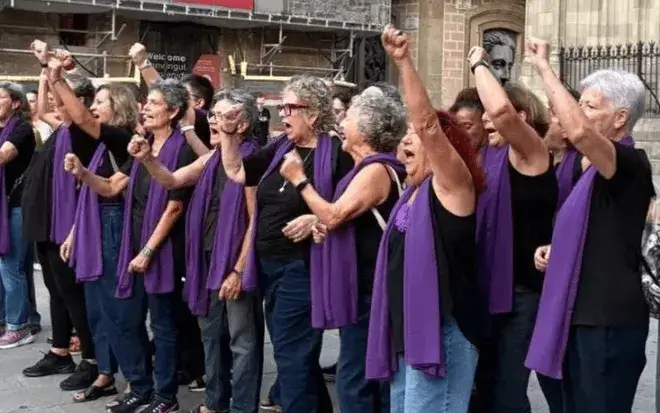
The International Forum of Alliances for the Right to Abortion brought together nearly 300 participants and coincided with an international declaration in support of reproductive justice.
On 1 October, Barcelona hosted the International Forum of Alliances for the Right to Abortion, a gathering that brought together nearly 300 participants and more than 30 speakers from 23 countries to share strategies and experiences in defending sexual and reproductive rights. Organised by the Association for Sexual and Reproductive Rights through the VullAvortar programme, the event focused on building alliances between feminist activists, healthcare professionals, researchers and political advocacy groups to remove the barriers that continue to hinder effective access to abortion.
The gathering took place against an international backdrop marked by a combination of legislative and social advances and renewed attempts to restrict sexual and reproductive rights. In this context, the Forum fostered knowledge-sharing and coordination between feminist movements, healthcare systems, legal professionals, researchers, community networks and institutions. Morena Herrera, an activist, advocate and leading figure in the fight to decriminalise abortion, highlighted the importance of cooperation across territories: “Alliances are essential because this is a global struggle, an international struggle that also takes place in every locality and every country.”
Other international figures included Rebecca Gomperts, physician and founder of Women on Waves and Women on Web, and Susana Medina, Programme Implementation Manager at Fòs Feminista. Gomperts highlighted the historical significance of Barcelona as the host city: “Barcelona is a historic place to hold this forum, as Catalonia was the first territory in Europe to legalise abortion.”
Medina, meanwhile, stressed the need for spaces where people can meet and coordinate their efforts in the current context: “This space is important because we are currently experiencing a shrinking civic space. Any place where we can come together, analyse the situation and develop joint strategies, including political strategies, is vital to sustaining the struggle and continuing to work for reproductive justice.”
The programme was structured around four main areas: activism within healthcare systems; community-based and feminist support networks; social, legal and political mobilisation; and research and knowledge production as tools for change. The event also provided an opportunity to share experiences that have helped improve access to abortion in a wide range of contexts, from telemedicine to political advocacy strategies and healthcare system reforms.
Coinciding with the Forum, several organisations and individuals promoted a Declaration in Support of the Right to Abortion and Reproductive Justice. The declaration called for reproductive justice to be recognised as an essential principle of democracy, human rights and equality. The initiative invited civil society organisations and the public to join a collective statement in response to setbacks occurring in different international contexts and to strengthen their commitment to defending reproductive autonomy.
The Forum preceded the International Conference of the International Federation of Abortion and Contraception Professionals, which took place in Barcelona on 2 and 3 October. Over three days, the city became a meeting point for healthcare professionals, researchers, activists and policymakers from around the world to discuss current challenges and strengthen international alliances in defence of the right to abortion and reproductive justice.




Add new comment