
Why is there a North? Why is there a South?': a formation that dismantles views and raises questions
Anna Rodríguez Casadevall, a trainer specializing in critical interculturality, invites us to rethink the world from cartography, history and our own position.
The training ' Why is there a North? Why is there a South? ' by Anna Rodríguez Casadevall is, above all, an invitation to think. It does not seek to give closed answers or masterful lessons, but rather to activate questions that make people uncomfortable and open windows. “ The idea is not to give absolute answers, but to ask questions ,” says Anna at the beginning, making it clear that knowledge is not an immutable block, but a space in constant movement, full of diverse perspectives, theories and positions.
The session starts with a fundamental distinction: equality is not equity. Anna explains it clearly: “ We talk a lot about equality, but what is needed is equity. There are peoples and groups that historically have not had the same starting point.” This idea serves as a basis for understanding why the categories North and South are not innocent or geographical, but rather respond to power relations that have been built over centuries.
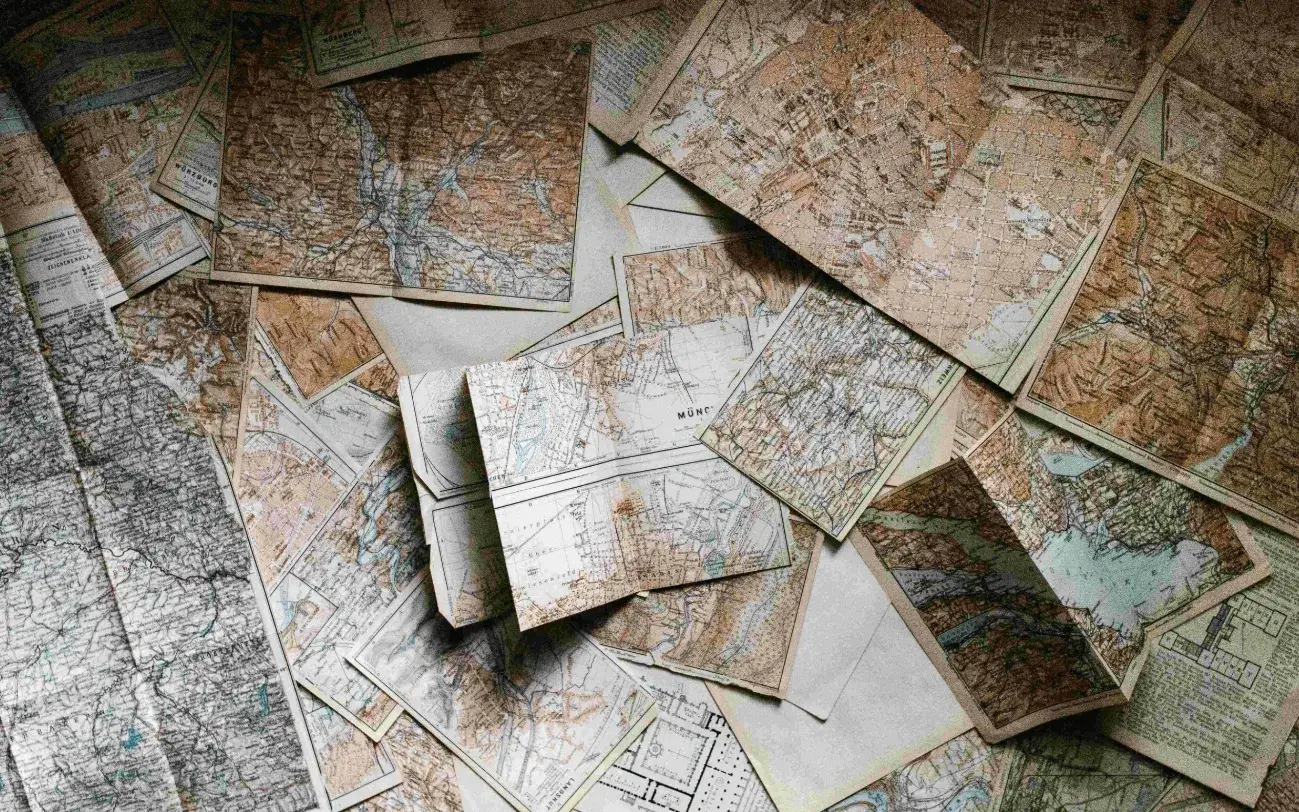
From here, the trainer deploys a seemingly simple but profoundly revealing tool: maps . She shows the Mercator projection , the same one that entire generations have seen in school, and recalls that it was created in 1569 to facilitate colonial navigation. “ Europe in the center, Europe enlarged, Africa reduced… and even today it is the map that continues to hang in many classrooms ,” she points out. When she turns the map and shows the inverted projection, someone says that “it is upside down.” Anna replies with a smile: “ It is not upside down. It is different. It is we who have learned that North is up and South is down .”
He also shares a personal anecdote from when he worked in China. Upon entering an office, he commented that it was “curious” to have a map with China in the center. “ They looked at me and I understood that my comment was deeply Eurocentric. Why should they have Europe in the center? ” he recalls. This moment, he explains, made him see how deeply ingrained certain views are, even when we consider ourselves critical.
The formation advances towards a key point: modernity . According to several authors and critical authors, it does not begin with the Enlightenment, but with 1492 , when the first globalization and modern capitalism began . “ Europe captures people in Africa, enslaves them in America and receives the economic benefits ”, explains Anna. “ This is where capitalism as we understand it today begins ”. This historical framework allows us to understand why the categories North/South are not geographical, but political, economic and colonial .
From the 1950s, the world was divided into first, second and third worlds . Later, into developed and underdeveloped countries . Then, into blocs like the BRICS . And finally, into global North and global South . “ The global South is not geographical ”, insists Anna. “ It is a group of countries that share having been colonized, exploited or subordinated to global logics of power. It is not a fixed or homogeneous category ”. An emerging concept also appears: the global majority , which claims the demographic and cultural weight of historically subordinate regions.
The session does not stop at theory. Anna constantly questions everyday life: the music we listen to, the stories we tell, the films we consume, the words we use. “ Many things we assume as universal are Eurocentric. And unlearning is a lifelong process ,” she says. She also talks about her own career: “ I grew up with a Eurocentric outlook. I wanted to travel and I thought missionaries were the way to do it. Over time I understood what was behind that narrative .”
The training ends as it begins: with questions. There is no end point, but a starting point. “ The important thing is not to arrive at a place, but to see where we start from and where we want to go ”, concludes Anna. The session leaves the feeling that the world is not how we have been taught, but how we have learned to look at it. And that, if we change our perspective, perhaps we can also change the way we live in it.


Add new comment