
On 17 January, a new global treaty entered into force that finally allows countries to establish marine protected areas on the high seas—ocean regions that lie beyond the jurisdiction of any single nation.
Formally known as the Agreement under the United Nations Convention on the Law of the Sea on the Conservation and Sustainable Use of Marine Biological Diversity of Areas Beyond National Jurisdiction (BBNJ Agreement), and more commonly referred to as the High Seas Treaty, it provides a long-awaited legal framework for protecting these waters, which account for approximately 64% of the world's oceans.
This is significant because, although the international community has committed to protecting 30% of the world's oceans as marine protected areas by 2030, currently less than 8% of the ocean has any form of protection, and less than 3% is fully protected from industrial fishing. With fewer than five years remaining to meet the 30x30 target adopted at COP15, the challenge is immense.
Sea Shepherd Global welcomes this remarkable achievement, as until now it has been virtually impossible to establish marine protected areas across the vast expanse of the high seas, which cover roughly two-thirds of the world's oceans.
Antarctica provides the only real precedent for high seas protection, demonstrating both what is possible and what can go wrong.
Under the Antarctic Treaty System and the Convention on the Conservation of Antarctic Marine Living Resources (CCAMLR), countries have been able to establish marine protected areas in Antarctic waters, but only through unanimous agreement among member states.
This legal framework led to the creation of the Ross Sea Region Marine Protected Area in 2016—the largest marine protected area in the world—but it has also stalled efforts to protect the Antarctic Peninsula. Objections from just two of the 27 CCAMLR member states, the People's Republic of China and the Russian Federation, have blocked progress for years.
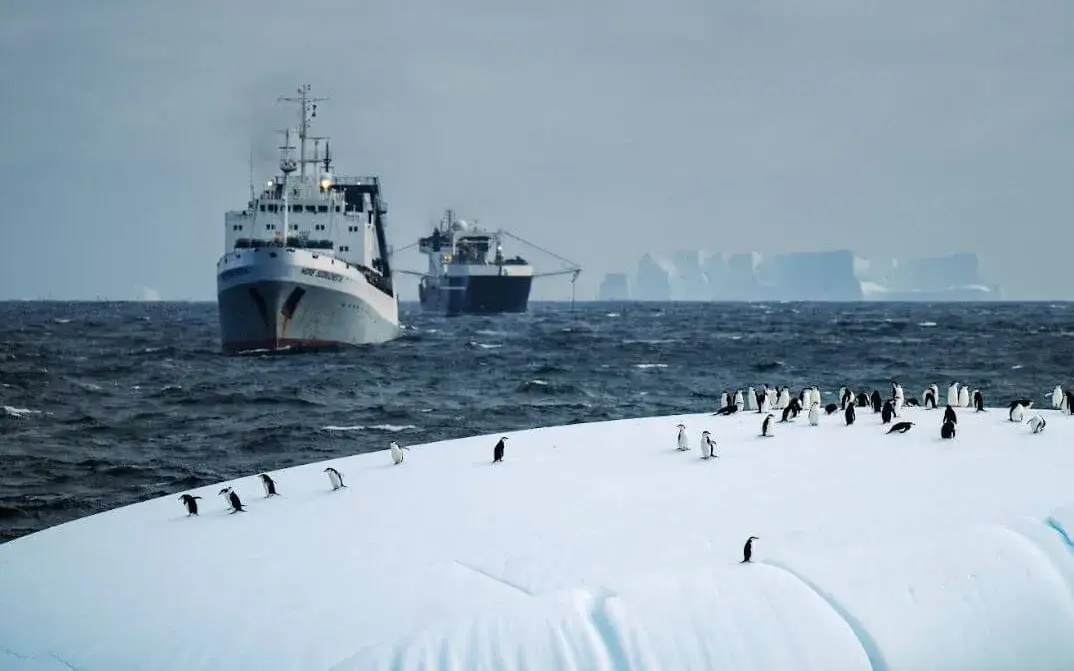
Sea Shepherd's vessel Allankay has travelled to Antarctica to expose the destructive—though still legal—krill fishery operating within the proposed protected area for the Antarctic Peninsula.
Regional fisheries management organisations (RFMOs)—groups of countries responsible for managing specific fisheries, such as tuna—have long had the authority to close certain areas to fishing.
However, these closures are not equivalent to establishing comprehensive marine protected areas, and enforcement depends on flag states—the countries where vessels are registered—which often retain veto power over conservation measures.
The shortcomings of this system are clear.
When Sea Shepherd closely monitored the South Pacific squid fleet in 2021, we documented 29 vessels, 24 of which had histories of illegal fishing, had been accused of labour abuses, or were operating covertly with their tracking systems switched off. Despite this, not a single vessel was placed on the South Pacific regional fisheries blacklist, and none appear on it today. Repeated attempts to list these vessels have been blocked by objections from the People's Republic of China.
One of the treaty's most important features is its decision-making process. While consensus will remain the preferred approach, the agreement allows decisions to be adopted by qualified majority voting, breaking the pattern whereby one or two countries can block conservation measures for everyone else.
For Sea Shepherd, this creates genuine hope that meaningful conservation measures can finally be implemented. However, enforcement remains a major concern. There is no United Nations Navy or international maritime police force to enforce these rules.
In practice, responsibility will continue to rest largely with flag states, which remain the only authorities with the legal mandate and operational capacity to enforce most regulations on vessels operating on the high seas.
When governments fail to act, civil society must help fill the gap, from companies providing vessel monitoring technologies to NGOs such as Sea Shepherd that directly support law enforcement efforts. Illegal, unreported and unregulated (IUU) fishing remains a major challenge even in national waters with established regulatory systems. Over the past decade, Sea Shepherd has partnered with several African governments to help stop 101 vessels engaged in illegal fishing.
On the high seas, securing the political will and financial resources needed for effective enforcement will be even more challenging.
Nevertheless, this does not diminish the importance of the High Seas Treaty.
For the first time, there is a global legal framework to establish genuine fully protected marine reserves beyond national borders. The greatest challenge now will be ensuring that these reserves truly safeguard the ocean, rather than becoming paper parks that exist only in name.


Add new comment