
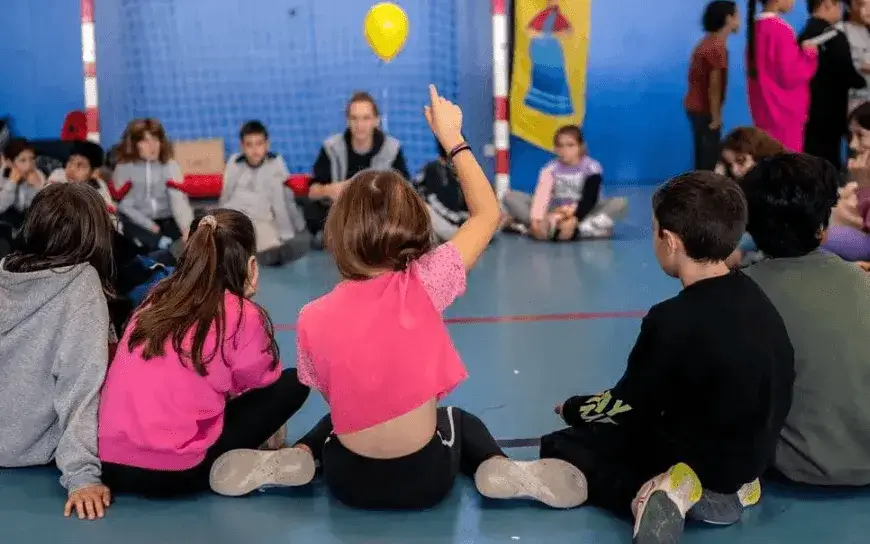
When a child understands why a rule exists, it is easier for them to make it their own and incorporate it as part of their way of relating to others.

Rules are part of any living space. At home, at school or in a residential home, they contribute to creating safe, respectful and predictable environments for children and adolescents. But just as important as establishing rules is the way
we transmit and work with them.
For a long time, rules have been associated mainly with authority, obedience or the imposition of limits. Today, however, we know that they are much more effective when they are worked on from a support, coherence and understanding perspective. Positive discipline focuses on helping children and adolescents understand the meaning of limits and progressively develop responsibility, cooperation and autonomy.
Example is one of the best educational tools
Children learn, to a large extent, by observing the adults around them. For this reason, adults become essential role models when it comes to transmitting values such as respect, responsibility, care for common spaces
or the ability to fulfill commitments.
In this sense, what we do often educates much more than what we say. If we want children and adolescents to respect the rules of coexistence, it is also important that they see that we adults respect and comply with them.
Clear, coherent rules adapted to each age
For a rule to be educational, it must be clear and understandable. It must also be adapted to the age and developmental stage of each child or adolescent.
Stable boundaries provide security and help understand what is expected of each person. At the same time, it is important to recognize efforts and progress, focusing on what is being learned and not only on mistakes.
Coexistence is not learned overnight. It is a process that requires time, patience and support.
Everyday life, an opportunity to educate
Day-to-day activities offer many opportunities to work on responsibility, autonomy and commitment to collective well-being.
Participating in household chores, maintaining order after playing, taking care of shared spaces or making responsible use of screens are everyday actions that allow us to learn to live together.
At CRAE La Salle, for example, we work to ensure that children and adolescents actively participate in daily household life, always taking into account their age and abilities. This can include making the bed, setting the table, sweeping or dusting
in the case of younger children, and loading the washing machine or preparing simple dishes in the case of adolescents.
We also establish shared rules, such as avoiding the use of screens during meals, for both children and adolescents and adults. In this way, the rules are not experienced solely as an obligation, but as agreements that contribute
to the well-being and coexistence of all the people who share the same space.
Conflicts can also be a learning opportunity
When conflict arises, the educational response should not focus solely on punishment. Conflict can be an opportunity for children and adolescents to reflect on what happened, understand how other people may have felt, and think about
how they can repair the damage caused.
This process helps develop empathy, personal responsibility, and the ability to make more conscious decisions in the future.
Accompanying does not mean stopping setting limits. On the contrary: it means establishing them clearly and coherently, helping children and adolescents to understand them and progressively assume responsibility for their actions.


Add new comment