
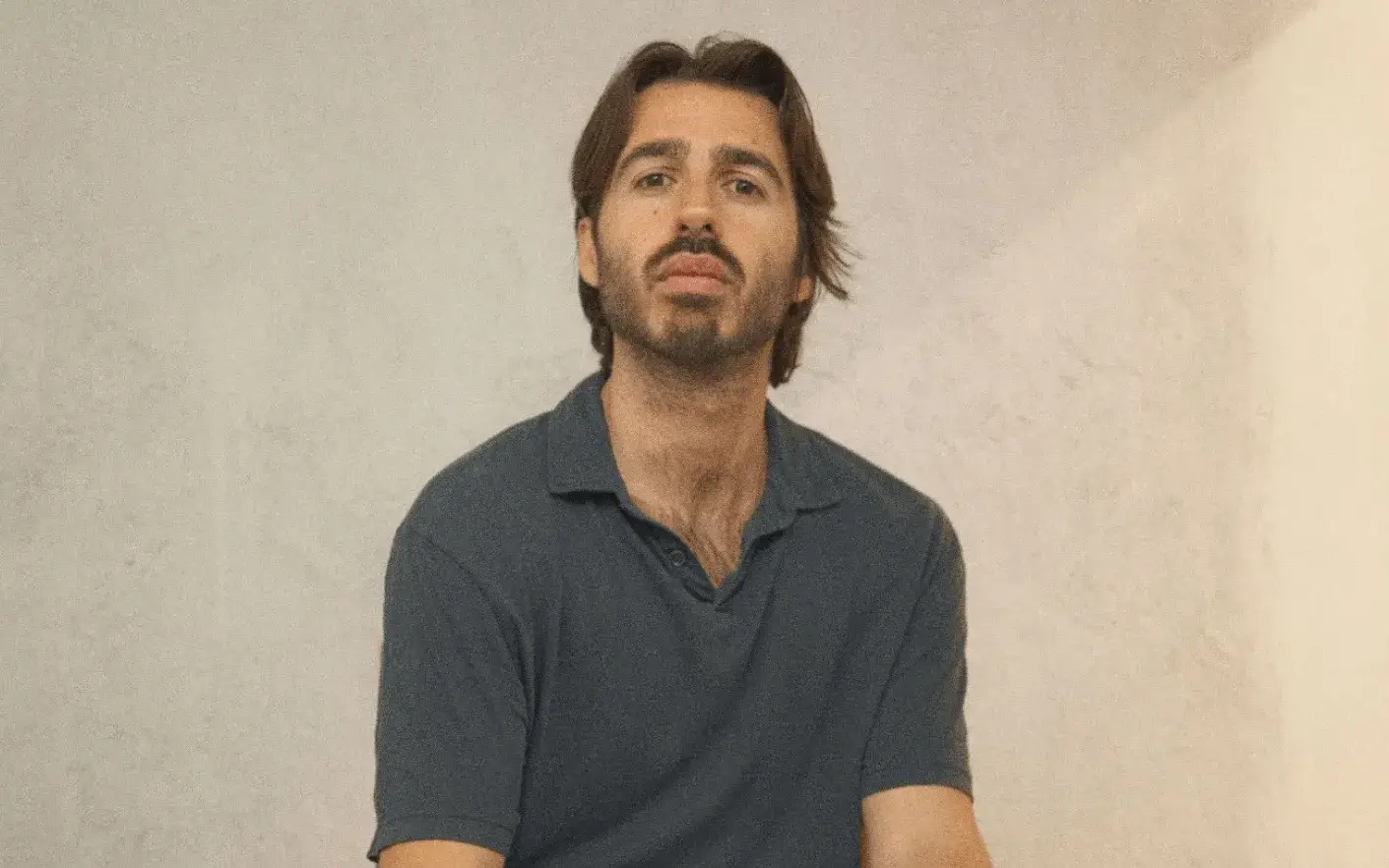
The European Union has approved a regulation that prohibits the destruction of some unsold clothing to reduce textile waste and move towards a more circular economy. We analyze the scope of this new regulation with Arnau Pla, member of Vestuari Compartit.
The new regulation is part of the European Union's Ecodesign for Sustainable Products Regulation , which obliges large companies in the sector to stop destroying their surpluses and to report on the management of unsold products. The aim is to reduce the waste of resources and move towards a more circular economy, although several entities warn that, without control, transparency and sanction mechanisms, the measure could be limited.
In this context, Vestuari Compartit works , a community initiative that promotes the shared use of clothes as an alternative to fast fashion consumption. Through an associative model, the entity extends the useful life of garments, encourages reuse and advocates a paradigm shift that places people and sustainability at the center. In this interview, Arnau Pla reflects on the limits of the new regulations and defends that the real challenge is to reduce textile overproduction.
New European regulations prohibit the destruction of unsold clothing. Do you think this measure can truly transform the fashion industry or is it just a first step?
We believe that like many public policies loaded with good intentions and pretty headlines, if there is no public investment behind them that shows the real will to regulate and sanction, they end up being just a piece of paper that remains in a headline. In this case, we see how the first steps that have been taken are the creation of Collective Systems of Extended Producer Responsibility (SCRAP) , Re-viste, which will have to manage textile waste. This association is in private hands and is financed by the big brands responsible for the problem such as Mango, Decathlon, Tendam, Primark, etc.
This fact raises suspicions that loopholes are already being provided for them so that they can continue with their model, hiding the real circuit that all the parts make, the reuse criteria, the real numbers... As long as the entire circuit remains in the hands of the perpetrators of the problem, we believe that there can be little room for change.
If big brands can no longer eliminate their surplus, what role can initiatives like Vestuari Compartit play in the management of these garments?
Big brands live off the control of surplus to maintain the value of their garments. If there are new garments circulating freely, who will pay 50 euros for a pair of trousers? At Vestuari Compartit, we believe that all this surplus should go into the hands of initiatives like ours, so that we can distribute the garments to people who can use them, and so that they do not become waste when they have not been used. What is the problem?
As long as there is no public investment that controls and forces a public and transparent stock register to be maintained, we will never know how many garments are actually being destroyed with the label. Our vision for the future is that the problem could be solved if the fundamental basis of everything is controlled: overproduction. As long as there are no caps on imports of production from the global south, the problem will remain. How can Inditex have an airport in Zaragoza where thousands of kg of clothing arrive every day without any control?
Do you think this ban will force companies to rethink the way they produce and plan collections?
The ban has very good intentions, but without a coherent investment plan to regulate the sector, it remains a dead letter. And as mentioned above, the space not occupied by the administration is privatized, as is the case with SCRAPs.
What other measures do you think the European Union should promote to reduce textile overproduction and promote a more circular economy?
Prohibit the import of non-reusable textile products due to color and composition. Although in an ideal future the surplus could be controlled, the business model is deriving from the manufacture of disposable garments, disposable garments with materials composed of mixtures of synthetic and non-reusable fibers.
The regulations focus on what to do with the surplus. But the real problem is overproduction. How can this issue be addressed by civil society?
First, do not contribute to the demand, currently there are many spaces where used clothes can be recovered, second-hand clothes are an option. Also contribute to projects like Iaios , which focus on local production and more durable garments.
What environmental and social benefits can there be in giving a second life to pieces that, until now, ended up being destroyed?
Each reused piece is one less sale made by multinationals, a good way to stand up and resist the compulsive consumption they induce us to. If demand is reduced in the long run, they will also have to reduce production and this means fewer natural resources used and less pollution. The challenge that must be faced is not only to take advantage of what we already have, but to prevent this reuse from becoming another tool exploited by capitalism to accumulate profits in a few hands and maintain addiction to consumption, promoting compulsive shopping with constant discounts and daily incentives.
Instead, we want to take advantage of this movement to create community spaces where clothes are understood as a shared good with the neighbors. Where there is no need to buy and buy and accumulate, but to use when you want without having to cause a headache when it comes to making ends meet. That is why we propose from Vestuari Compartit the association model, in which we share a wardrobe between the members and the monthly fees they pay are used to pay for the place and the people who keep it alive and active.
Do you think consumers are aware that until recently many new items were destroyed without ever reaching stores? How can we raise awareness of this reality?
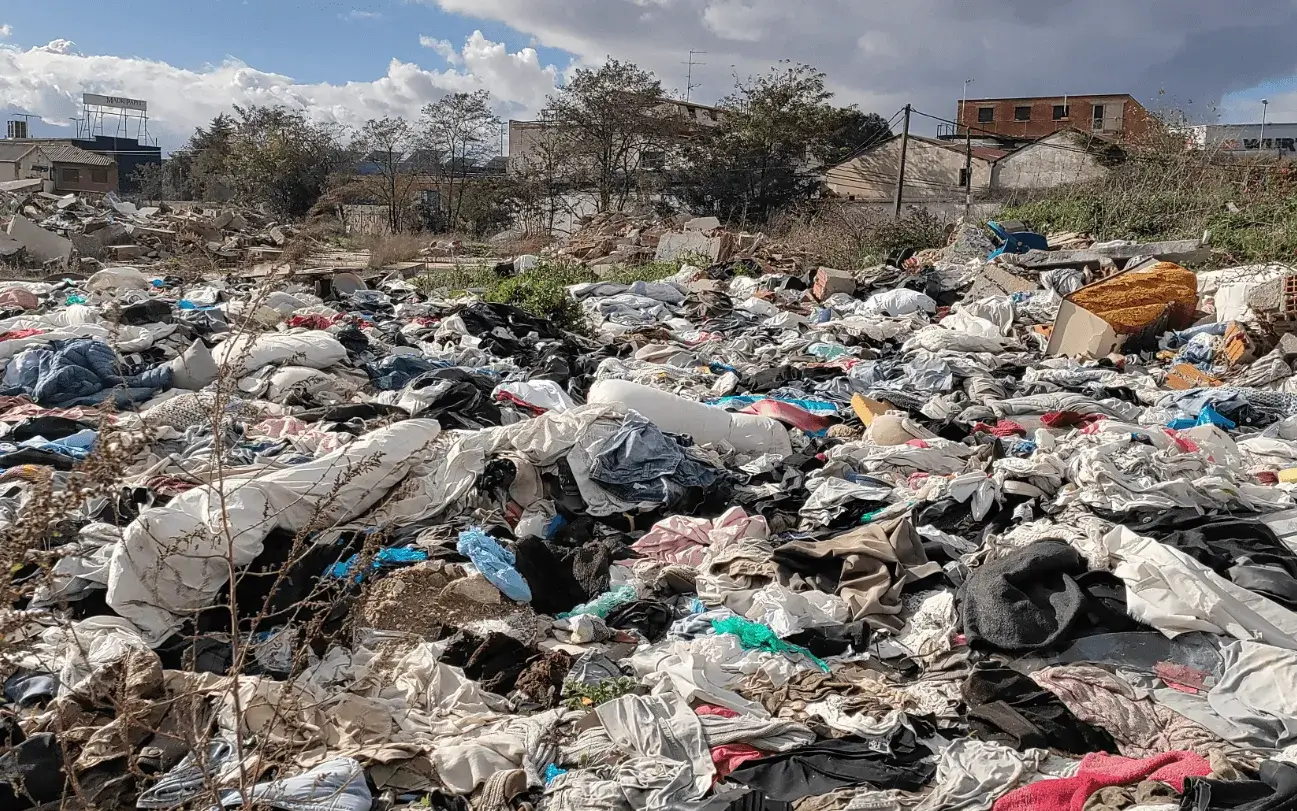
The established consumerist model is maintained in part by preventing people from seeing the waste they generate. That is why all the clothes that become waste are sent to Africa or Southeast Asia. Making the mountains of waste that end up being created far from our natural spaces invisible is a tool they use to continue the cycle.
It is difficult to raise awareness among an increasingly impoverished population that struggles month after month to get by. When you have difficulty paying rent and filling your shopping cart, it is easy to fall for tempting offers on platforms like Shein, where the price of clothes is very low. The right to renew your wardrobe and buy clothes that fit your changing body should be for everyone, without this having an impact on the planet.
What logistical and economic challenges does it entail to make use of unsold stock instead of destroying it?
Huge, the overproduction is excessive so we're talking about a lot of pieces that can be reintroduced, the issue is, is it interesting? Fast fashion has been based on generating the feeling that what you bought last week is already out of fashion. So, will people want what's out of fashion?
Can this new regulation generate new opportunities for social entities, cooperatives or clothing exchange and reuse projects? In what way?
Yes, if we manage to make the problem more visible. The fashion industry is the second most polluting in the world. And not everyone knows that. We also need the administrations to rise to the occasion and give more support and funding to those who dedicate themselves to re-introducing into circulation these garments that are still at the end of their useful life.
If you had to evaluate this decision by the European Union in five years, what indicators would make you think it has been a success?
Reliable traceability of the entire life cycle of each piece, with transparency and public data; public audits of the number of pieces imported from factories in the Global South; inspections of private SCRAPs to sanction bad practices, and sanctions that have served as a persuasive measure to be imposed within five years.




Add new comment