Mònica Donnellan: “It is very difficult for a school to be able to respond alone to a social phenomenon such as bullying”
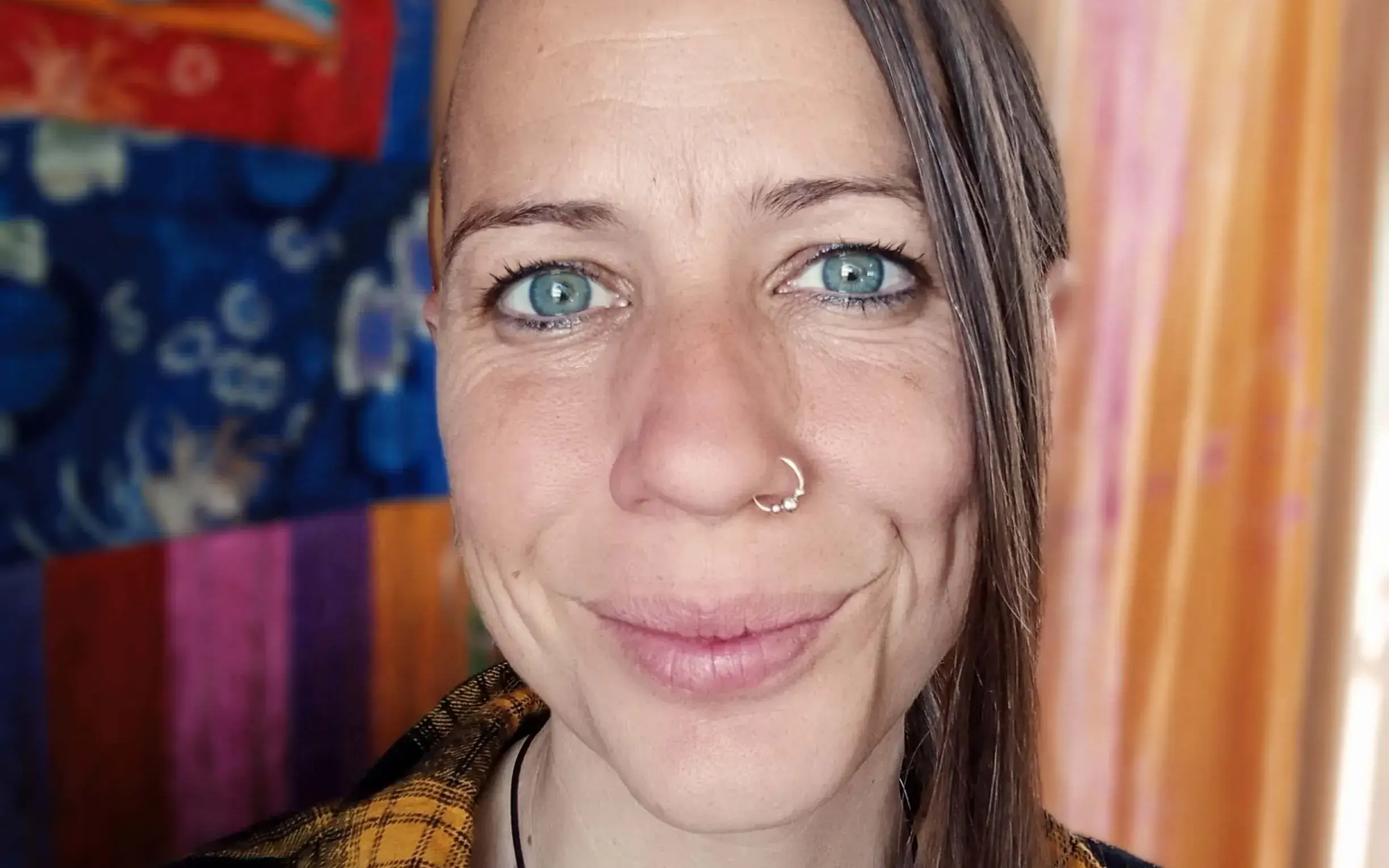
We speak with the social worker, protocol manager and prevention focal point at PDA Bullying, who defends a community-based perspective to prevent, detect and address peer harassment.
PDA Bullying is much more than an association; it is a network and also a collaborative platform that brings together institutions and organisations to promote good practices in prevention, detection and action in the face of bullying, cyberbullying and other forms of violence present in childhood and adolescence. Born from the PDA model promoted by SEER, the network advocates for a comprehensive, community-based approach centred on well-being, based on a code of good practices shared by the organisations that form part of it.
In this interview, the social worker and protocol manager and prevention focal point at the organisation, Mònica Rose Donnellan Barraclough, argues that bullying cannot be reduced to the school sphere and calls for a collective response involving educational centres, families, leisure and the community. We speak with her about the importance of refining definitions, strengthening prevention and detection, and understanding peer harassment as a social phenomenon that must be addressed from co-responsibility.
What is PDA Bullying?
It is an association born ten years ago from the experience of SEER (Health and Emotional Education), an organisation with more than twenty years of experience in promoting coexistence in Catalonia and throughout the State. Around 2016, from SEER we began to receive many requests to address cases of bullying and we saw the need to create a specific organisation to devote ourselves to it. In this way, we could respond to this reality without neglecting all the prevention work and accompaniment in socio-emotional development that SEER carries out.
How does your work begin?
The opportunity arose to collaborate with Save the Children to carry out a study on good practices in coexistence programmes in some educational centres in Barcelona. From that first work, focused on identifying which practices were already helping to promote coexistence and to address bullying in a comprehensive way, our code of good practices was born. It is the framework to which organisations that want to position themselves publicly as organisations that are sensitised and committed to the steps and criteria that must be followed adhere.
You also define yourselves as an organisation of organisations.
Although we are an association, we also function as a platform that allows diverse organisations and initiatives to adhere to our code of good practices and join a shared culture of prevention, detection and action in the face of bullying. Currently, we have more than two hundred affiliated organisations. Not all of them participate actively in the day-to-day work of PDA Bullying, but they do form part of the platform. From here, we speak of the PDA network to refer to the organisations with which we maintain more constant collaboration and with whom we generate synergies, also within other spaces such as the Platform for Children or the Children’s Network.
Therefore, you work on different levels.
Yes, on three levels: the associative one, which is the work we do as an organisation; the network level, which is the joint work with other organisations; and the platform level, which is broader and includes affiliated organisations from the rest of the State and also from Asia or South America.
And as regards your activity?
In this sense, we work in many areas, but our guiding thread is to place the emphasis on good practices rather than on what is not being done, always from a pedagogical perspective. What we seek is to broaden the view and apply the PDA model to order the phenomenon and provide appropriate responses to it.
How does this take shape?
In very diverse actions, from intervention in the classroom and accompaniment to groups where there is a case of bullying to political and institutional advocacy. We work, therefore, on many levels, from the most everyday terrain to international spaces such as the United Nations Commission, where we have even submitted requests for bullying to be included within child protection programmes.
Let’s talk about good practices.
Right now, our code of good practices includes sixteen points divided into four areas: promotion, prevention, detection and action. What we seek is to establish principles that are as shared and universal as possible, although afterwards each centre, space or facility must adapt them to its own reality. The idea is to have a common language that makes it possible to understand which basic elements must be implemented in each of these phases. As regards promotion, it has to do with disseminating our model and applying policies from a perspective of comprehensive care, generating a structure that later makes good prevention, detection and action work possible.
What exactly do you understand by prevention?
In the field of prevention, there are various good practices, but for us there is one that is key: being very clear about what preventing means. It is not about avoiding conflict, because conflict is part of life, but about preparing ourselves to face it well when it appears.
What does preparing ourselves for when conflict appears imply?
It means promoting programmes that help train tools for life, skills and protective factors linked to emotional education, health education, diversity and work on values.
It is also important to differentiate between prevention and awareness-raising.
Raising awareness means talking about the phenomenon of violence and the associated risks; preventing, on the other hand, means training how we will respond when it happens. Often a great deal of awareness-raising work is done, but then this more practical training is lacking.
When people talk about bullying, there is still a lot of confusion. Serious situations are often trivialised or, conversely, cases that are not bullying are labelled as bullying. Is it important to refine this reading before intervening?
Yes. A basic good practice is for educational centres, facilities and child care services to carry out prior work to agree on a shared language. That is, for them to agree on what they understand by violence, bullying or conflict.
Why is this prior step so relevant?
Because we often start from subjective interpretations, and even at an international level there is no single definition. For this reason, years ago we promoted an interprofessional debate with the collaboration of different countries to try to distil the common elements of the various definitions. If we do not refine this framework, we run the risk of calling something bullying when it is not and, instead, of not identifying as bullying what really is bullying.
It is also important to review how we name the phenomenon.
Yes. We are accompanying different services and facilities so that they can find their own definition, also starting from ours, which has been evolving for years and which we try to refine as much as possible.
For example, you do not use the term school harassment.
No, we speak of peer harassment, because the LOPIVI proposes a community-based approach. Calling it school harassment makes us think that it only happens at school and that only the school has to respond to it, when in reality it is often violence that begins in the educational centre, but extends to other spaces, also of non-formal education. That is why it is very difficult for a school to be able to respond alone to a social phenomenon such as bullying.
The nuance is important.
That is why we prefer to speak of peer harassment or bullying. It is a way of opening up responsibility to other agents and of understanding that we are facing a social phenomenon, not only a school one. In this sense, refining the definitions is key in order to be able to reach agreement.
And when violence also happens through screens and networks, what really changes?
In cases of cyberbullying, what changes is that the protection still provided by shared physical spaces is broken. When violence happens in a face-to-face environment, exposure stops at some point, although suffering often continues at home. By contrast, through screens, violence also enters the home and exposure can be much more constant.
This can multiply its impact.
Yes, because in the digital environment more people are often added and the direct perception of the impact that the act has on the other person is lost. Since this harm is not seen immediately, it is easier for the violence to get out of control and escalate very quickly, at a pace that perhaps it would not take on in physical space.
Your model also places a strong emphasis on prevention and detection. What is being done late or badly, or not being done enough, in these areas?
What is often missing is better systematising observation: seeing how the group relates, what emotional climate there is and which warning signs appear. If this is not done continuously, many times we arrive late, when a lot of harm has already been done. It is also necessary to have a shared language that helps properly identify what violence is and what type of violence we are talking about.
For us, this is key because not all violence between peers is bullying, and understanding the origin of each case makes it possible to provide a pedagogically appropriate response. In addition, we work from the perspective of roles: we speak of the role of aggressor, victim or bystander, not of fixed labels placed on people. That is why we believe that responses that are only sanctioning may stop the conflict for a while, but they do not repair the pain or transform what lies behind it.
Why do so many children and adolescents remain silent when they suffer bullying?
I think it is a multifactorial phenomenon. To begin with, we live in a society where there are many forms of violence that are very present, but also very subtle, and this often causes them to be normalised. For this reason, many children and adolescents do not even identify straight away that they are suffering a situation of violence. And when they finally identify it, guilt and doubts often appear: “maybe I deserve it” or “maybe I have done something for this to happen to me”. That is why we also have to be careful with certain adult responses, such as asking “and why didn’t you tell me before?”, because we may end up blaming someone who perhaps has taken a long time to understand what was happening to them.
What happens internally in a child or adolescent when they suffer this violence?
Here a very perverse part of violence comes into play: it weakens us and robs us of our capacity to respond. It is not that violence happens to weak people, but rather that violence itself makes us small and leaves us in a situation of paralysis. That is why, many times, the person suffering it does not have the tools to stop it alone. And this is where it becomes especially important to activate the role of the bystander, because often violence cannot be stopped only by the person who is suffering it.
Which warning signs seem especially important to you and still go too unnoticed?
At group level, one of the clearest warning signs is how children and adolescents relate to one another. If a relational culture marked by tension or by very normalised forms of violence has become established in a group, this is already a clear indicator that something is not going well. In reality, there can be many indicators, but the key is knowing how to read them. We know that there are children and adolescents who are suffering, so we cannot act as if this were exceptional. We must take it for granted that these situations exist and refine our gaze in order to detect them.
And beyond the group climate, what else should we pay attention to?
At a more emotional level, some important indicators may be sudden mood changes, also sudden isolation or, on the contrary, a constant need to be turned outwards. On the relational level, changes such as suddenly starting to talk about new people or losing the desire to go out may also alert us.
The alerts do not only manifest themselves in the emotional or relational sphere.
There may also be signs in the academic sphere, such as a sudden drop in performance, and on the physical level, for example, changes in weight or wearing long sleeves when it is hot, which can sometimes indicate self-harm. There are many indicators, but the key is knowing how to read them.
And how should this reading be done?
For us, this reading must be applied to all roles. It is not enough to ask ourselves what has happened or who has done what. We must also look at what each person is thinking and feeling, because often the victim, the bystander and even the person who exercises violence are suffering in some way. In the end, the indicators must help us see who is having a hard time and who does not have enough internal security to ask for help.




Add new comment