-
Image
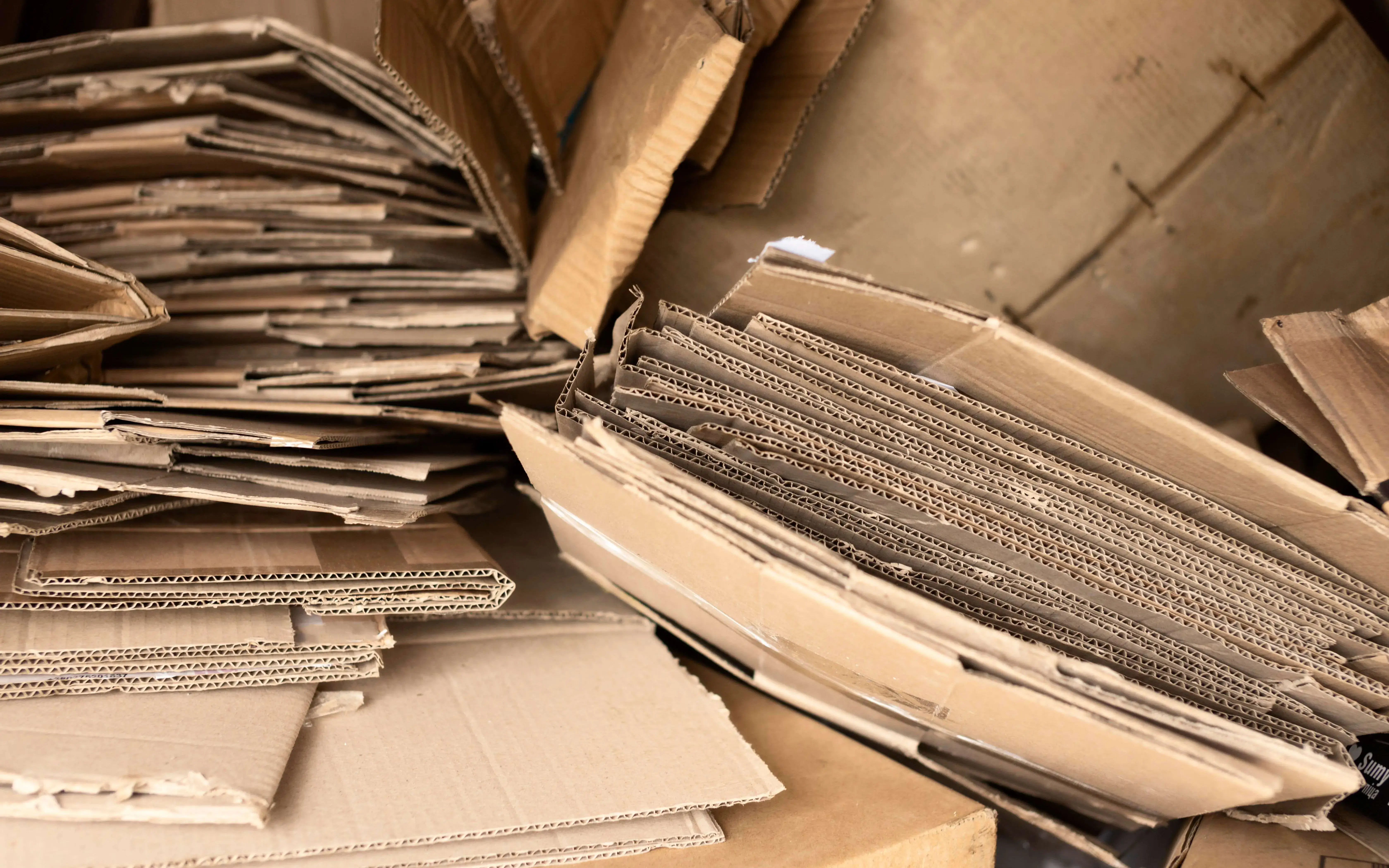
Rezero is promoting a shared roadmap to reduce overpackaging and expand reuse. Source: Freepik
Rezero is promoting a shared roadmap to reduce overpackaging and extend reuse, which already has the support of companies, institutions and sector stakeholders.
Without realising it, we have normalised buying almost anything with a single click, wherever we are and at any time. But are we aware of all the implications of an action that is already part of the daily lives of millions of people? Behind this convenience lies an entire production, distribution and logistics chain that has impacts in many areas and leaves a trail that is becoming increasingly difficult to manage.
If we look at the data, in Catalonia, nearly two out of three people aged between 16 and 74 already shop online. That is close to four million people. Electronic sales by Catalan companies also continue to rise and reached 70 billion euros in 2024. This growth, which entered a new dimension during the pandemic, has consolidated a consumption model based on immediacy and home delivery.
One of the most visible consequences of this change is the multiplication of shipments, boxes, envelopes and other materials. According to Rezero’s calculations, e-commerce generated more than 300 million packages in Catalonia in 2025 and, if the model does not change, the figure could approach 440 million by 2030. Faced with this scenario, the organisation has promoted a pioneering pact to reduce overpackaging, extend the use of reusable packaging and prevent waste from entering people’s homes.
An agreement to act before waste reaches the home
To address this problem, Rezero has launched the Pact for the Reduction of Waste in E-commerce with the support of the Agència de Residus de Catalunya. It is a voluntary agreement that aims to act before the package reaches the home, where much of its impact is decided.
The proposal aims to prevent the responsibility for reducing waste from falling only on consumers and therefore does not limit itself to asking people to separate cardboard properly. Instead, it focuses on the decisions made by retailers, manufacturers and logistics operators on issues such as the size of the box, whether a second layer of packaging is needed, which materials are used or how the packaging can be returned so that it can circulate again. “Shopping online should not mean filling homes with unnecessary boxes and filling materials,” explains Rosa García, director general of Rezero.
Among the first organisations to join are operators such as GLS Spain, InPost, Koiki and Som Ecologística; platforms and retailers such as Wallapop, Iaios and Tot Herba; manufacturers and ecodesign projects such as Capsa and Blue Room Innovation; and public administrations and business organisations such as the Ajuntament de Barcelona, the Àrea Metropolitana de Barcelona, the Agència Catalana del Consum, PIMEC and the Cambra de Comerç de Terrassa.
If we look more closely at the content of the pact, it sets out four lines of action that affect different stages of the purchasing process. The first involves offering reusable and returnable packaging, so that some orders do not end up generating waste after a single use. The key, however, is not only for the packaging to be durable, but for it to be part of a system that facilitates its return and reuse.
Another area focuses on removing additional boxes, envelopes and wrapping when they are not necessary. Many products already have original packaging that is secure enough to reach their destination without a second layer of protection. In other cases, it is a matter of better adjusting the size of the package and avoiding filling materials that merely compensate for empty space. “Transporting air, oversized boxes and single-use materials is neither environmentally nor economically efficient,” says Alexandra Cid, from Capsa, in statements collected by Rezero.
However, reuse can only work if returning the packaging is simple. For this reason, the pact also provides for strengthening local collection points, giving clear instructions and deploying traceability systems and logistics channels that make it possible to recover packaging and put it back into circulation.
The final strand of the agreement focuses on information. The proposal aims to ensure that, during the purchasing process, users can know which products are shipped without additional packaging and which offer a reusable option. The aim is to make it easier for consumers to choose an alternative that generates less waste.
Four routes towards greater reuse
Of the four lines set out in the pact, reuse is probably the one that requires the deepest transformation. It is not enough to replace single-use packaging with a more robust alternative. According to Xavi Franco, a technician at Rezero, boxes should be durable enough to circulate between fifty and one hundred times. To reach these figures, however, they must be collected, checked, cleaned when necessary and redistributed.
This requires coordination between retailers, logistics operators, manufacturers, collection points and public administrations. “It is impossible for it to be solely the responsibility of a single company,” says Jenny Berengueras, director of the Àrea de Reutilització de Rezero. Therefore, without a shared and easy-to-use network, even the most durable packaging can end up in the bin after its first journey.
Rezero also argues that the reusable option should appear by default during the purchasing process, rather than being hidden as a secondary alternative. In this way, prevention does not depend only on the willingness of each consumer, but also on how the service is designed. In any case, the environmental improvement will depend on each item of packaging completing enough uses and on its collection not generating a disproportionate logistics burden.
A large part of the material trail left by online shopping consists of cardboard. It is by far the most widely used material, both in boxes and in many of the protective elements that accompany orders. The fact that it can be recycled often means that it is perceived as an option as an option with little environmental cost, but producing it also requires raw materials, water and energy. And, above all, recycling it does not eliminate the impact of a model based on producing, using and discarding with every shipment.
According to the Rezero study, cardboard accounts for 96.85% of the emissions associated with the materials used in e-commerce in Catalonia and across the State. This can also be seen on the streets. In Barcelona, for example, the collection of paper and cardboard from containers has increased by 27% by weight over the last ten years, while the share coming from households represents an increasingly large proportion of the total.
This increase is consistent with the expansion of home deliveries, although it cannot be attributed exclusively to e-commerce. In any case, the data show that the box accompanying each purchase does not disappear when it reaches the container.
A shared responsibility
The pact is voluntary and is designed so that each company or organisation can gradually move forward with the measures that best fit its activity. In this regard, not all stakeholders have the same role, in the sense that, for example, retailers can focus on reducing packaging, logistics operators on facilitating returns and manufacturers on developing packaging that is better fitted and reusable.
Beyond the four main lines, the signatories also commit to supporting new distribution models and infrastructures that facilitate waste-free deliveries and returns. They must also communicate their participation and explain the actions they put in place.
The document also provides for shared actions to raise public awareness about prevention, reuse and the return of packaging. In the case of trade associations and business organisations, the commitment includes promoting the pact among their members. The initiative remains open to new participants and aims to prepare the sector for the regulatory changes expected in the coming years in relation to packaging, reuse and waste reduction.
The reality is that e-commerce will not stop growing; on the contrary, it will continue to gain importance in the coming years, which is why work must be done to ensure that this does not lead to the proliferation of more single-use materials and more waste. With this objective, Rezero argues that change requires adopting new practices, extending reuse and improving the design of packaging and transport systems.
To make this possible, the involvement of the entire value chain is needed, from retailers to logistics operators, manufacturers and public administrations. Consumers also have a role to play by choosing options that generate less waste and returning reusable packaging, but the responsibility cannot fall only on them, because many of the decisions are made long before the packages reach people’s homes.




Add new comment