Carlotta Besozzi: "We want to make citizens aware that democracy means participating in all processes that impact their daily lives"
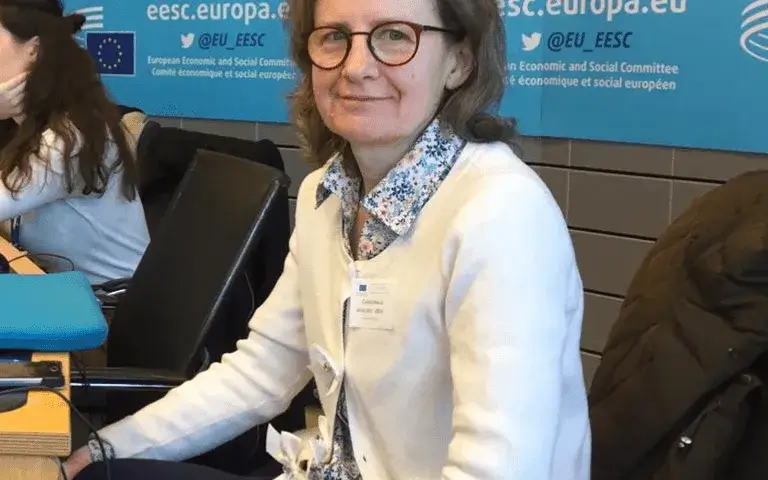
We spoke with Carlotta Besozzi, Director of Civil Society Europe, about the Voices of Millions campaign and the role of civil society in strengthening democracy and citizen participation across Europe.
What was the core motivation behind launching the Voices of Millions campaign at this particular moment in Europe?
The current landscape for civil society organisations to operate across Europe is complex and changing rapidly. Recently, civil society is facing unjustified scrutiny on its funding and transparency, and their ability to advocate for change is questioned, while the space for these organisations to operate continues to shrink across the continent.
This is why we felt the need to launch the Voices of Millions campaign. It’s important to remind people that civil society has a tangible and positive impact at both national and EU level, and amplifies the voices of millions of citizens who would not be heard otherwise by empowering them to participate.
The campaign emphasizes amplifying citizens’ voices. What gap do you believe currently exists between EU institutions and ordinary Europeans that this campaign hopes to bridge?
The campaign emphasises the fact that civil society organisations are essential actors in bringing the perspective of citizens into EU legislation, and that civil society must be supported to ensure strong EU policies that leave no one behind.
This is the gap we’re highlighting and aiming to tackle - without citizens’ perspectives in policymaking, we risk having weaker policies in place that may end up not delivering for citizens and harming certain groups, especially marginalised groups such as persons with disabilities, people experiencing poverty or LGBTQ+ people.
During the launch, there was strong focus on the historical role of civil society in defending rights and democracy. How does Voices of Millions build on that legacy?
We felt it was important to highlight that civil society has long been present in the EU, representing citizens and advocating for their right to be heard, contributing and often initiating policies that have improved people’s lives. We felt that this historical context was needed to understand the current situation of civil society in the EU and possible future developments.
The campaign builds on this legacy by demonstrating that despite mounting challenges and shrinking civic space, civil society continues to stay resilient and deliver for communities. We will continue to do what we’ve done historically in the face of these threats.
You described the campaign as a “collective space” for co-creating messages. How will organisations and citizens practically participate in shaping the campaign?
Civil Society Europe brings together 27 EU level civil society networks in our membership, and naturally they have played a key role in shaping this campaign. Through our members and their members, we have a large base of organisations who can take part in this campaign.
Right now, we’re running the first campaign output, which is a social media series titled ‘The Power of Many’. Biweekly, we post a story of positive impact from a national level organisation who accomplished a concrete achievement at EU level by being part of a European network. We’re actively reaching out to organisations to provide their stories, and we collaborate with them directly to bring their voices to the forefront.
Why is it important for national grassroots organisations to connect through European networks rather than working independently within their own countries?
At our campaign launch event, we had a panel discussion where two civil society representatives from Belgium (Pierre Gyselinck from Belgian Disability Forum) and Spain (Brian Reyes from Plataforma del Voluntariado de España) shared their stories of concrete achievements at EU level by working in a network.
Both of them highlighted that without European level networks, their work would have much less of an impact. Many national organisations have limited capacity and resources, so being active at EU level through a network is incredibly important for them to access information, craft a collective voice and push for their advocacy priorities.
Across Europe, some civil society organisations face funding pressures and political challenges. How does the campaign respond to this increasingly difficult operating environment?
This campaign emerges at a moment of great scrutiny of civil society organisations’ work. Therefore, its main goal is to shift the current narrative by showing the real positive impact that these organisations have for all, at the national and EU level.
For that purpose, one of the outputs of Voices of Millions will be a series of infographics on the state of funding for civil society in the EU, and how to ensure stable funding mechanisms. By making this information accessible, we aim to help organisations understand existing pressures, take strategic actions for the future and enable them to advocate for adequate funding under the next EU long-term budget.
How do you plan to engage younger generations, especially those who may feel disconnected from EU politics or institutions?
Among our network are organisations working on youth representation, youth political participation, and students’ rights. Our members are key co-creators of Voices of Millions, and this campaign intends to create an enabling space for them to participate in our outputs, including those advocating for youth.
Through our ‘Power of Many’ series, we will show that younger generations also have a say in EU decision making through concrete successful stories. Showing specific achievements from youth civil society organisations can set the stage for other organisations and citizens, and underline that making young voices heard at EU level is attainable.
In practical terms, what outcomes would make you consider Voices of Millions a success one year from now?
One of the campaign’s goals is tackling the disconnect between decisions made at EU level and citizens. Among those decisions is civil society funding, which has a direct impact on people’s lives. Managing to make information on funding accessible and understandable for everyone, through simplified infographics and social media publications, will be an indicator of success for the campaign.
We also want to build capacity and enable our members and other civil society organisations to raise awareness on these issues by taking part in the campaign. We’ll consider it a successful scenario if we see engagement with the campaign materials and outputs.
Europe is facing challenges ranging from democratic distrust to social inequality and digital transformation. Where do you think civil society can have the greatest impact in the coming years?
Civil society organisations occupy a strategic position in listening to, supporting and representing diverse societal groups. This means that they can understand and tackle people’s concerns from their roots, especially when it comes to political distrust, systematised inequalities, and upcoming social transformations.
The current global political situation suggests that the coming years might bring scenarios of increased misinformation and polarisation. Civil society organisations working on such issues can play a key role in giving citizens the necessary tools to make informed decisions and understand the political climate that they are inhabiting.
Finally, if you could send one message directly to European citizens through Voices of Millions, what would you want them to hear?
We would like to encourage European citizens to keep making their voices heard by engaging collectively. This way, they will have a say in decisions that affect them, which will lead to better policies at national and EU level, and to a greater feeling of political accountability. We want to make citizens aware that democracy means participating in all processes that impact their daily lives.
At the same time, we would like to show that organisations working at all levels and across all sectors can support citizens in having their experiences and realities recognised. This way they can better contribute to building a society that delivers for them.




Add new comment