Pere Ortega: “Europe must distance itself from Trump; it cannot be allied with someone who violates international law”
-
Image
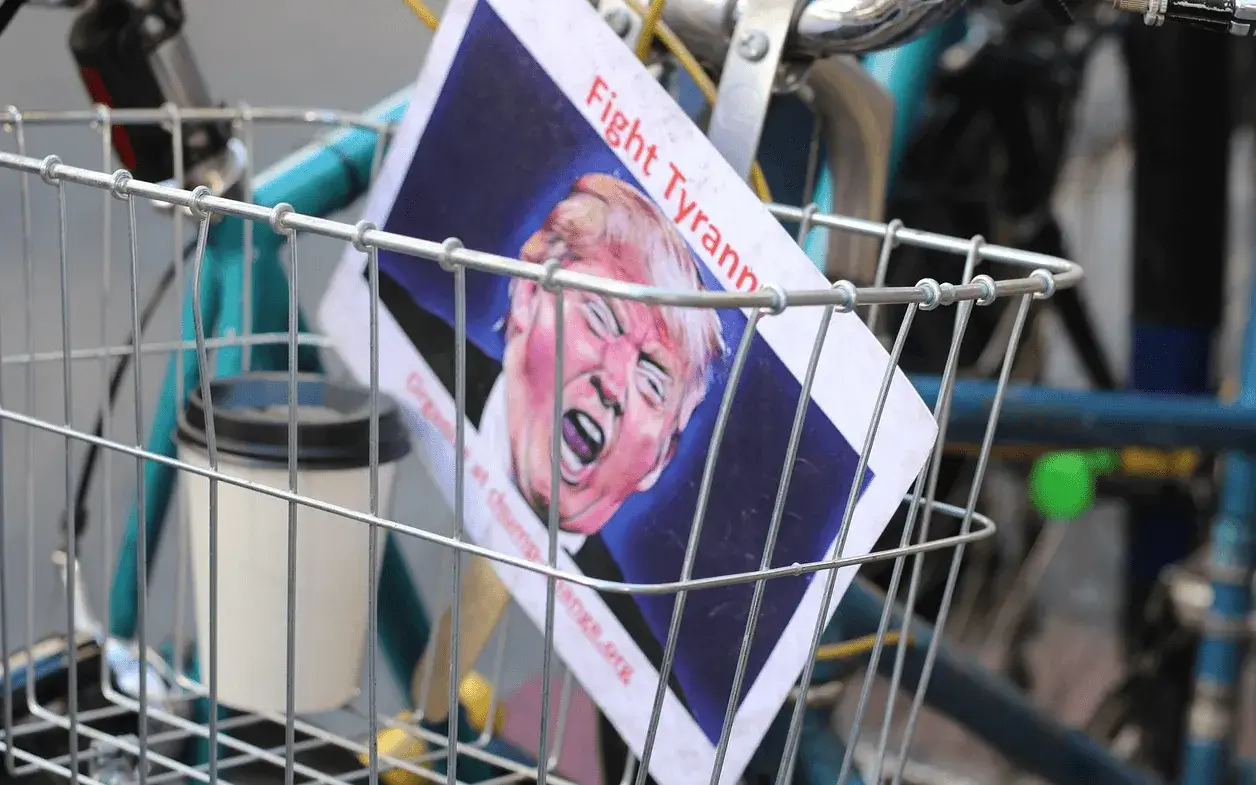
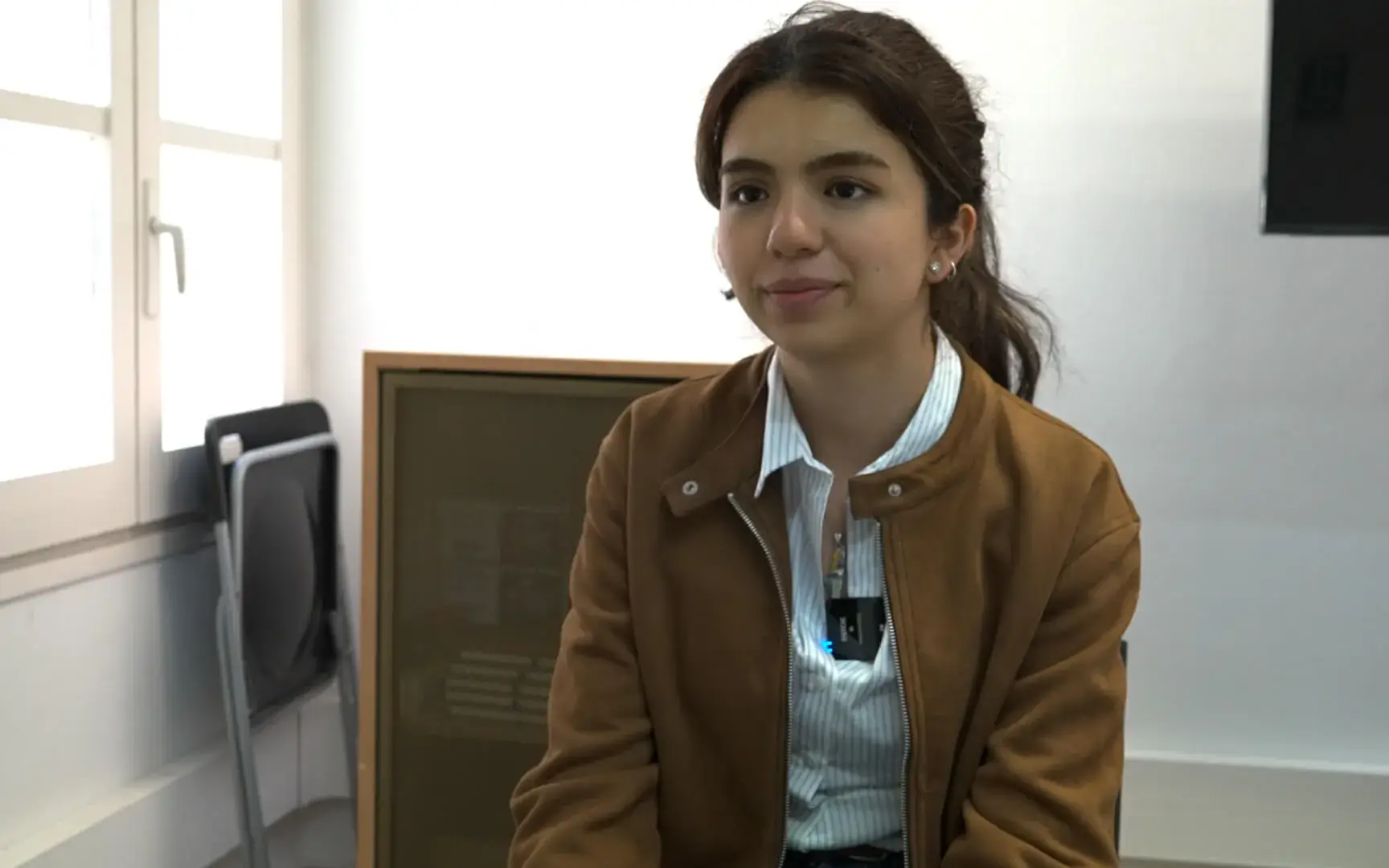
Centre Delàs researcher Pere Ortega analyses the intervention in Venezuela and warns of a highly dangerous shift to a new phase in the international order. Source: Centre Delàs. Source: Centre Delàs.
The researcher at the Centre Delàs analyzes the intervention in Venezuela and warns of a very dangerous change of era in the international order.
The intervention of the United States (US) in Venezuela has accelerated a deep shift in international relations. The unilateral use of force, contempt for international law, and the break with multilateralism are opening an increasingly unstable scenario, in which the common rules that had ordered the world since the Second World War are wavering. Everything points to the fact that Venezuela will not be an isolated case, but rather a precedent that can spread to other territories and actors on a global scale.
We talk about it with Pere Ortega, researcher and former president of the Centre Delàs d’Estudis per la Pau, who analyzes the keys to this new world marked by Donald Trump’s unilateralism, the consequences for Europe, the role of NATO, and the response of powers such as China. Ortega warns of the risks of a world governed by the law of the strongest and argues that Europe must react if it wants to preserve democracy and the international order based on shared norms.
Does Venezuela exemplify a normalization of the use of force and a change in the way the United States exercises power?
Yes, clearly. With this action, Donald Trump has crossed the Rubicon. In the sense that the international order as we have known it until now is being liquidated, and a new, very dangerous stage in international relations is opening. We still do not know how everything will develop, but it is evident that the order that emerged after the Second World War is being broken with, and also the one that had been built after the end of the Cold War.
How do you assess the intervention to overthrow Maduro?
Entering the country, bombing it, or kidnapping its president is a clear violation of international law. That does not mean I defend the Venezuelan government; it is evident that there is repression and political prisoners. But the fact is that Venezuela has been bent by force. The current government acts under threat and ends up accepting what Trump imposes. The logic is clear: either you accept what I ask of you or I will destroy you. The country is already blocked; it cannot export oil and is being economically suffocated. And what has been done to Venezuela can be repeated with any other country, without that surprising anyone very much.
The operation has taken place at a moment of deep crisis for international institutions.
Until now, what we call the West had led an international order with shared norms, a certain international law, and frameworks of relations among states. With all the criticisms that can be made of it, the United Nations (UN) existed and a network of international agencies—such as UNESCO, the FAO, or the International Monetary Fund (IMF). This whole order is entering into crisis because Trump does not accept it: he does not recognize international law or the rules of the game that had structured international relations; instead, he now imposes them through the use of force.
What can we expect from now on?
We have entered a very dangerous stage, also marked by a kind of division of the world into geographic areas of influence. The national security strategy approved by Trump and the White House a few months ago already makes it clear that they consider the entire American continent to be their area of influence, a space where they intend to impose their designs. It is, ultimately, a reactivation of what has historically been known as the Monroe Doctrine.
Europe will not be left out.
No. In fact, in that same national security strategy there is clear contempt for the European continent, which is no longer considered a partner, but a rival, even an unfair rival. Trump argues that the European economy harms the United States, and this translates into concrete measures such as the trade tariffs he has promoted.
The Greenland issue is also an example of this contempt.
The case of Greenland is especially serious. From the point of view of the international order it is hard to explain, although it is explainable from Trump’s logic. Greenland, despite the right to self-determination of its population, depends politically on Denmark and is under its jurisdiction. And Denmark is a NATO member country. If the United States threatens to seize a territory from an ally, that implies that NATO ceases to make sense. In practice, it is blowing up its foundations.
It is a top-to-bottom change in international relations.
Obviously, and this is already reflected in the way Trump understands international relations. With Putin, for example, he gets along to the extent that he assumes that Putin’s Russia will also have its own area of influence in its living space. We are talking about Ukraine, but also other territories such as Georgia or Moldova. All of this is part of a very deep and dangerous change, because Trump makes the use of force the main tool to impose himself on those who oppose him. He does not set clear limits or make distinctions: today it is Venezuela, but tomorrow he can intervene in Iran, in Colombia, or anywhere else. He himself has expressed it openly.
How do you assess the reaction of European leaders to this?
What worries me most is the passivity they show. It is a serious problem, because they are repeating a historical mistake, such as the appeasement policy of the 1930s in the face of Adolf Hitler’s rise. Instead of standing up to him, concessions were made and he was offered kind words. Today Europe acts similarly with the United States, unable to distance itself from this logic and to undertake its own path.
What should that path be?
It should be separate from the United States. Europe should defend what was built after the Second World War, and even before: values that come from the Enlightenment and the French Revolution, based on respect for human rights, social justice, freedom, and fraternity. That is what we understand as the rule of law and the welfare state. With all the criticisms that can be made of them, these foundational values are in danger today.
For this reason, European leaders must distance themselves from Trump’s policy and defend democracy, which he openly despises while strengthening authoritarian regimes and extreme nationalisms. His objective is to weaken the European Union and leave only nation-states governed by the far right. Europe should react, but right now it is not doing so.
And even leave NATO?
NATO, as it works today, no longer serves, because its main leader does not respect the other member countries. What is the point of an alliance if one state can threaten or attack another without the principle of collective defense being applied? It is obvious that we cannot react militarily against the United States. If one of the members attacks the very foundations of the alliance, it stops making sense. For that reason, Europe should build its own security space outside NATO. Not all countries will take part, but those that want to must be able to do so. The alternative is to accept the law of the strongest, and that leads us to disaster.
Can we expect more unilateral actions?
Yes, we can expect more. Trump has already acted unilaterally in various scenarios, with bombings in Syria, Yemen, Iran, or Nigeria, and with threats of annexation or intervention in places such as Panama, Greenland, Mexico, or Colombia. It is an unprecedented situation. Europe cannot be allied with a country that attacks international law, does not respect its own norms, and supports leaders pursued by international law, such as Putin or Netanyahu.
How will China be affected by this US intervention in Venezuela?
China is a very prudent actor when it comes to making decisions, but what has happened in Venezuela affects it directly. A large part of Venezuelan oil was destined for the Chinese market, although, in absolute terms, that represents only approximately 2% of the oil China receives, while for Venezuela it was key. In exchange for this supply, China invested in the oil industry and in very deteriorated infrastructure. This entire scheme has been broken, and this is one of the factors that explain Trump’s intervention. One of his objectives is to expel Chinese influence from Latin America and prevent oil from being sold in yuan, because that questions the hegemony of the dollar and directly impacts the US economy.
Do you think there will be a response?
China will not respond militarily, but it will respond. It is already thinking about how to deal with this US foreign policy, especially considering that Trump has made it clear that he wants to put an end to the strong Chinese presence in Latin America. China has made many investments there and Venezuela maintains a significant debt with Beijing, money that sooner or later it will claim, although we do not know in what way. With China, Trump cannot move to direct confrontation, because it is a great power and that would open the door to a third world war. For that reason, the response will go through negotiation and the use of economic and political power to defend its area of influence.
In Taiwan, for example.
Of course. The problem is that if Trump acts without limits in his own area, he legitimizes China being able to do the same in other scenarios, such as Taiwan, indeed. It may not be immediate, but if we widen the focus the situation is very delicate and everything points to an increase in global conflicts—not necessarily wars, but more unilateral impositions and an even greater weakening of international institutions.
You are not very optimistic.
No, because we find ourselves in a very delicate situation. The world is entering a new stage of international relations with still uncertain consequences. What is clear is that Donald Trump is betting on the unilateral path and openly despises multilateralism, without hiding that he does so to guarantee access to resources and defend his interests, as has been seen with Venezuela or Greenland. Faced with this scenario, the rest of the countries should persevere in defending multilateralism, so that conflicts are resolved collectively and the law of the strongest is not imposed.


Add new comment