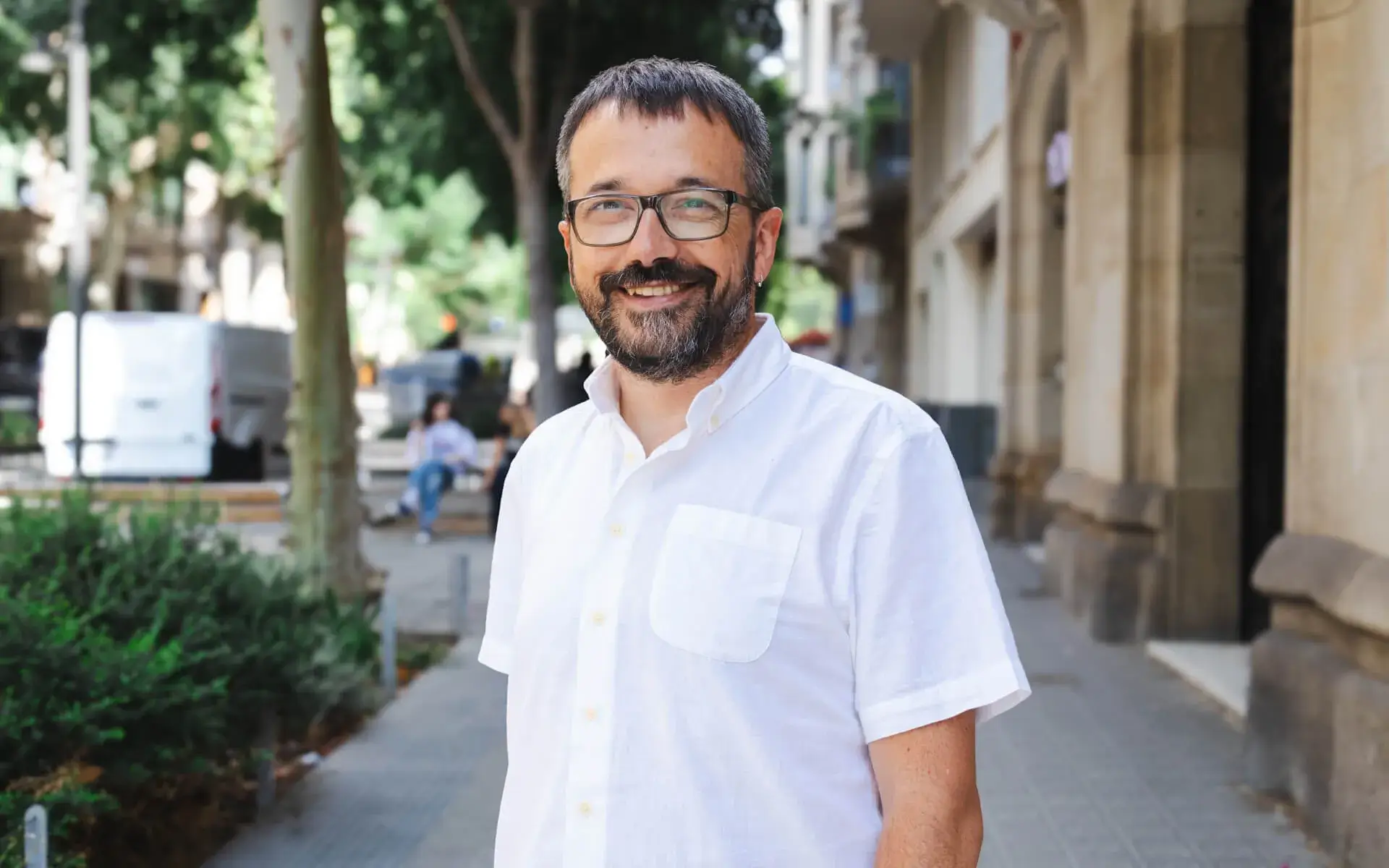
Dei Sow Diallo: “We no longer see other cooperatives as competition, but as a way to join forces”

The 'We want to be partners' campaign celebrates its second edition, strengthening intercooperation between Catalan and Latin American cooperatives to claim feminism and cooperativism in a global context.
In 2023, several Catalan and Latin American cooperatives agreed on an idea as simple as it was transformative and powerful: to join forces to claim cooperativism and feminism. From that first impulse was born ' We want to be partners ' , a campaign that this year celebrates its second edition and which has become a space for meeting, mutual support and shared resistance to the rise of the far right and hate speech.
From Xarxanet we spoke with Dei Sow Diallo , journalist and digital content developer at La Sembra , to find out how this international alliance has been woven and what it means to intercooperate from a feminist and transformative perspective.
What is the 'We want to be partners' initiative?
'We want to be partners ' was born last year. This year we have held a second edition. It emerged as an intercooperation between Catalan and Latin American cooperatives. Last year we were three Catalan cooperatives, El Far Cooperatiu , La Sembra and Dies d'Agost , and this year we are two, El Far and La Sembra. The reason was that several cooperatives from here and Latin America wanted to do an intercooperation project for Women's Day . It was not something we sought: we met, we got together and, upon realizing that we were all women, we said: "We could do something for March 8th".
How does the idea of setting everything up come about and how do conversations between cooperatives begin?
El Maizal , a Latin American cooperative, contacted us to propose intercooperation. Last year they led the process of grouping cooperatives. Then the thing got bigger: we invited other cooperatives that wanted to join. The initial contact was them, from Argentina, and from there the idea of doing it internationally grew.
Were you surprised that a cooperative so far away contacted you?
From the very beginning we realized that, despite the distance, we shared many things . We work in Catalan, which is why the campaign is in Catalan and Spanish, and they communicate in Spanish. But the values were the same : the economic model we defend and the society we want to build. The idea has always been to promote cooperativism and feminism as a sustainable , respectful and transformative alternative, putting people and the environment at the center.
Where can this collaboration be seen beyond the March 8 campaign?
Mainly on the website associades.coop , which is the website where we have all the information about the campaign and the materials we have created. It is the most stable space to retrieve what we have done and which cooperatives are participating. You can also see it on social networks, especially during the main days of the campaign.
Intercooperation is a very present value in cooperativism. How do you work on it?
When we brought together Catalan and Latin American cooperatives, despite the distance, we saw that we had the same problems . This brought us together a lot. Since we are committed to a non-capitalist, but associative model , the perspective changes: you no longer see other cooperatives as competition, but as a way of joining forces. It is a change of perspective and priorities.
What common challenges did you detect?
The rise of the far right , fascism and hate speech. People who bet on alternative models to capitalism find themselves with the same consequences all over the world. We talk about working hours , social inequalities , gender inequalities ... The consequences of capitalism affect the same here and there, and this has been a very strong point of connection.
What differences and lessons are there between the first and second editions?
From the first edition we take away the learning of working with cooperatives that have the same way of doing things: horizontal structures, democratic decisions... Everything flows more easily. The change this year is the global context, which has worsened . With the arrival of Trump, what is happening in Russia, in Gaza... everything is darker. We have maintained the base - promoting cooperativism and feminism - but we have reinforced the story: claiming rights, saying that we are not afraid and that we have the tools to respond. We have raised the tone: you will not stop us, we will not remain silent in the face of threats.



Add new comment