We call for breaking down walls and demand urgent measures that make possible the right to migrate freely, reside and work with dignity, and live as a family.
I think of Naima, who arrived in Barcelona alone, without a network or resources and ended up on the streets. And loneliness accompanied her until she walked through the doors of Migra Studium where she found a safe space where she felt supported and accompanied, and from where she could continue building her life project.
Today, December 18, International Migrants Day, we celebrate the adoption of the International Convention on the Protection of the Rights of All Migrant Workers and Members of Their Families (1990). A convention that proclaims the right to migrate freely, to reside with equal treatment and access to basic services, to work in a dignified manner and to live with a family. But the gap between paper and reality is too great . In our country, an obsolete Immigration Law forces thousands of people, like Naima, to live in administrative irregularity, condemning them to a precarious situation that is not the result of migration, but of a system that generates obstacles and hinders access to rights, the development of vital projects and the realization of their dreams.
At Migra Studium we see it every day. Migration is no longer a distant phenomenon: it is a central axis of our society and an experience that involves us personally. The stories of the people we accompany remind us that the desire to live in freedom and dignity is universal and unstoppable, and should not be synonymous with loneliness and isolation. Yesterday it was our grandparents who migrated; today they are our neighbors; tomorrow perhaps our sons and daughters will be. From this awareness of a single human family, the face of those who migrate is never the face of others.
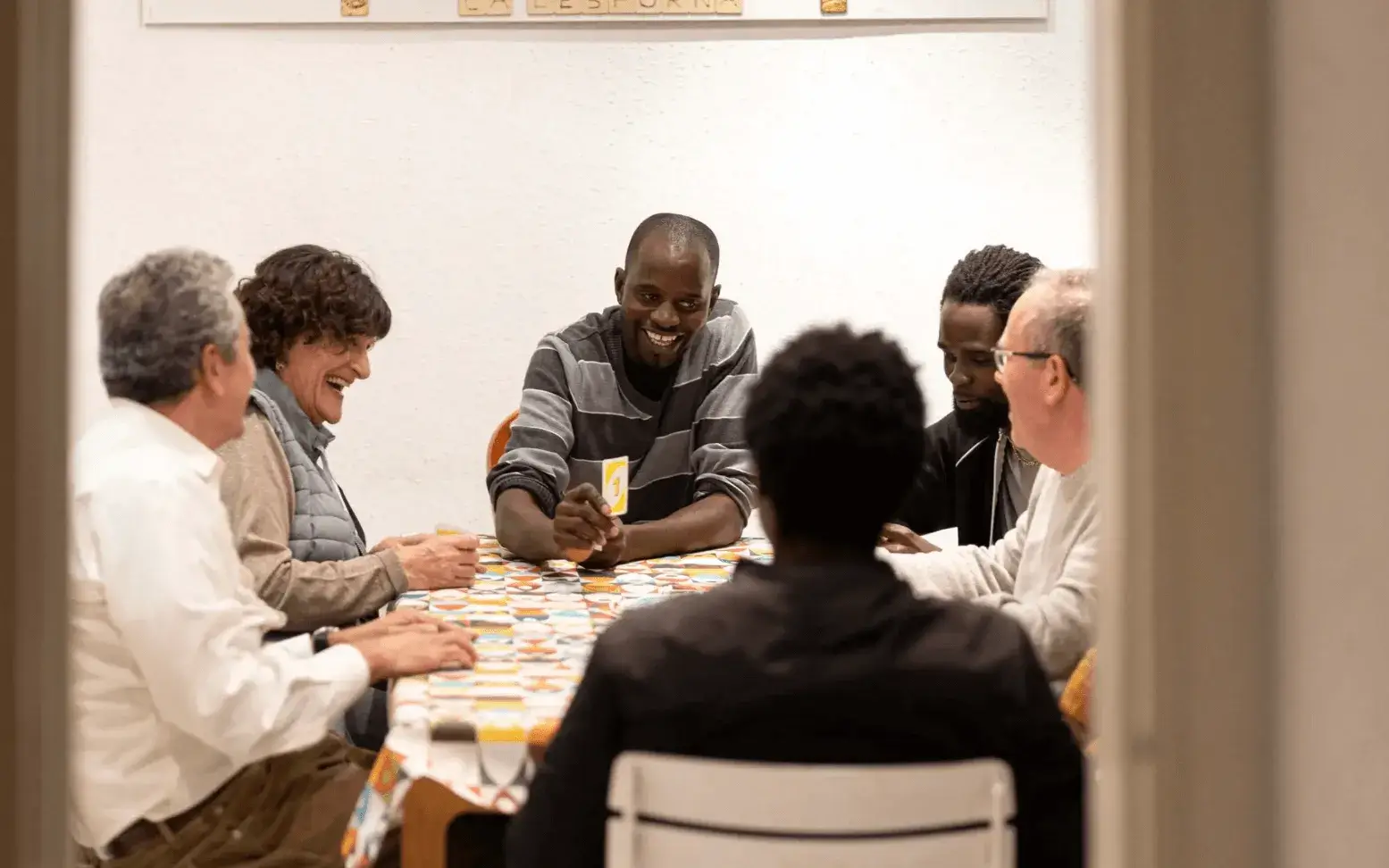
Social reality also does not give respite. In fact, the latest FOESSA Report warns that the isolation of people in exclusion has multiplied by five in just six years (going from 3.2% to 16.6% in six years). When a country multiplies social isolation by five, this is a symptom of a democratic emergency, not just a social one. When this community shield cracks, getting out of exclusion becomes almost an impossible obstacle course. That is why we work so that no one has to start from scratch in solitude: so that whoever arrives finds a community warmth that rekindles the possibility of a life project. We know, for example, that learning the language is an urgent need and the gateway to inclusion and social participation. That is why offering hospitality and welcome is our commitment . And we feel grateful to be able to do this with a large citizen network that generates safe spaces.
These situations of daily hope and fraternity that grows in adversity, however, cannot make us forget the daily injustices that still mark the lives of so many people. There are borders that do not appear on maps: a census that takes forever, an appointment that never arrives, a contract that cannot be signed because a paper is missing that depends on another paper that also does not arrive. This administrative labyrinth is not an accident; it is the result of exhausted legislation that needs to be repealed and of a regularization system that must be at the service of people. That is why, today and every day, we call for the breaking down of these walls and demand the adoption of urgent measures.
- Universal access to quality healthcare and education, as well as decent housing and jobs with respected labor rights, must be guaranteed. This is the basis of dignity.
- They call for the repeal of the Immigration Law and support for extraordinary regularization to deal with social reality. Daily difficulties (months to register, to get an appointment or to sign a contract) have no excuse in the saturation of services.
- We demand an end to the unjust suffering of racial identifications, exploitation and internment in Foreigners' Detention Centers (CIE). We are ashamed to be Fortress Europe. We call for a reformulation of the European Pact on Migration and Asylum in terms of human rights and investment in dialogue and bridges that generate neighborhood.
The future we want is not that of “us” and “them”, but that of a shared We. From Migra Studium, we will continue to work to be a more diverse and actively anti-racist community of people. We add our reflection and our voice to that of so many others who today, December 18, 2025, continue to remind us that migrating is an expression of life and hope . We will continue to weave this We, breaking down the invisible borders that we have been creating and guaranteeing a dignified welcome for everyone.


Add new comment