Laura Cubero: "Once you become involved in this field, you quickly realise that the needs are endless"

Laura Cubero, President of Tattoo Artists for Peace, discusses the organisation's humanitarian work with Syrian refugees and its recent mission in Syria. She reflects on the country's current challenges, the importance of education and mental health, and the power of solidarity to drive lasting change.
For more than seven years, Tatuadores por la paz has been working on the ground to support Syrian refugees, primarily in Tripoli (Lebanon), where it runs educational and sports projects, as well as programmes assisting families living in situations of extreme vulnerability. The association, made up of tattoo artists and professionals from other artistic disciplines, has launched initiatives including the construction of a small school in a refugee camp, educational programmes for children and women, support for children with disabilities, and the provision of essential needs such as food, medicines and school supplies.
You are currently in Syria. How would you describe the situation you have encountered since your arrival?
To be honest, we were surprised by the apparent sense of normality in everyday life. However, behind that façade, the reality is extremely precarious, especially for the people of Homs, where we are focusing our work. Despite everything, the population still hopes that the situation will improve at some point.
We are facing a landscape of absolute poverty, with a large number of returning refugees—people who, in many cases, have been forced to come back after initially finding refuge in other countries, only to discover that there are very few opportunities here.
What is your specific mission during this stay in Syria? What goals have you set, and who are you working with on the ground?
Since the beginning of this project, our main purpose has been to support Syrian refugees. We started in Lebanon, specifically in Tripoli, where many people were living crammed into refugee camps under inhumane conditions. There, we made education the cornerstone of our work, complementing it with sports activities, family support, food and hygiene distributions, and a particular focus on women.
Once you become involved in this field, you quickly realise that the needs are endless. That is why we expanded our work to include the reconstruction and repair of infrastructure in camps that had been completely neglected. Now, while continuing our work in Lebanon, our goal in Syria is to establish a strong and lasting presence that allows us to continue this mission despite the countless bureaucratic and logistical challenges the country presents.
We continue to work alongside our team from Tripoli, who have travelled with us to Homs, as most of them were born in this city. This trip has also allowed us to meet small local organisations that have been working on the ground for some time. They have been an invaluable source of support.
You are tattoo artists by profession, but on the ground you play a very different role. How has your understanding of your work changed when moving from the tattoo studio to a humanitarian mission?
Ultimately, the community that supports us shares a common essence: artistic sensitivity. We firmly believe that art is one of the most powerful ways to connect with people and raise awareness. Through creativity—regardless of the medium—it is possible to communicate complex realities and move a wide audience that might otherwise perceive the refugee crisis as nothing more than another statistic reported on the evening news.
After so many years working alongside Syrian families, how has their reality evolved? Is there hope, or does the legacy of the conflict still define everyday life?
Although our project has been supporting this community for years, this is actually our first time setting foot in Syria. Upon arriving, it is impossible not to notice the deep desire people have to believe in a better future. However, that optimism collides head-on with the harsh reality of a country that, more than a decade after the conflict began, remains trapped in extreme hardship.
The landscape of destroyed homes and the lack of decent employment have entrenched an incredibly difficult situation, both for those who stayed throughout the war and for the hundreds of refugees returning full of hope. Daily life is still a constant struggle, although there are small signs of progress as basic services and infrastructure slowly begin to function again.
What are the most urgent needs you have identified during this mission?
For us, education remains the cornerstone of everything we do, especially for children who have grown up abroad. Many of the children we worked with were born and educated in Lebanon. They are now returning to a Syria they have never known and must adapt from scratch.
At the same time, it is important to recognise that returning to their homeland is already a source of great happiness for these families. The challenge is that the transition is dramatic, and the emotional impact is significant. That is why psychological support has become an urgent priority to help them through this process.
Women are a central part of your projects. What specific challenges do they currently face, and what role do they play within their communities?
We firmly believe that women are the driving force behind these communities. Family plays a central role in Arab societies, and in most cases it is women who hold families together and keep them moving forward.
Today, we are seeing encouraging changes among young women who are studying, attending university and planning for the future. However, this remains far more difficult in the most vulnerable communities, mainly because of economic hardship.
It is also important to remember that war does not only destroy homes, cities and buildings. The psychological toll is immense, making mental health care and emotional support absolutely essential for women as well.
Working in such a complex environment inevitably involves risks and challenges. What has been the greatest obstacle you have faced during this mission?
The biggest challenge was the bureaucratic uncertainty surrounding the preparation of our travel documents. Syria has only recently reopened to the outside world, and the available information is not always reliable. Fortunately, thanks to the assistance of the Spanish Embassy in Syria, the process ultimately turned out to be much smoother than we had expected.
Now, one of our main objectives is to raise awareness about this journey and explain what we have experienced. Syria urgently needs support, and it is essential to put prejudices aside. The warmth of the people we have met has been a wonderful surprise, and the reality on the ground is very different from what many people imagine.
Do you think your profession has a unique ability to inspire solidarity?
As I mentioned before, artistic sensitivity is at the heart of this project. In addition, tattooing has become extremely popular in our society, and the international conventions we attend throughout the year give us a platform to reach thousands of people. We do much more than tattooing—we organise charity events and artistic initiatives that also involve graffiti, photography, illustration and many other creative disciplines.
How do local people react when they discover that those who have travelled there to help are tattoo artists? Have you encountered curiosity or preconceived ideas about your profession?
To be honest, it is often quite amusing. In my case, as someone who is heavily tattooed, people are completely accepting once I explain what our project is about, although it certainly sparks a great deal of curiosity.
In fact, it is surprising to find tattoo studios in places you would least expect. Damascus and Homs are perfect examples of this.
Ultimately, what matters most to local people is that someone has travelled from another country willing to help. Their gratitude is overwhelming, regardless of what our profession happens to be.
After each trip, how does everything you experience influence your work as artists? Has it changed the way you tattoo or relate to the people who visit your studio?
It is impossible to become involved in projects like this without changing your perspective, both professionally and personally. The reality you witness is deeply moving, and it inevitably shapes your everyday life.
In the end, the sensitivity we often talk about becomes a source of strength and motivation to keep working and to continue developing these initiatives.
How can people in Spain support your work?
For us, raising awareness is essential. The most direct way to support us is by following our work and initiatives through our official Instagram account (@tatuadoresporlapaz).
We currently offer two simple ways to provide financial support:
- Become a member: Once we return, we will launch a membership campaign to ensure the long-term sustainability and continuity of the project.
- Join our Teaming group: Through the Tattoo Artists for Peace Teaming platform, anyone can contribute just €1 per month. It is a small donation that hardly makes a difference to an individual's budget but enables us to continue providing real support on the ground.
What are your priorities for the coming months, and which projects do you hope to develop?
Our main goal over the coming months is to establish a solid presence in Syria. It is a complex process that involves starting from scratch in a new country, building relationships with other organisations, coordinating with new partners and adapting to a different way of working.
Despite these challenges, the foundations are already in place, and we hope to begin implementing the key elements of our programme very soon.
At the same time, we have no intention of neglecting our work in Lebanon. Maintaining our operations in both countries simultaneously is our greatest challenge at the moment, and one we are excited to take on.
If you could leave readers with one message, what would it be?
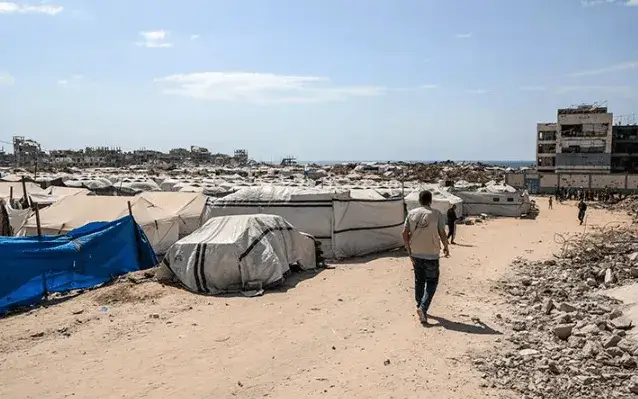
Don't forget. When we see images of war and destruction—as we have recently with Gaza—the immediate impact is powerful. But the long process of reconstruction and recovery that follows is just as important, and far more difficult.
Every one of us can contribute, whether in a small way or a big one. The important thing is simply to do something.
I would also add that, at a time when so many people seem determined to divide us, we should make an effort to reflect, to learn about one another and to travel whenever possible. We would soon realise just how similar we really are, and how much closer we are to each other than we often think.



Add new comment