
Tania Montesinos: “All our interventions are based on the needs expressed by the population”
-
Image
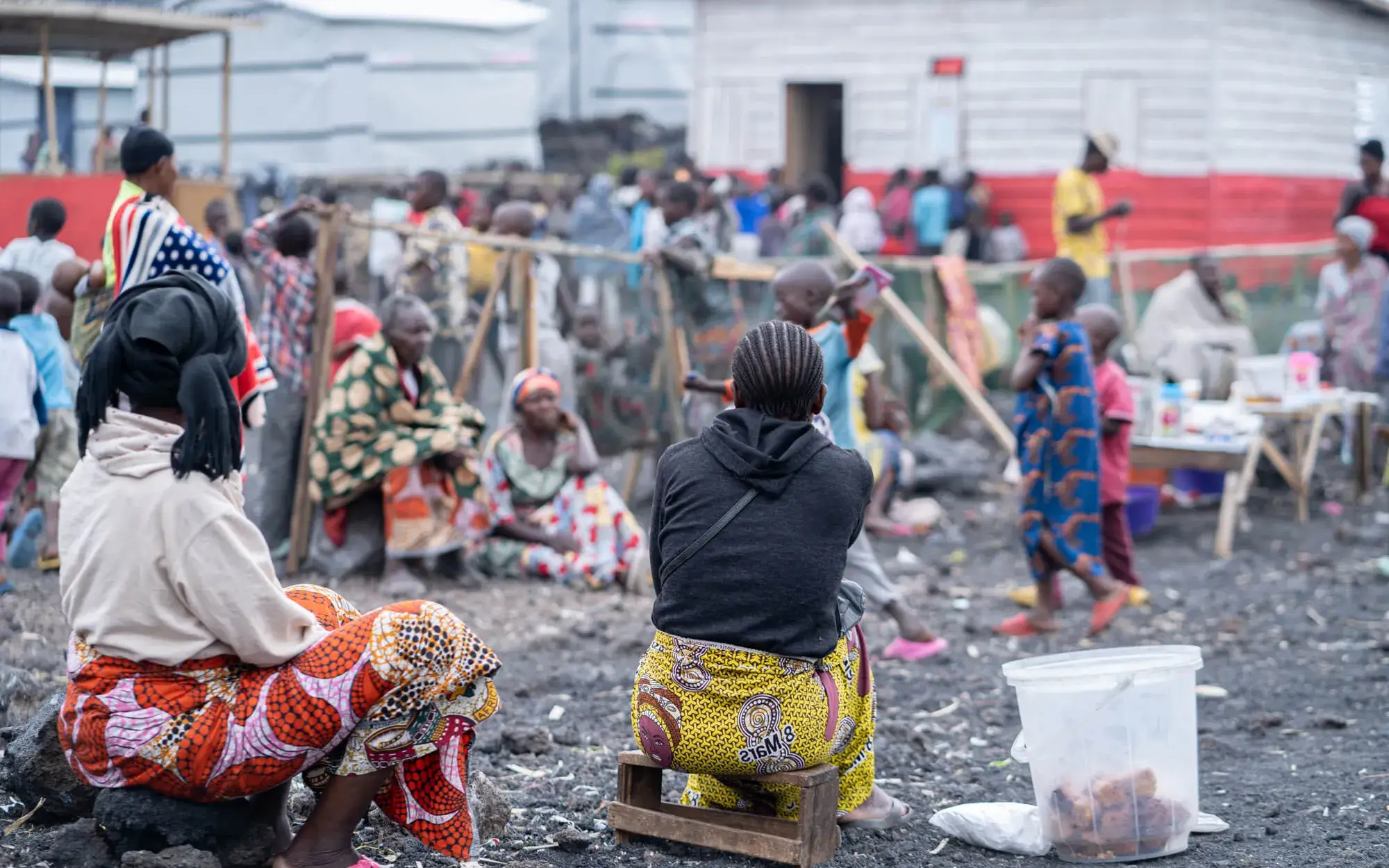
The organisation works in countries affected by conflict, such as the Democratic Republic of the Congo. Source: Farmamundi. -
Image
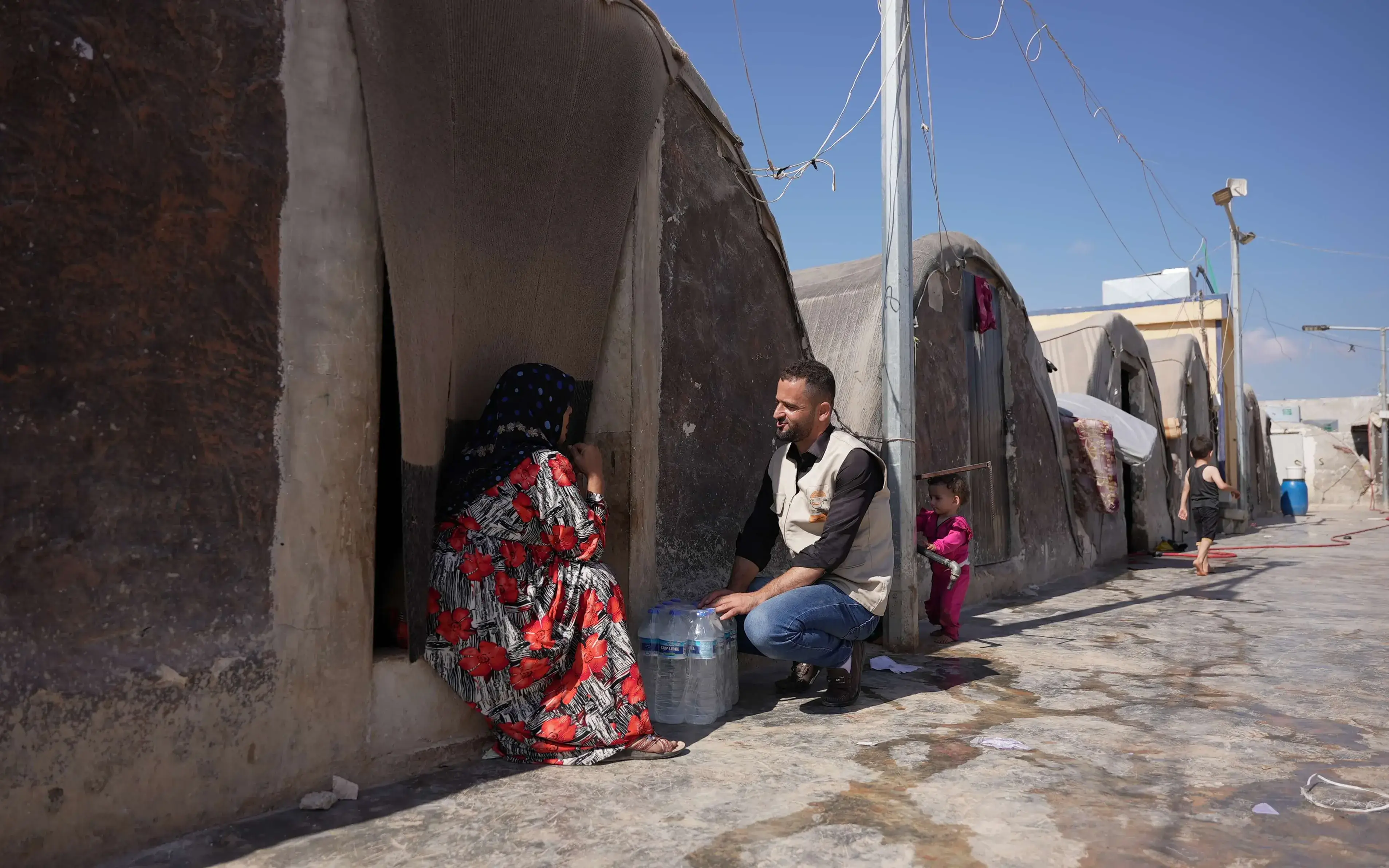
A member of the Farmamundi team speaks with a woman at a settlement for displaced people in Syria. Source: Farmamundi.
We explore Farmamundi's work with Tania Montesinos, the organisation's Head of Humanitarian Action and Emergencies, discussing the challenges of ensuring the right to health in situations of armed conflict, the role of local organisations and her recent experience in Syria.
With more than 30 years of experience, Farmamundi has carried out 311 emergency interventions and supplied around 2,700 tonnes of medicines and medical supplies in more than 8,000 humanitarian aid shipments. These figures reflect the scale of this NGO's work, which focuses on defending the right to health and responding to humanitarian crises.
Yet, as Tania Montesinos, the organisation's Head of Humanitarian Action and Emergencies, explains, Farmamundi's work goes far beyond healthcare. We speak to her about the challenges of working in countries affected by armed conflict, the role of local organisations and the current situation in Syria, which she recently visited.
What role does Farmamundi play in situations of armed conflict?
In the field of humanitarian action, we are accredited by the European Union as a humanitarian organisation. In Spain, only fifteen organisations hold this accreditation, which is not easy to obtain. We currently work in eight countries, five of them on a continuous basis, mainly in contexts where armed conflicts are ongoing or have recently ended, or where there are large numbers of refugees or internally displaced people.
How do you organise this work on the ground?
One distinctive feature of Farmamundi is that we are fully committed to the localisation of humanitarian aid. We believe that work on the ground should be carried out by local organisations, not international ones. We do not implement projects directly; instead, we advise and support our local partner organisations, particularly with financial management and technical matters. We have been working in humanitarian action for twenty-five years and have built strong relationships of trust with these organisations. The process of accrediting them is very demanding.
What kinds of needs do you address?
We work in the field of health and have healthcare professionals from different specialities, but experience has taught us that we need to address all the factors that affect health. This includes healthcare and mental health, which has long been neglected in these contexts, but also access to water, children's education, psychosocial support and violence against women and children. We also distribute kits and food and non-food items. In short, we do far more than people usually associate with the health sector.
How does armed conflict affect people's access to healthcare?
It very much depends on the context. I like to use COVID-19 as an example because we experienced it so intensely here, and people can relate to it. In contrast, in some of the countries where we work, it was barely felt. In sub-Saharan Africa, for instance, life expectancy is lower and COVID mainly affected older people. In addition, because of their experience with epidemics such as cholera and Ebola, people in countries such as the Democratic Republic of the Congo are already used to measures such as physical distancing.
And what happens when people are forced to flee?
During large-scale population displacement, many medical treatments are interrupted overnight. This happens in countries such as Ukraine and Syria, whose epidemiological profiles are similar to those in Europe, where people with diabetes or cancer suddenly lose access to the treatment they need. That is one of the issues we pay particular attention to.
Even so, not every emergency calls for the same response.
In other contexts, we have to deal with epidemics, for example, such as the cholera outbreak we are currently working on in Ethiopia. Thanks to the World Health Organization, we have basic emergency kits containing the medicines needed to respond to specific situations, such as sudden population displacement or earthquakes.
So you have to adapt to each context.
Exactly. In this respect, basic emergency kits are standardised and follow established protocols. Knowing these procedures is part of the European accreditation I mentioned, and we ourselves have been involved in developing the kits. That is why good coordination and working with local organisations are so important. There are NGOs that I call 'parachutists', which arrive at an emergency with very little coordination. The same happened during the DANA in Valencia, for example, when suddenly everyone was heading there without any organisation. In the end, that does more harm than good.
How do you ensure that medicines and healthcare reach conflict areas where there are security risks or difficulties with access? What role do local organisations play?
Local partner organisations have been working in these areas for a long time and have the backing of a Spanish organisation such as Farmamundi. This support from an organisation in the Global North gives them a certain degree of credibility, particularly if that organisation is accredited. International humanitarian law also requires access to aid to be facilitated in any conflict, although in Gaza, for example, that obligation has been completely disregarded. It is another matter if the parties want to control or inspect humanitarian convoys to prevent weapons from being brought in.
These are what are known as humanitarian corridors.
Exactly. If you are part of the humanitarian sector and have accreditation, you can access these corridors to deliver aid. In the Congo, which to me is one of the most terrible situations of the past fifty years, we continue to work even in occupied areas. This is possible because we talk to all parties involved in the conflict. Humanitarian aid must be neutral, which means negotiating with everyone. Besides, none of the parties wants the population to turn against them. They need manpower for the war, unfortunately, and they also have an interest in allowing aid to get through. It is far from romantic, but that is how it is.
And what difficulties do you encounter in practice?
In all these years, we have never encountered a situation where we have been unable to access an area. We have experienced delays and administrative or bureaucratic obstacles that have meant aid arrived later than expected. But in more than twenty years working in this field, I have never encountered a situation of complete inaccessibility. And that has a great deal to do with working with local partner organisations.
You have recently been to Syria. What situation did you find there, and what work are you doing?
We have been working in Syria since 2016. We began in camps housing Palestinian refugees, people who had experienced displacement twice. Our work expanded after the 2023 earthquake. Under the Assad regime, the country was completely closed off and we could not transfer funds there. We began working in the northeast through Turkey, which until two months ago had de facto control of that area. We took on the management of two camps for internally displaced people in the north of the country.
What have you done there?
We have built wells and homes, because many people had been living in tents for fifteen years. This has been one of our main areas of work. In December 2024, with the change of regime, the situation began to change and many people have returned to the country. Syria has been utterly devastated after so many years of war, with the involvement of the Russians, the Americans and the actors in the conflict themselves.
What was your impression of the current situation?
The situation remains very difficult, but there are also grounds for hope because there is some opening up. International sanctions have been lifted and aid can gradually enter, although still only in dribs and drabs. People have hope and optimism. It is true that the war with Iran has worsened fuel problems and that the lack of electricity makes everyday life even more expensive. Even so, things do seem to be improving. Banks are starting to open, although bank cards are still unavailable, and the currency has been renewed. Despite all the differences, the situation is nothing like it was before. There is a lot of work to be done, but green shoots are beginning to appear. Although it is also true that I am always very optimistic.
What are the main challenges you face, and what needs to improve in the response to humanitarian crises?
We need more support from countries in the Global North. I think institutions and organisations need to help the public understand that, although we have problems here too, there are countries in far worse situations. I get the feeling that we are increasingly focused on ourselves and forgetting that we have a responsibility. We probably live much better here than in other countries partly because of history. We need more awareness-raising, because if the public puts pressure on the authorities, there will be more funding for humanitarian action and emergencies.
And beyond financial support?
We also need greater professionalism and coordination. Not everything is acceptable. Farmamundi has probably made mistakes too, but we have to make good use of the resources available, because a coordinated response will always have a greater impact. Then there are security challenges and governments that fail to comply with international law. Even so, I think those of us in the sector are still crazy enough to keep working, even though we are risking our lives a little more than we used to. We need support and for people to understand how important this work is, because people are literally dying every day for lack of support.
Do the needs of affected people vary much from one context to another?
Yes, enormously. Climate, for example, has a major influence on the types of diseases. Working in Ukraine, Syria or parts of Bosnia, where we have also worked, is not the same as working in sub-Saharan Africa or Haiti. There are enormous differences, even in issues that may seem secondary, such as the digital divide. That is why we adapt all our programmes to each context, but there is one thing that does not change. All our interventions are based on the needs of the population. We work with focal points and focus groups so that people themselves can tell us what they need. And we build the entire response from there.
It is about enabling people to decide what they need.
Yes, for us, respecting people's dignity is also fundamental. Of course, we still provide medicines and rebuild hospitals, but we are increasingly turning to cash transfers, an approach that we have also managed to introduce in Spain. It is good to support people, but we all want to be able to buy our own sanitary pad or the kind of rice my father liked. This way of providing everything for people seems a bit outdated and ethnocentric to me, typical of a Global North perspective. I think it is important to listen to people and for them to demand their right to receive appropriate aid.


Add new comment