Javier Ceresuela: “Cooperation has taught us that helping does not mean imposing our way of doing things”
-
Image
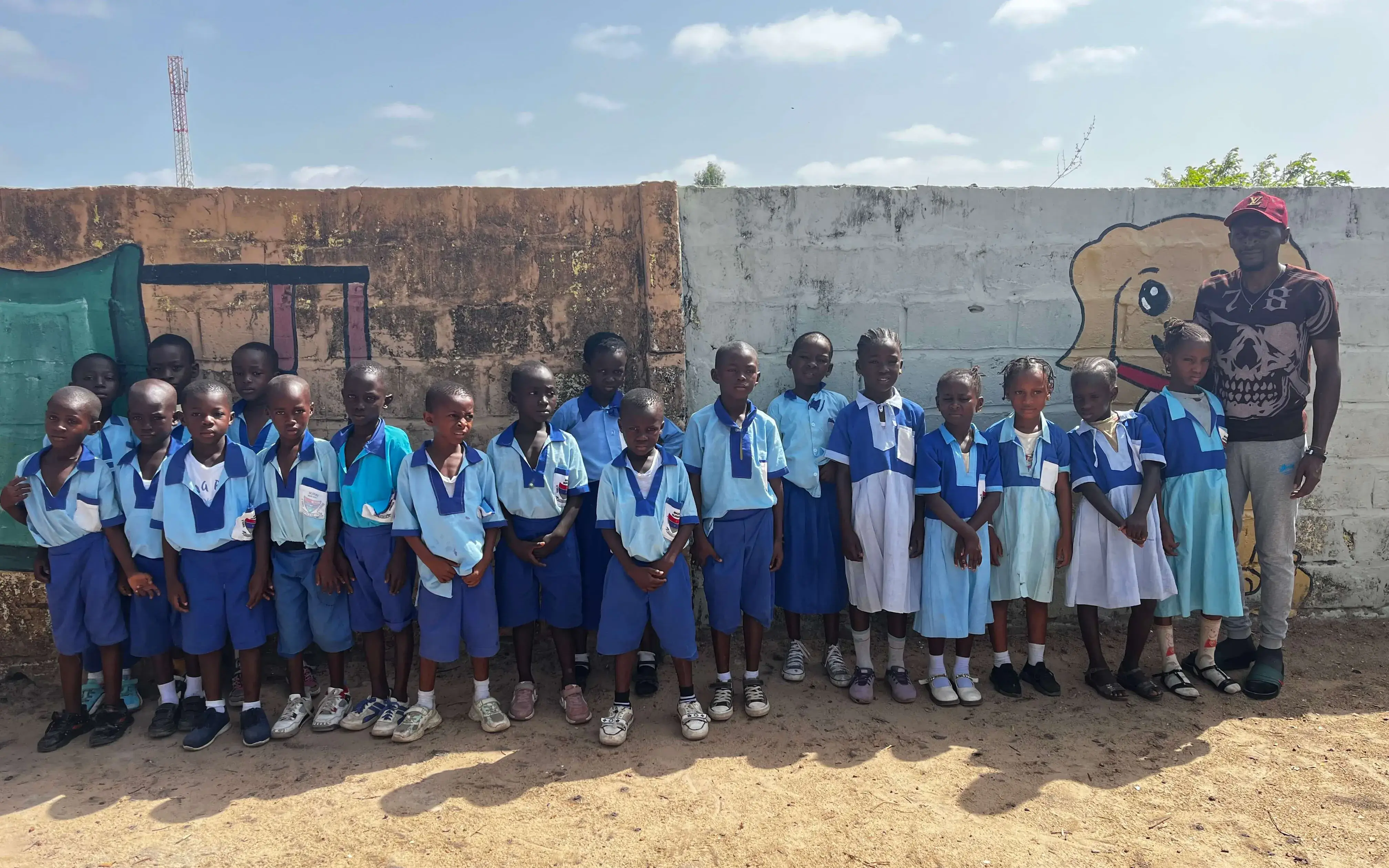
The association Somriures de Madina Jambor has promoted two nursery schools in Gambia. Source: Somriures de Madina Jambor -
Image
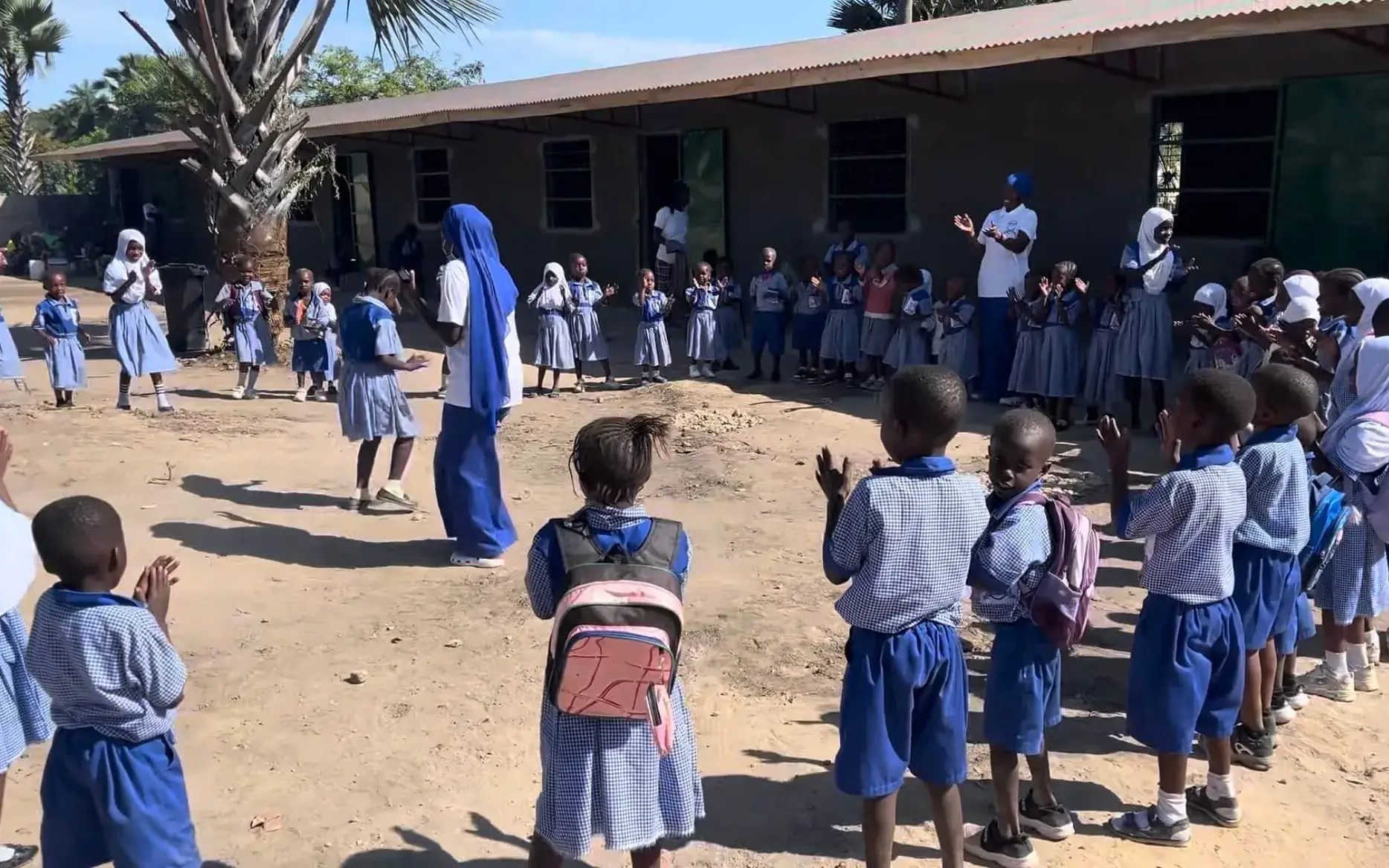
Source: Somriures de Madina Jambor.
From Llagostera, the association Somriures de Madina Jambor has promoted two nursery schools in Gambia so that children from families with few resources have an educational, safe and community space.
Somriures de Madina Jambor was born in 2017, after a group of people linked to Llagostera got to know first-hand the harsh reality of a community in Gambia, where many children did not have access to early childhood education. After years of hard work, today the association supports two schools for children aged 3 to 6, a stage that falls outside compulsory public education in the country.
We talk about it with Javier Ceresuela, president of the organisation, who reviews how they have grown the project, what the school means for children and families, and what lessons they have learned from a way of understanding cooperation based on accompanying, listening and not imposing.
How does an association from Llagostera end up promoting an educational project in a community in Gambia?
Somriures de Madina Jambor was born as a result of a trip to Gambia, in February 2017. There I met a couple from Llagostera who had already been going there for years during their holidays to distribute material they sent from here. On that trip we saw a lot of children and we began to ask ourselves what we could do that would be truly useful. Then we contacted a person from another NGO, from Valladolid, who lived there, and she guided us a lot. She told us that the best thing we could do was support a nursery school. And that is where everything began.
We are talking about an early childhood education school.
Yes, it is a school for children aged 3 to 6. In Gambia, it must be taken into account that compulsory schooling does not begin until the age of 7 and that, in this previous stage, there are no public nursery schools.
This means that children from families who cannot pay for a nursery school often stay in the street, without schooling.
How did you materialise the project?
We began looking for schools and found one in Jambur that was abandoned. The person who acted as sponsor and took care of the expenses had died, and the project had come to a halt. Then we contacted the owner of the land, who lived right there, we came to an understanding and we signed a collaboration agreement. From there we were able to start moving it forward.
Had you already been constituted as an association?
We constituted the association after that trip, once we had already reached the agreement with the owner of the land. From here we did all the procedures with an agency specialised in associations: the creation of the organisation, registration in the Generalitat registry, the tax ID number and all the part concerning the tax authorities. At the beginning, the five people who promoted the association made the commitment that if we did not get sponsors, members or grants, we would pay for it out of our own pockets. Each of us would put in the money needed to cover the 200 euros a month it cost to maintain the school.
How did it go?
We were lucky because the couple from Llagostera had a restaurant and that was a good entry point for getting members. Then, thanks to all our family and friendship circles, things grew until we reached almost 200 members.
To situate ourselves, what is the west coast area of Gambia where you work like?
It is an area where, beyond Banjul, the capital, and some larger cities or towns, the population is very scattered across the municipalities. In addition, almost half of the men of working age have left and live outside Gambia. Many have gone to Spain and, mainly, to Catalonia. In fact, Girona is the province with the largest Gambian population, and in Salt there is the consulate of Gambia.
Your work has focused above all on early childhood education. What have you done so far in the country and how has the project grown?
By the end of 2018 we had already rehabilitated the first school and, in February 2019, on a trip with more members, we started it up. It is the school in Jambur, in the community of Madina Jambor, with three classrooms and 90 boys and girls aged 3 to 6. Later we built a dining room, made new toilets and have been taking on the maintenance of the school. We cover all the expenses.
In 2024, the project takes an important leap forward.
Yes, because we received a donation from a former member who wanted us to continue with our work and build another school in Gambia. From there we bought a small plot of land in Madina Salam and we have now finished building this second school. We have planned this one with a little more ambition: it has four classrooms, a separate kitchen, toilets, a drinking water well and a small hostel for cooperation workers, which we are finishing right now.
And you still want to go further.
On this same land we also want to promote another project that we have on the table, together with the Fundació Eveho, from Sabadell, which consists of building a vocational training school for young people so that they can learn trades. Above all, we would like to train them in the field of electricity and renewable energies.
What objective have you set yourselves?
The idea is that Gambian and Senegalese people who live here, who arrived as unaccompanied minors and have trained in the foundation’s centres, can go there as trainers, together with teachers in these subjects. The objective is for these young people to be able to access a job, whether there, in Gambia, or, through agreements, here.
These schools are much more than an educational space for children and their families.
Yes, because if they are not schooled, many boys would be in the street, and many girls would stay at home looking after their younger siblings. The school prevents this and, for the families, it is also like a kind of scholarship. The children receive a uniform, have one main meal a day and have a safe space where they can be.
And the bond with the school does not end when the school year stops.
In fact, at the end of July, and until the school year starts again, at the end of September, there are boys and girls who continue going to the school to play or to meet up. In Madina Jambor, as the owner of the school also lives there and is a teacher, sometimes he gives them paper and pencils and they stay there doing things. In the end, the school is a bit like that, a meeting point for them.
What role do the teachers, the families, the local community play…
They play a very important role. So far, we have been very lucky with the teaching staff because, while remaining an authority figure for the children, it is clear that they love them very much and treat them with a lot of respect. There is a very beautiful relationship between pupils and teachers, and the boys and girls go to school very happily. They would go every day.
The school ends up being a space of community life.
You also have to take into account where they come from. Many live in houses that may be just one room and, if the average number of children is over five, imagine what day-to-day life is like. In the end, they spend more of their life in the street than at home. That is why we want to create a small library and we are accepting books in English, Catalan and Spanish, to get them used to reading. It is difficult, but I think that in a few years the school will also be a meeting centre for them.
What have you learned, in all these years, about the way to do international cooperation?
Cooperation has taught us that helping does not mean imposing our way of doing things. I always say this to the members who accompany us on the trips: you cannot expect to change their customs. It is about making their lives easier, not imposing our view on them. You can help with issues of hygiene, education or health, but their customs are theirs and they continue to maintain them.
Therefore, the key is to help, but always understanding the context well.
For example, from the first day we bought bowls for rice, cutlery and plastic cups, and also toothbrushes and toothpaste that some dentists gave us. But they continue eating with their right hand. That said, they wash before and after lunch. With language, it is a bit the same. The official language is English and we teach in English, but at the school there are Mandinka children, Wolof children… On the first day you cannot speak to them only in English. That is why the teachers, who are all from there, alternate English with their languages.
You also make an effort to preserve their cultural richness.
Obviously, for us it is essential to respect their culture. Now, for example, we are trying to collect stories from there, which are transmitted orally from generation to generation, in order to write them down and have them at the school. As much as Western life fascinates them, they have great respect for their culture, for festive clothes, hairstyles, songs, dances… They love all of this and keep it alive.
What are the main challenges or difficulties you have encountered in sustaining the schools and growing the project?
As an association, we have grown. After the pandemic, the number of members dropped a little, but now we are more than 140. It has also helped us a lot to be part of the Coordinadora d’ONG Solidàries, because we have learned to access grants. The Catalan Agency for Development Cooperation calls for grants every year and this will be the third year that we access them. The Llagostera Town Council and companies from the Gironès area also collaborate with us.
The challenge is being able to give continuity to the project.
Of course, and this gives us a certain financial stability. Being able to say that next school year is covered is very important, because it allows us to continue with the projects. Since I have been president, I have always tried to manage the NGO as if it were a company, with objectives, annual budgets and watching very carefully what every cent is spent on.
Beyond funding, you have also encountered obstacles.
On the ground, yes, we have had them. Every year we send a container with material and we have had problems with the police there. We even ended up speaking with the president’s wife to explain these difficulties to her, because every time we sent material there were attempts to keep part of it. In this regard, they helped us.
And you have come across very sensitive issues.
Yes, we have encountered a very harsh reality, which is female genital mutilation, a practice on which other Catalan NGOs in the country also work. My wife is a paediatrician and, while carrying out medical check-ups on the children, she has found girls aged three, four or five who have undergone mutilation, even though it has been prohibited for years. Sometimes done in any way at all, even by the family itself.
How have you acted in the face of this?
We have held many talks with the families. You cannot threaten parents by telling them that you will take the girl out of the school, because then you harm the girl. But you can try to raise awareness that it is a form of violence against women and girls, and that it conditions their life and sexuality forever. It has been a work of many conversations with the teachers and with the group of Cuban doctors with whom we collaborate in Gambia. This has surely been the strongest shock we have had there.
What do you need in order to continue doing your work?
Funding is what costs any association the most. We want to push ahead with more projects and, if things go well, expand this second school. There are a great many children there and the population pyramid is very different from ours. More than half of the population is under 14 years old.
Education is the best way to invest in the future of the country.
Indeed. And what you do there is also a way of empowering them. In each of the schools we have a small vegetable garden, through which we teach them that if you work and care for the land, you get benefits from it, such as potatoes, tomatoes, peppers, onions... We have them planted there and, in some way, they retain that.
How can people collaborate with Somriures de Madina Jambor?
The most direct way to collaborate is to make a contribution through the NGO Bizum, using the code 08846. And anyone who wants more information can write to us at info@somriuresdemadinajambor.org. There are also many people who contact us to ask how they can collaborate, volunteer or provide support from the health field. In these cases, we guide them and put them in contact with people who can help them go there and lend a hand.




Add new comment