Xavier Punset: “Many times, you don’t need to be a great specialist in cooperation to make an impact”
-
Image
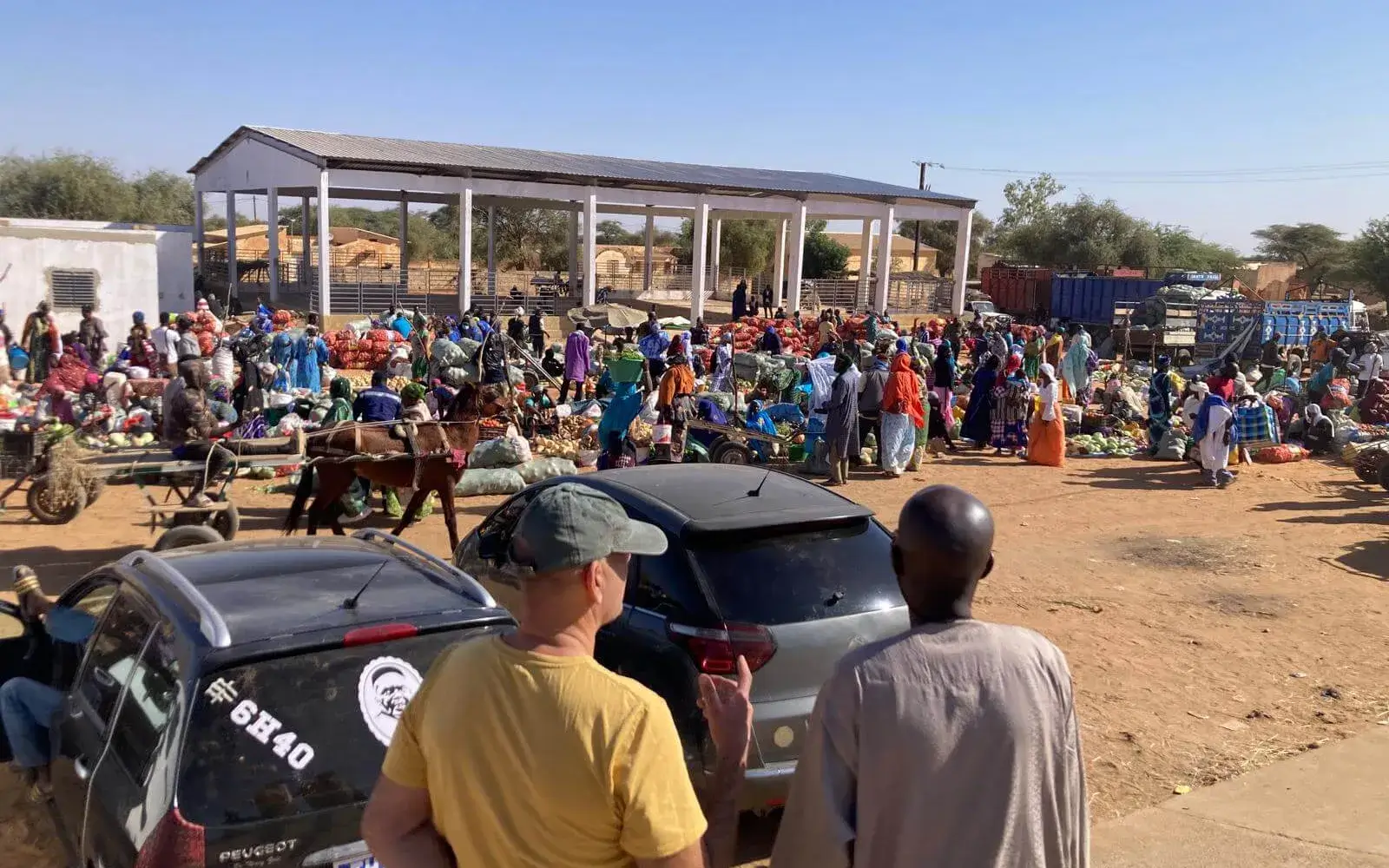
SEC promotes projects to strengthen health centres, train professionals and improve care in rural areas of Senegal. Source: SEC
The president of Salut Empordà Cooperació explains how the organisation, born out of professionals from Figueres Hospital, combines local projects with international cooperation to strengthen access to healthcare.
Xavier Punset has spent more than half his life working in international cooperation. He has worked in countries such as Congo, Mauritania, Afghanistan and Liberia, among others, and for years has focused much of this experience on Senegal, where Salut Empordà Cooperació (SEC) promotes projects to strengthen health centres, train professionals and improve care in rural areas.
Founded in 2009 out of the concern of professionals from Figueres Hospital, the organisation also has a foothold in Alt Empordà to cover needs that often do not receive a quick enough response, such as access to medication, the loan of orthopaedic equipment or the training of caregivers. We speak with Punset, a nurse and president of SEC, about cooperation from the field of health, the gaps they still detect in the area, the healthcare situation in Senegal and the challenges faced by a small organisation that works on a voluntary basis.
SEC is an organisation born out of health professionals.
Yes, SEC is an organisation very closely linked to Figueres Hospital. The association was created in 2009 and was promoted by workers from the Fundació Salut Empordà, which manages Figueres Hospital. It was born out of the concern of some professionals who were interested in cooperation and wanted to create an association linked to the hospital in order to carry out projects in this field. At that first stage, the people who set it up were Dr Sanz and Pilar Grau. I also took part in the initial formation of the organisation, but at the time I was doing cooperation work with Médecins Sans Frontières (MSF). I was involved for a while, but then I became somewhat disconnected from it.
What were the first years like?
The first years were very much based on volunteering. The people who were part of the organisation made some financial contributions, but above all they focused on awareness-raising actions. There was also an attempt to promote an international cooperation project, if I’m not mistaken in Rwanda, but it never quite came together. And some support was given to a centre in The Gambia. In general, they were smaller actions and very focused on awareness-raising, also at local level.
Where did the organisation want to focus its work?
When the organisation was created, the intention was to do international cooperation. But from 2013 onwards there was a change in the board, quite a few people left and new people joined, and we went through a kind of collective reflection to see where SEC could go. We were coming out of the 2008 crisis and began to detect gaps where we could play a role. That is why, until 2017, for about four years, we focused mainly on local projects.
Where did you see that you could be useful?
One of the first things was to provide support with medication for newly arrived people, homeless people or undocumented people who could not access free medication. Often these were people who arrived at the emergency department and that was where we detected the need. At that time we worked a lot with Elisabeth Vives, a social worker who told us that these gaps existed and that we should do something. There were already services from Figueres City Council and other organisations, but many times the response was not quick enough or did not resolve a specific need.
How did this local line of work grow?
From there came the project to help with medication and also the loan of orthopaedic equipment. This also responded to a gap that existed in the area. As a result of the cutbacks, long rehabilitation stays at the Bernat Jaume social and healthcare centre, which we now call intermediate care, were reduced and many people had to return home earlier. This created complicated situations, because many homes were not adapted and there was a lack of wheelchairs, shower chairs, articulated beds or adapted mattresses. There is equipment that the Government of Catalonia does not provide or that requires a very slow procedure, of two or three months. We tried to fill this gap that institutions could not cover in time.
This local perspective also led you towards the world of care.
For a few years another line of work also appeared, through contact with Càritas. There were families who took elderly or dependent people home because they could not pay for a care home, and they often looked for caregivers informally. Càritas worked with Latin American women who had come here, had left their families there and did not have stable jobs. They asked us whether we could train them free of charge to care for elderly people.
And how did you respond to this demand?
We created a team of volunteers from the Fundació Salut Empordà, with nursing assistants, nurses and doctors, who provided small training sessions on hygiene, nutrition, wound care or first aid. This collaboration worked until the pandemic brought it to a halt. Since then we have carried out more occasional training sessions with other organisations or with some county councils. We have always done it free of charge. And it was from 2017-18 onwards that we became more clearly involved in international cooperation projects.
What shortcomings do you still detect in the area?
We still detect the same ones, especially among newly arrived people or people who are treated at the hospital and then need treatment, but do not have a CIP. It also happens with homeless people who are not registered as residents and therefore do not have the right to treatment. Now we have few cases, around fourteen people a year, but it is also true that they are the ones we detect, the ones who reach the hospital. There is still room to work here. In all the years this project has been running, we may have reached around one hundred and fifty people. And there is still quite a lot of demand for orthopaedic equipment. We usually have around one hundred requests every year.
This has led you to collaborate with organisations in the area.
Yes, with smaller organisations, especially in Figueres, such as the Food Bank or La Xarxa, which was created as a result of Covid. They help families with significant financial difficulties, many of them newly arrived, who have trouble making ends meet. We have sometimes also supported them, especially with food for babies and young children. We have done so with the help of the Fundació Salut Empordà, which sometimes has stocks that will expire in seven months or a year, lets us know, and we distribute them.
You are an organisation that emerged from health professionals. Does this healthcare perspective shape the way you understand cooperation and social action?
In international cooperation, it is very clear. We specialise basically in strengthening existing healthcare structures, reinforcing protocols that are already in place, providing the necessary equipment to offer minimum care and, above all, doing a lot of training. We have provided equipment such as sterilisers, ultrasound machines or laboratory devices, but always closely linked to subsequent training.
You have to adapt a lot to each context.
The idea is to work in a way very similar to how we work here. Sterilisation is sterilisation, here and in Senegal. The only difference lies in the economic possibilities and the structure you have in order to adapt to each situation. This healthcare perspective also has to do with the previous experience some of us have in cooperation. I, for example, had worked for many years with Médecins Sans Frontières. Since 2002 I have done five or six missions and have experience in Africa, Asia and Latin America.
How do you decide what kind of projects you can take on?
At SEC we keep a low profile, in the sense that we work mainly in primary care, in the first health structures, which are the ones that have an initial impact. We have not worked with large hospitals because that requires very significant budgets and structures. We work with the poste de santé, which are the smallest healthcare units. With our budget, which in the best year is around 20,000 euros, we cannot take on projects of 200,000 or 300,000 euros. That is why our projects are relatively small.
Let’s talk about Senegal. How is the country doing and what challenges does it face, especially in the field of health?
We work in an area in the north, near the border with Mauritania. What I see is that rural areas still have very major shortcomings. Senegal is a fairly stable country, and that means you can work well there. At central level, the hospitals already look relatively good. I visited one in the Rufisque area and thought: “they really do have quite a lot”.
Even so, the contrast with the periphery is important.
Yes, the reality changes a lot. I was surprised because I found shortcomings that I had also seen in countries such as Congo, such as problems with sterilisation, lack of equipment, lack of training and lack of medicines. The whole rural area is very neglected. Even so, the Ministry of Health is trying and we have had a very good response. Some of the structures we have strengthened have moved up a level and, in fact, the state has placed doctors in places where previously there were only nurses.
So you have worked well with the local authorities.
Yes, and we have also seen a positive evolution. I try to go there every three years and I also try to get professionals from the Fundació Salut Empordà to learn about cooperation and see that small things can have an impact. Many times, you don’t need to be a great specialist in cooperation to make an impact. Nor do you need to have taken a tropical medicine course in order to contribute. Our medical and nursing training is good and can be useful, provided it is well guided. That is a bit my job, to see where the project should go and what can be adapted. But we can say that we have had a very good response from the ministry.
How do you assess the journey you have made so far in the country?
My view of the projects we have carried out is very positive. We are moving forward and I have the feeling that Senegal is improving, at least in the area where we work, in the north, near Mauritania. It is a small area, more or less like Alt Empordà, Baix Empordà and La Garrotxa, which is the territory we cover with the centres we have supported.
How do you decide where to act?
I know this area through a Senegalese colleague from the Coordinadora d’ONG Solidàries de Girona, who introduced me to the territory and explained that there were needs in a health centre where he had worked. At that time I had equipment from the Fundació Salut Empordà and I told him we could send it, but that first I wanted to see how they worked and that, if we provided equipment, there also had to be training.
And once you are on the ground?
Once there, we began to build alliances. We hold participatory councils and speak with the staff, with those in charge of the centres, with the town council and with people. Word of mouth also helps a lot. When I go there, I carry out an exploratory visit of around fifteen days, with meetings arranged months in advance with various centres and villages. I listen to the needs they raise and also set out the things I see, especially in the field of health. Then I compile everything, present it to the team, we assess the pros and cons and decide. From there we draft the project, draw up the budget and see whether we can secure funding. There is a lot of work behind it and we do it entirely on a voluntary basis.
What are the main difficulties you come up against in carrying out your work?
Funding is one of the most important difficulties. We also find it hard to find staff who can go to Senegal, because in our projects there is a lot of training and it is important for professionals to go there. I know trainers in Senegal, and that would be ideal, but there is also this double perspective. When someone comes from outside, it seems that the people taking part in the training become more involved. And, at the same time, I also want professionals here to get to know cooperation and perhaps later feel like doing more things.
This training part requires a lot of involvement from professionals.
This is where we find the most difficulties, when it comes to finding staff who can leave. Sometimes we help them with transport and the stay there is free, but many have to do it during their days off or holidays. We are now working on a protocol at our hospital so that it is understood that there should be paid leave days to carry out this task, because deep down it is work. Training in ultrasound, for example, is not just going there and doing it. You have to prepare material, videos, previous sessions, video conferences, phone calls, send training material and then carry out the training there. All of this is a process and many people find that they do not have time.
Do cultural differences carry weight?
Yes, they do, but Senegal is an easy country to work in. We always give a talk before people go there. From my experience with Médecins Sans Frontières, I had received a lot of training before leaving about what you should and should not do. Even so, Senegal is easier than other countries where I have worked. South Sudan, for example, is very expensive and more complicated in terms of security.
Again, it is about adapting to the context.
It is clear that you have to bear in mind the cultural and religious context. They are Muslim countries and you have to respect their decisions a great deal. Sometimes you have one idea and they have another, and you have to know how to step back and accept it. But that also happens here at home. For me, the most complicated thing remains funding. It would be good to have private funders, corporate patronage, because justifying subsidies is also very burdensome.
It is a recurring complaint among organisations.
Yes, because it is a huge amount of work and it has increased. Justifying subsidies is very burdensome and there is a very strong feeling of being audited. It seems that, instead of running an organisation, you are doing something suspicious. Now, for example, many difficulties arise because associations need a digital certificate to be able to carry out procedures and apply for calls. Well, for the past three months the Ministry of Justice in Girona has not been issuing them and this prevents us from applying for anything.
Besides, you also notice that many public institutions look at you with suspicion. And being an organisation of public utility is very burdensome. We are not one because we would spend 5% or 10% of the budget just on administrative agencies and paperwork. For a small organisation like ours, that weighs heavily.
What future challenges do you have in mind for SEC?
Trying to become stronger internally, with more participation. We are doing quite well; we are already growing. We were five and now we are seven or eight people working steadily, although we continue to do so entirely on a voluntary basis. Now we want to strengthen the structure a little more, become more solid, clarify everyone’s roles better and do more dissemination. We still lack a lot in terms of dissemination.
Explaining properly what you do is also important.
For me it was a secondary thing, but I realise that it is primary. We have to explain the projects, show that they work and generate trust in what we do, because this can also help us secure financial sustainability or some patronage. Deep down, what we do is strengthen structures so that they can be self-sufficient and move forward.
What has cooperation and the work at SEC given you personally?
I started doing cooperation work when I was 23 or 24 and the truth is that it fulfils me a lot. I am a nurse and, for me, cooperation is another branch of my healthcare side. Seeing that the projects work, that children who previously could not be treated can now be treated, or that we have tools to diagnose, treat or refer, is very satisfying. I think it has to do with my healthcare role. I have been working in an emergency department for almost thirty years and with cooperation I get a similar satisfaction to what I feel when I go to work.




Add new comment