Interview
Pablo Aguiar: “For years, major global challenges have been overwhelming the capacity of nation-states”
-
Image

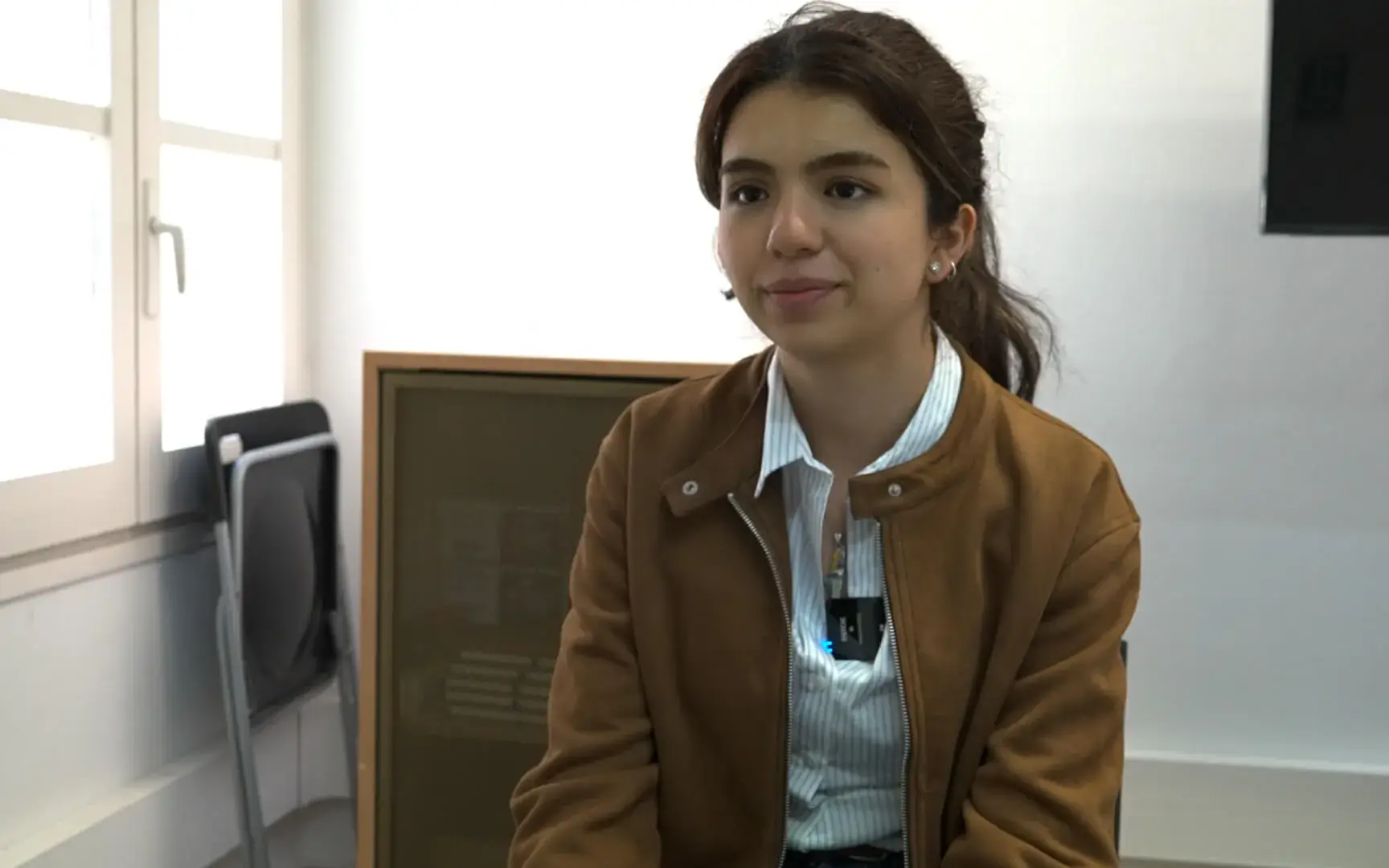
Pablo Aguiar has been the director of FundiPau since September last year. Source: FundiPau. -
Image

We review the challenges of an increasingly militarised and polarised world with the new director of FundiPau, who took office in September last year. Source: Freepik (License CC).
We review the challenges of an increasingly militarised and polarised world with the new director of FundiPau, who took office in September last year.
“I am aware that these are difficult times for the promotion of peace,” writes Pablo Aguiar in his introductory letter as the new director of FundiPau, a position he assumed a few months ago. The organisation’s new public face does not hide the context in which he has taken on the role, arriving at a time marked by rising military spending, the proliferation of armed conflicts, the genocide in Gaza, and the weakening of international law.
In this interview, Aguiar reflects on his first months leading FundiPau and discusses the limits of the current international system, Europe’s response to wars, the impact of militarism on social rights, and the challenges of working for peace in a context of polarisation and hate speech. He does so convinced that, in the face of pessimism and the temptation of force, promoting peace and nonviolence is more urgent than ever — something that must be built collectively every day.
You took over the leadership of FundiPau in September 2025. How have these first months at the head of the organisation been?
In this interview, Aguiar reflects on his first months leading FundiPau and discusses the limits of the current international system, Europe’s response to wars, the impact of militarism on social rights, and the challenges of working for peace in a context of polarisation and hate speech. He does so convinced that, in the face of pessimism and the temptation of force, promoting peace and nonviolence is more urgent than ever — something that must be built collectively every day.
You took over the leadership of FundiPau in September 2025. How have these first months at the head of the organisation been?
They have been very intense and busy months, but also very exciting. We have been very active and have done many things, and I have learned a great deal. Above all, I have discovered that I have a wonderful team by my side, and that has made this beginning at FundiPau as inspiring as it has been stimulating.
What priority have you set for this new stage?
What priority have you set for this new stage?
What we want to try to do is help channel the concern and unease generated by a terribly pessimistic global scenario, with prospects that I consider very worrying. I see a growing feeling of “I want to do something in response to what I’m seeing,” both among young people and the population in general, and from FundiPau we must try to accompany and guide that energy. I am convinced that if all of us get involved, we can change things, even though it will be difficult.
Let’s look at this context. FundiPau promotes peace and nonviolence. How do you assess the state of peace in the world today?
Let’s look at this context. FundiPau promotes peace and nonviolence. How do you assess the state of peace in the world today?
If we had to give the state of peace in the world a grade, I would say “needs improvement,” as we used to say at school. And I think this has a lot to do with the tolerance we have gradually developed toward violence. The most visible and crude forms are those carried out through weapons and wars, which are terrible and have immediate consequences, but increasingly we are also accepting very serious forms of violence in our own surroundings.
What kinds of violence are we talking about?
What kinds of violence are we talking about?
Some have existed for centuries, such as violence against women, but others are taking newer forms. For example, violence against vulnerable groups, such as migrant populations, or violence linked to access to housing. We should not forget that there are working people who, despite having jobs, cannot access decent housing and must share flats or continue living with their parents. At the international level, all this appears in a more brutal way, but in the end everything is connected.
The narrative equating security with more weapons and higher military spending has been gaining ground for some time. What risks does this approach entail?
The narrative equating security with more weapons and higher military spending has been gaining ground for some time. What risks does this approach entail?
The risk is that it fuels a spiral with no way out. If the only way to feel safe is to have enough weapons to confront our neighbour, the system is doomed to fail: when we arm ourselves more, the neighbour feels more insecure and the only response they find is to arm themselves as well, until eventually we are the ones who feel insecure again.
It is a self-reinforcing circle.
It is a self-reinforcing circle.
Yes, and that is precisely the problem. Maybe I am naïve and simply do not understand how others do not see it so clearly. In any case, the challenge is to convey this message and explain it well, because when people stop to think about it, it becomes quite obvious.
What alternative is there?
What alternative is there?
The alternative involves building shared security centred on people. It only makes sense for us to feel safe if our surroundings are also safe and feel secure with us nearby — that is the path forward. Continuing to believe that security is achieved through weapons, today with a much greater capacity for destruction, is terrible. We also see this in contexts where the presence of weapons becomes normalised, and their use ends up being accepted as the only response, to the point where demonstrators are killed by the police. Preparing for peace by arming ourselves is a guaranteed failure.
However, this militaristic narrative also seems to be gaining traction among the public, with peace portrayed as utopian and the pacifist movement often labelled naïve.
However, this militaristic narrative also seems to be gaining traction among the public, with peace portrayed as utopian and the pacifist movement often labelled naïve.
I think two things come together here. On the one hand, growing social discontent and, on the other, a period of very rapid and volatile change. In this context, yes: surveys show that an increasing part of the population, especially young people, feels more attracted to ideas that present pacifism as naïve and identify real security with a more militarised form of security.
What explains this shift?
What explains this shift?
I have the feeling that this regressive, reactionary and neoconservative turn is partly explained by the fact that for years we have seen major global challenges overwhelm the capacities of nation-states. We do not have sufficient tools, relying only on states, to address issues such as climate change, financial crises or the migration flows generated by armed conflicts. That helps explain a reaction that is relatively natural, based on returning to formulas from the past that once worked.
But those past solutions no longer work.
But those past solutions no longer work.
Exactly — the problem is that they are no longer valid. We must look for other mechanisms to face the challenges ahead. In this sense, I would say that it is not pacifism that no longer works, but rather this reaction. The path forward, in my view, lies in supranational governance mechanisms and in understanding peace and security as human security.
How does the increase in militarism and military spending affect social rights and the welfare state?
How does the increase in militarism and military spending affect social rights and the welfare state?
It is quite evident. Public spending has limits, so it is a matter of priorities. Society needs to understand this in a very simple way. The greatest challenge to our most basic human security in recent years — less than five years ago — was a pandemic, and military spending was useless in confronting it. If instead of investing in healthcare, research, science or public education we allocate more resources to weapons, the next major challenge we face could be devastating because we will not have enough capacity to respond. Or we will respond, but much worse.
We are doing the opposite.
We are doing the opposite.
Yes, we are confusing our public spending priorities because, year after year, global military spending keeps growing. It has been increasing for almost fifteen years, and in twelve of those years the world record for military spending has been broken. Europe also broke its own record last year and, unfortunately, everything suggests it will happen again in 2026. And that is terrible.
With recent international conflicts and crises — Gaza, Venezuela, Ukraine — do you feel international law is losing weight and that a new world order is emerging?
With recent international conflicts and crises — Gaza, Venezuela, Ukraine — do you feel international law is losing weight and that a new world order is emerging?
We must start from the fact that international law has never been fully effective. Unfortunately, it has not functioned as a hard law; it has often been described more as soft law. In fact, the United Nations Charter itself envisaged the creation of a world army, and that has not even been on the political agenda for the last sixty years.
What worries you most about the current moment?
What worries you most about the current moment?
What we have seen recently is an especially serious signal. When the largest powers in the international system endorse or even directly participate in these dynamics, the message is devastating: that this law, already weak, is even less binding. As a result, many countries no longer feel committed to complying with it.
What response should come from countries that still believe in it?
What response should come from countries that still believe in it?
Faced with this drift, we must insist and make efforts so that countries that believe international law must be upheld seek formulas that bind everyone, because this benefits the entire system. Otherwise, the risk is that everything turns into a jungle.
Where would you place the European Union in this new scenario?
Where would you place the European Union in this new scenario?
In this sense, I am convinced that the EU should continue working to build alliances with countries in Latin America, Africa and also Asia. And if this trend consolidates — especially on the part of what has traditionally been our international partner, the United States — we will need to explore other ties and solutions with other major powers.
How do you assess Europe’s response to current conflicts?
How do you assess Europe’s response to current conflicts?
The EU carries certain problems that have become very evident with recent conflicts. The speed of international events often overwhelms a machinery designed to respond more slowly, which also requires consensus among a large number of member states. All of this makes rapid reactions to crises of this magnitude difficult.
So what should change?
So what should change?
I believe political leadership understands that more agile mechanisms with greater response capacity are needed, and that this should not mean abandoning multilateralism or the defence of human rights, nor yielding to the law of the strongest, which seems to be increasingly prevailing.
Does this require deep reform?
Does this require deep reform?
I want to believe that with some movements in this direction we will make progress. But I return to the core idea: we are trying to confront 21st-century challenges with very rudimentary political structures based on nation-states created in the 19th century, while today the speed of change is enormous. It is not about dismantling them, but about ensuring they accept the need for other political mechanisms to address these challenges. I do not know whether the EU should lead this, but I am certain that responses to peace, war, armament and disarmament cannot remain confined solely within the state system.
On a smaller scale, and faced with the rise of hate speech and polarisation, how do you work for peace in everyday life beyond major international conflicts?
On a smaller scale, and faced with the rise of hate speech and polarisation, how do you work for peace in everyday life beyond major international conflicts?
It requires persistence and a great deal of education. This year, for example, for the School Day of Non-Violence and Peace (DENIP), we made a strong commitment and delivered 25 talks in schools involving the entire FundiPau team and board. Sometimes we feel like we are preaching in the desert, but it is essential to keep insisting.
And what are you trying to convey?
And what are you trying to convey?
We want people to understand that we need much more inclusive societies — spaces where everyone can develop freely and with rights. Everything that moves away from that is a risk, and a serious one. We see this in discourses that portray those who are different or vulnerable as responsible for everything.
It is a very dangerous discourse.
It is a very dangerous discourse.
It reminds me strongly of the rhetoric used by Nazism to target a cultural and identity group. We know where that led, even after winning elections. That is why we must work on this every day and be aware that democracy and peace are not an endpoint but a daily practice. If we fail to do so, the risk is very high.




Add new comment