
-
Image
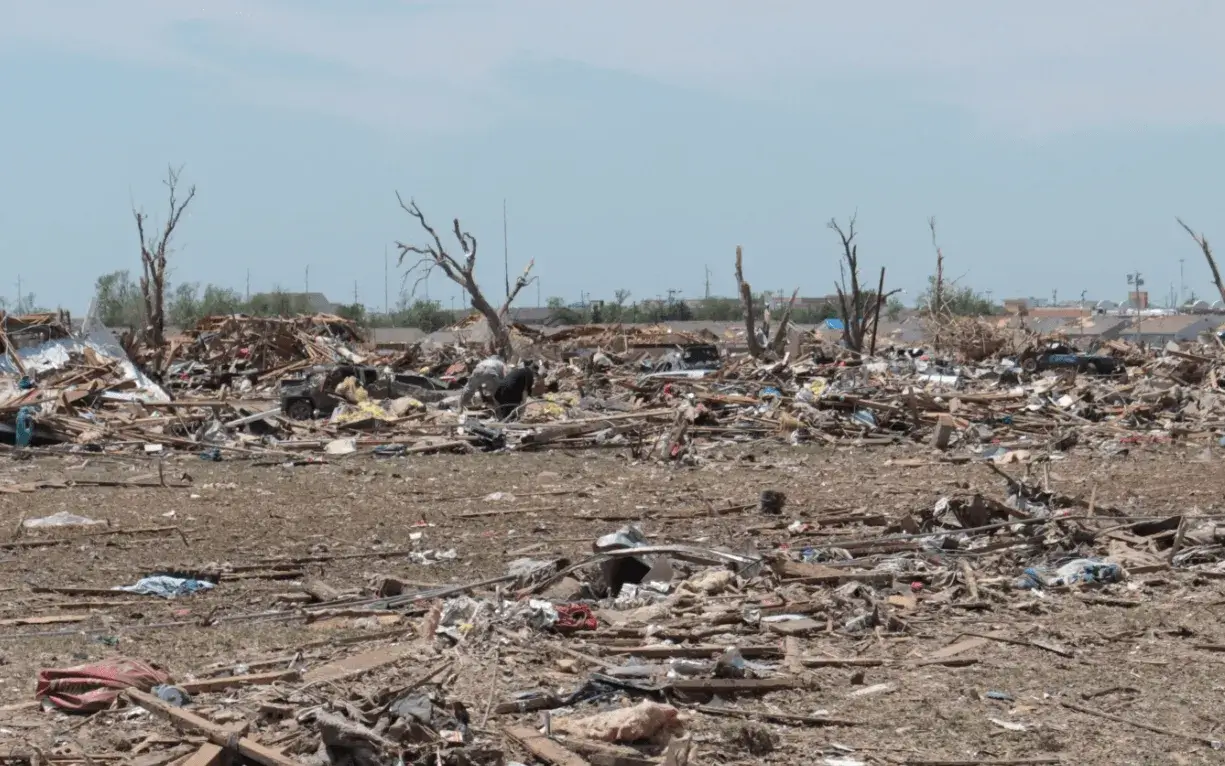
The map of armed conflicts in the world keeps widening and today rises to levels never seen since the Second World War. Source: Freepik (CC License).
We review five little-visible conflicts, but with strong human and regional impacts, based on the analysis made by the quarterly report Risk Scenarios and Opportunities for Peace, by the Escola de Cultura de Pau.
The war in Ukraine, which has already lasted more than four years; the genocide perpetrated in Gaza; the military escalation in the Middle East after the attack by the United States and Israel on Iran; or the situation in Venezuela after the US operation that overthrew Nicolás Maduro are conflicts that have monopolized all the headlines in recent months.
Even so, the map of armed conflicts in the world keeps widening and today rises to levels never seen since the Second World War. This is made clear by the latest data from the Uppsala Conflict Data Program (UCDP), which put the number of active armed conflicts in the world in 2024 at more than sixty. Since then, dynamics such as the deterioration of human rights, the increase in militarism, the normalization of the use of force or the erosion of international law have advanced without letup and confirm that in 2026 this trend will continue upward.
Beyond the major conflicts that occupy front pages, headlines and public debates, there are hotspots of violence that advance far from media attention despite causing enormous human, political and regional impacts. In this context, the quarterly report Risk Scenarios and Opportunities for Peace, by the Escola de Cultura de Pau (ECP), points to various risk scenarios that often go unnoticed, but which should be followed closely. Below, we highlight five that the document analyzes in January 2026.
- Democratic Republic of the Congo and Rwanda: the failure of mediation and the risk of regional escalation
In the east of the Democratic Republic of the Congo (DRC), 2026 began with a new military offensive that confirms the escalation of the conflict. The report warns that “the failure of US mediation and the growing regional involvement show an escalation of the conflict.” After the fall of Goma and Bukavu in 2025 into the hands of the M23, with support from Rwanda, the mediation attempts promoted by Qatar and the United States opened a window for dialogue, but they have not managed to stop the violence.
The agreement signed in June between the DRC and Rwanda, and ratified in December in Washington, did not prevent the M23 from resuming the offensive a few days later. The fighting has continued, population displacement has soared and the humanitarian situation has deteriorated even further. In this regard, the ECP states that “the M23 and Rwanda offensive shows the diplomatic failure of the US.”
The ECP warns that the failure of mediation and the growing involvement of Rwanda and Burundi point to a regional escalation in 2026. It also points out that, without real mechanisms of pressure and verification, nor an approach to the root causes of the conflict, the agreements will hardly be able to consolidate.
- Somalia: the threat of Al-Shabaab and the risk of institutional collapse
In Somalia, 2026 begins under a particularly serious threat. After years of institutional fragility, tensions between the Federal Government and various federal states, and an entrenched struggle against Al-Shabaab, the country is sinking into an ever deeper crisis. The ECP report warns that “in the short term, the collapse of the Federal Government and the seizure of power by Al-Shabaab could be triggered, with profound regional consequences.”
The jihadist group Al-Shabaab has strengthened its military, financial and territorial capacity, while the Somali state shows clear signs of weakness. The effective control of the Government is limited mainly to Mogadishu, the capital, and some surrounding cities. All this, in a context of internal political polarization, a weakened army and an African mission that is diminishing. Altogether, according to the document, this outlines a “jihadist insurgency on the rise” in the midst of an increasingly unstable scenario.
Added to this situation are regional geopolitical rivalry, tensions with Somaliland and Ethiopia and the impact of violence on the population, with hundreds of thousands of displaced people. The text warns that the coming months may be decisive, because if there is no change of course, Al-Shabaab could take advantage of the Government’s weaknesses to deepen its control of the country and put the capital at risk.
- Sudan: a protracted war and a devastating humanitarian crisis
More than a thousand days after the start of the civil war, Sudan enters 2026 with a country split in two. On the one hand, the Sudanese Armed Forces (SAF) control the center and the east; and on the other, the Rapid Support Forces (RSF) have consolidated their domination over much of Darfur and other areas of the west and south. The recapture of Khartoum by the Army and, months later, the fall of El Fasher into the hands of the RSF have ended up drawing this territorial division, while mediation attempts and successive ceasefires have been unable to contain the violence.
The human cost is devastating, as the report makes clear: “the war in Sudan has caused the most serious humanitarian and forced displacement crisis in the world.” Millions of people have had to flee their homes, hunger is spreading in different parts of the country and both sides are blocking humanitarian aid. At the same time, the involvement of regional powers and foreign actors has turned the conflict into a proxy war that makes its resolution even more difficult and fuels the risk that the war will drag on.
- Haiti: between insecurity and the risk of collapse
Haiti reaches 2026 amid an increasingly serious political, humanitarian and security crisis. Violence linked to armed gangs has not stopped intensifying and the country stands close to collapse. As the report notes, citing United Nations data from the end of 2025, “more than 16,000 people had been killed and more than 7,000 had been injured by violence linked to criminal gangs since the beginning of 2022.”
The situation is especially critical in the capital and its surroundings. Armed gangs, many of them grouped under the Viv Ansanm coalition, have expanded their radius of action and control large parts of the territory. The report underlines that “armed gangs control 90% of the capital,” in addition to much of Artibonite and other regions of the country. The crisis also has a strong social impact: hundreds of thousands of people have had to flee their homes, food insecurity is worsening and the closure of schools and health centers is hitting the population hard.
Thus, 2026 is shaping up as a delicate year because of the calling of elections and the deployment of a new international mission to confront insecurity. Even so, the state response also generates controversy. According to the ECP, “the Government hired a private security company to form part of a combat unit for assistance and support to the police and the Army in their struggle against armed groups,” in a context marked by allegations of extrajudicial executions, the intensive use of drones and the fear that gangs may take advantage of the transition between international missions to continue gaining ground.
- Myanmar: a chronic conflict with no way out in sight
Myanmar has entered 2026 at a delicate moment, with an armed conflict that threatens to become even more entrenched. The ECP warns that the country is facing a possible “escalation, chronicification and regionalization of the situation of violence and political crisis,” in a scenario marked by the strengthening of some insurgencies, the appearance of new armed groups and the partial recovery of the junta’s military capacity. At the same time, the elections held between the end of 2025 and January 2026, described as fraudulent and lacking credibility by much of the international community, may end up serving to give a certain appearance of normalization to the regime and consolidate an authoritarian scenario without a clear way out in the short term.
The situation is especially worrying in Rakhine State, where the Arakan Army has put government forces on the ropes and where the Rohingya population is once again trapped between various armed actors. The text points out that “no way out of the situation of violence, repression and authoritarianism” that the country has been experiencing since the 2021 coup “is visible in the immediate future.” To this is added the risk of a new displacement of Rohingya towards Bangladesh, the growing involvement of China and the possibility that the conflict may spread even further in a region already marked by instability and serious human rights violations.






Add new comment