A Girona-based NGO launches a maternity ward that will provide care to around 7,000 women in Senegal
-
Image
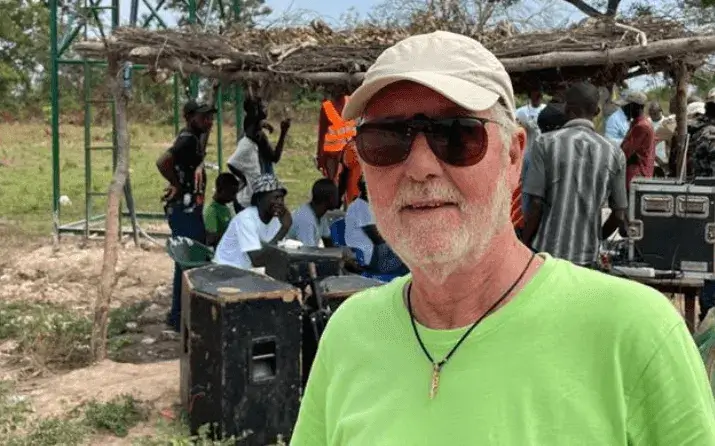
Carles Enric Cuadrada is the project coordinator on behalf of the Associació de Cooperació pel Desenvolupament de Bantandicori. Source: Associació de Cooperació pel Desenvolupament de Bantandicori. -
Image
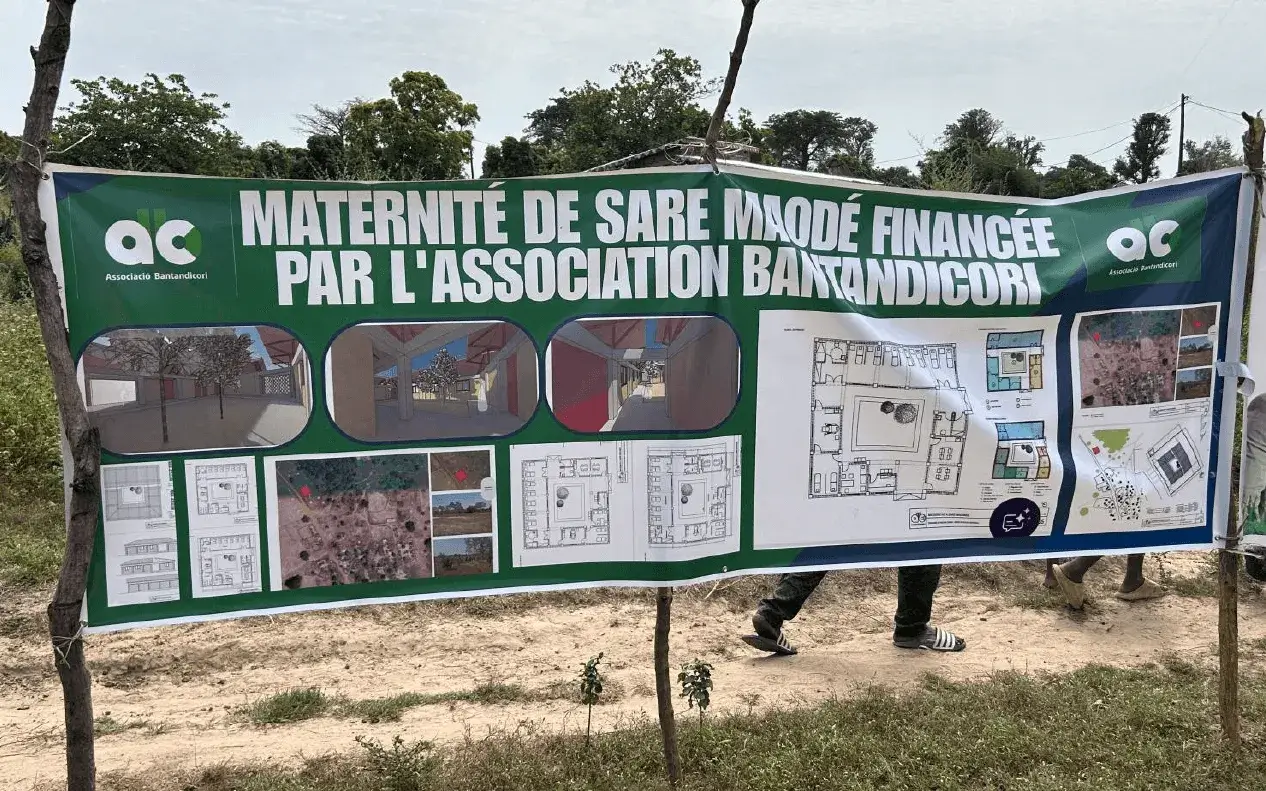
The project aims to improve maternal and child health in the Commune of Médina Chérif (in the Kolda region) through the construction of a maternity ward in the village of Saré Maoundé. Source: Associació de Cooperació pel Desenvolupament de Bantandicori.
The Associació de Cooperació pel Desenvolupament de Bantandicori, based in Arbúcies, has already laid the first stone of a maternity ward in Saré Maoundé, in the Senegalese region of Kolda.
In Senegal, the death of a woman during childbirth and the failure of a child to reach the age of five are tragedies that still occur far too often. In the region of Kolda, located in the south of the country, this reality is even more acute, especially in rural areas, where access to health services is precarious and very often depends on factors such as distance and cost.
The territory has endured decades of conflict and institutional neglect. “It is an area marked by many years of armed conflict for independence. And when that conflict was lost, the State punished the territory by ceasing to invest in it and depriving it of infrastructure,” explains Carles Enric Cuadrada, who knows the country well thanks to the work he has been carrying out for years with the Associació de Cooperació pel Desenvolupament de Bantandicori.
The organisation, founded in Arbúcies, has been working in Senegal for more than two decades, steering clear of paternalistic aid and collaborating with the local population on an equal footing to contribute to their development, as its president, Toni Ridorsa, highlighted in an interview with Xarxanet. “We have never wanted to act as what is known as ‘the white saviour’, nor to take part in all those paternalistic narratives that we have always avoided,” he made clear.
Water, education, and now health
The association has structured its work in Senegal around what Cuadrada defines as “the basic pillars of development”. They first started with water and food, through wells and vegetable gardens. “The wells allow women to work the land, organised in small cooperatives, and to obtain produce to feed their families, but also to sell the surplus at markets,” he says. In addition, this enables many women “to have a certain economic independence and to empower them”, he adds.
Later, the organisation opened a second line of work focused on education. Cuadrada describes schools with classrooms in very poor condition, in makeshift huts made of reeds and sheet metal. And a recurring reality that affects many rural areas: children who stop going to school to help at home, and families who do not see schooling as a priority.
For this reason, the association opted for facilities with photovoltaic panels to provide light in the afternoons and offer greater opportunities to access education beyond standard hours and material limitations. After this journey, the organisation is now taking a new step. “We have jumped in at the deep end with our first healthcare project, which is more complex and more expensive to carry out.” All this work is summed up in one sentence: “We have always focused on the most basic things: feeding, educating and healing.”
Objective: fighting maternal and child mortality
This healthcare project aims to intervene in a very specific area, focused on improving maternal and child health in the Commune of Médina Chérif (in the Kolda region) through the construction of a maternity ward in the village of Saré Maoundé.
The move into healthcare is no coincidence. Kolda is a region with more than 700,000 inhabitants and a predominantly young population. Infant mortality rises to 137 deaths per thousand births, almost double the national average, while maternal mortality stands at 12 deaths per thousand live births, according to 2022 data collected by the National Agency of Statistics and Demography (ANSD). The problem is worsened by a system with few resources, limited infrastructure and little staff, with approximately 0.3 doctors per 10,000 inhabitants and only one hospital in the entire region.
Added to this precariousness are other difficulties, such as the fact that healthcare in Senegal must be paid for—only 3% of the population has any type of social protection against illness and 53% of women live in poverty—and also distances. In Kolda, more than half of the population lives more than five kilometres from the nearest health centre. And often it is not easy to reach: “Beyond one main road, everything is dirt tracks that become muddy when it rains and are impossible to travel,” he explains. During the dry season, he adds, distance and precarious transport also make travel difficult.
This situation is also aggravated by the lack of resources and health education, as well as limited awareness of available services in a very dispersed environment. “They die because there is no monitoring of pregnancies; people cannot follow up because they have no money; therefore, when there are problems they are not detected, and when they are detected, it is already too late.”
However, the trigger that ultimately accelerated the project came during a field visit last November. They had gone to inaugurate a well and a vegetable garden in a village, but the secretary of the commune could not attend because his wife had given birth and had lost the baby. Two days later, she also died. For the team, it was a heavy blow. “This cannot be allowed to happen; something must be done,” Cuadrada recalls thinking. He is a doctor by profession.
A project that goes beyond infrastructure
So what does the project consist of? The starting point is the building itself: a maternal and child care centre designed to grow modularly and in phases, with the participation of the local community and using local materials. The facility will include all the essential spaces needed to care for pregnancy, childbirth and the postpartum period, as well as newborn care.
However, the project is not conceived as a simple piece of infrastructure. “A building on its own does not solve the problem; facilities have been built there that were later abandoned or ended up being used to house goats,” says Cuadrada, the project coordinator, who makes it clear that “if there is no functioning system behind it, it solves nothing.”
Thus, the initiative aims to focus on follow-up: monitoring pregnancies from the beginning and overseeing children’s health up to their first thousand days of life. To carry out this monitoring, the organisation wants to make use of mobile phones and promote a system of periodic surveys via WhatsApp to detect risks in time, provide guidance and activate responses before it is too late.
At the same time, the project includes a training component to build the capacity of local healthcare staff, especially midwives, with the aim that they can also act as educators and community role models. Along these lines, the association has signed collaboration agreements with Mataró Hospital—for support and mentoring by professionals in gynaecology and obstetrics—and with local organisations. It also plans to promote nutrition programmes to combat child malnutrition and strengthen the monitoring of communicable diseases, such as malaria, which continue to impact maternal and child health.
Cuadrada stresses that this training must be carried out carefully and adapted to the reality and customs of the local population and territory. “You have to adapt to the reality of the country and combine their ways of doing things with the most appropriate practices from a healthcare perspective; if you arrive and impose, it is useless. In essence, it is about practising medicine as it was done fifty years ago,” he says.
Impact and sustainability to grow with the community
As for the impact they expect to have, the association from Arbúcies sets concrete objectives: improving access to maternal and child healthcare and reducing maternal and infant mortality in the commune of Médina Chérif. The project aims to reach nearly 7,000 women—around 52% of the population—mostly from families with limited resources who live from agriculture and livestock farming.
The project coordinator warns, however, that the real scale of demand is difficult to predict because data and records often do not reflect reality. “The data you are given are not reliable; you have to treat them with great caution,” he states, adding that many births are not even registered when the baby or the mother dies. For this reason, he explains, the project has been designed “like a notebook, with an architectural design that can be easily expanded and duplicated if necessary”. The idea is to start with the available resources and scale it up as they go, until its real scope can be measured.
Along this path, the organisation counts on the cooperation and support of local authorities. “It is obvious that we cannot carry this out on our own; it is impossible without the approval and leadership of the region’s health authorities,” Cuadrada stresses, highlighting that “the reception has been very positive”.
If we widen the focus and look beyond, the association believes that initiatives like this are key to fighting the inequality that runs through countries of the Global South. “In the end, the objective is to prevent desperate people from getting on a makeshift boat and leaving their countries because they see no future there.” In this sense, Cuadrada insists once again on the pillars of development: food, education and healthcare. “Little by little, we have to work so that these people have the resources and conditions to stay in their own homes,” he concludes.




Add new comment